Tamil Nadu Chief Minister C Joseph Vijay on Wednesday met PM Modi to discuss the pressing issue of Mekedatu dam project on the Cauvery River. But what is the dam and why is Tamil Nadu opposing to Karnataka building the dam?
Published: May 27, 2026, 11:52 PM IST
Share Article
https://www.india.com/news/india/what-is-mekedatu-project-tamil-nadu-opposing-dam-proposal-on-cauvery-river-vijay-karnataka-modi-supreme-court-8428508/
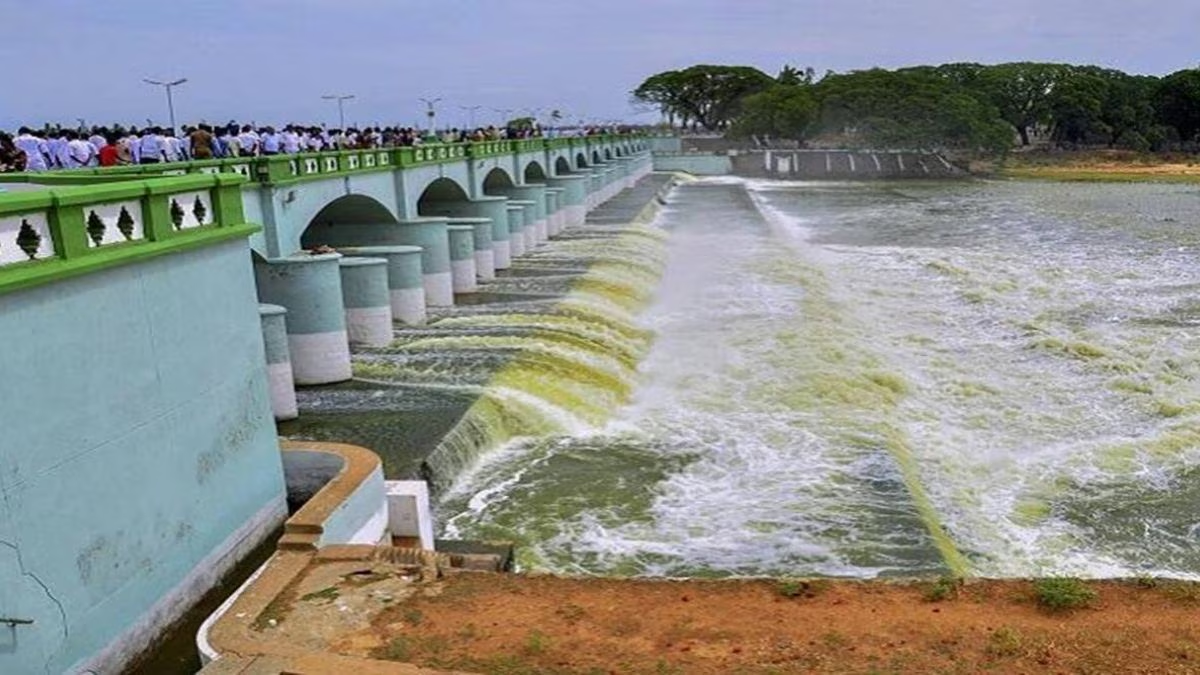
The dam, 99 metres high and 735 metres long, is planned to impound approximately 67.16 TMC of water. Representational image/PTI
Tamil Nadu Chief Minister C Joseph Vijay on Wednesday met Prime Minister Narendra Modi to discuss the issue of the Mekedatu issue. He urged the PM to discuss the issue with Karnataka to resolve it as soon as possible.
The move comes after he wrote a letter to the PM on Tuesday, appealing to the PM to immediately intervene and stop Karnataka from proceeding with the proposed Mekedatu Reservoir Project across the Cauvery River, alleging that the move violates Supreme Court orders and the Cauvery Water Disputes Tribunal (CWDT) award.
But what is the Mekedatu project and why is Tamil Nadu against it?
What is the Mekedatu project?
Planned by the Government of Karnataka, the Rs 14,000-crore Mekedatu Dam Project is a proposed multi-purpose balancing reservoir to be built across the Cauvery River near Kanakapura in Ramanagara district. The site lies in the deep gorge of Mekedatu, roughly 4 km upstream from the Tamil Nadu border.
The dam, 99 metres high and 735 metres long, is planned to impound approximately 67.16 TMC (Thousand Million Cubic feet) of water. It will also include an underground powerhouse designed to generate 400 MW of hydroelectric power.
Recently, DK Shivakumar announced that the revised DPR for the Mekedatu project is in its final stages and will soon be submitted to the central government. Preparations on the ground and the process of identifying land for compensatory afforestation are also underway.
This came after the Supreme Court of India threw out a review plea filed by Tamil Nadu, noting earlier that any legal challenge to the Mekedatu project was “premature” as the DPR remains under technical scrutiny by the Central Water Commission and the Cauvery Water Management Authority.
Vijay writes to PM Modi
In a detailed letter addressed to the Prime Minister, the Chief Minister expressed deep concern over Karnataka’s announcement of a “Bhoomi Puja” for the Mekedatu project. He stated that the development has created widespread anxiety among farmers in Tamil Nadu who depend on the Cauvery waters for agriculture and livelihood.
The Tamil Nadu government argued that the Mekedatu project was never approved under the CWDT Final Award, which was later upheld by the Supreme Court in its landmark judgment dated February 16, 2018. The letter stressed that the Cauvery basin is already categorised as a water-deficient basin and that the available water has been fully allocated among the riparian States.
“You may be well aware that a solution to the sensitive Cauvery water dispute was obtained after a long legal battle, lasting about three decades, and the Judgment dated February 16, 2018, is under implementation. Mekedatu Project is not in the list of projects permitted by the Tribunal, which has been affirmed by the above-mentioned Judgment,” the letter read.
Also Read: Tamil Nadu CM Vijay meets PM Modi in Delhi on first official visit, discusses Mekedatu dam project
“There is no scope for additional utilisation or for creating a new huge storage reservoir, since the Cauvery basin is found to be a deficit basin and the available water at 50 per cent dependability has already been allocated to the party States. Therefore, planning any new project across Cauvery or its tributaries, other than those specifically permitted by the Tribunal in its Final Award as affirmed by the Hon’ble Supreme Court in its Judgment, would tantamount to interfering with the said Judgment,” Vijay said in his letter.
According to the Chief Minister, Karnataka’s proposal to build a massive reservoir with a storage capacity of 67.16 TMC near the Tamil Nadu border could obstruct the natural flow of water that Tamil Nadu is entitled to receive under the Tribunal’s award and the Supreme Court verdict.
With inputs from agencies