

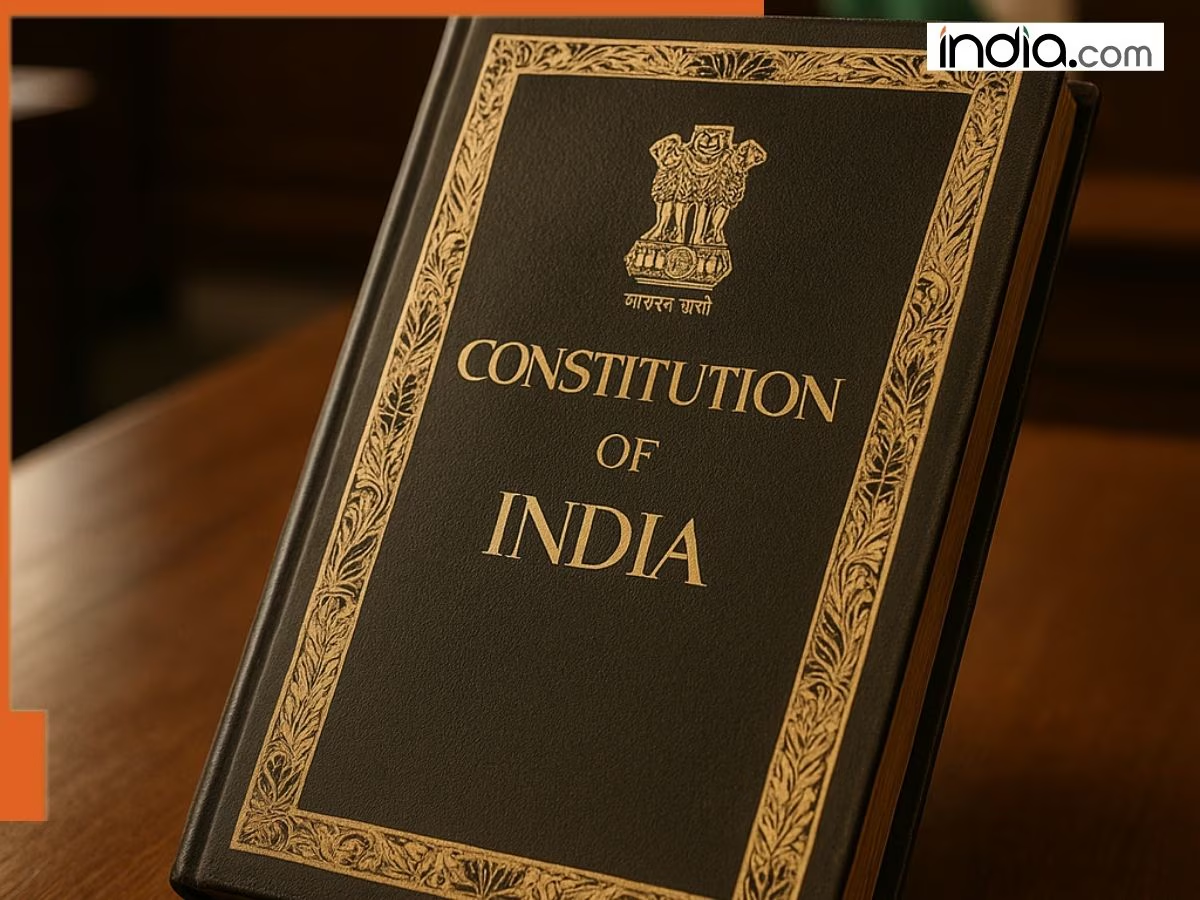
Republic Day 2026: Read the story of unsung India leaders who were part of the Constituent Assembly of India and had significant roles but are often forgotten during the journey of Indian constitution.

Updated: January 25, 2026 6:58 PM IST
History behind Indian constitution and Constituent Assembly of India
The demand for a Constituent Assembly of India was first raised in April 1936 at the Congress session in Lucknow, which was presided over by first Prime Minister of India, Jawaharlal Nehru. The purpose of the Constituent Assembly of India was to frame a Constitution that could guide a newly independent and deeply diverse nation.Unsung heroes behind Indian constitution
While leaders like Jawaharlal Nehru, Dr B R Ambedkar and Sardar Vallabhbhai Patel led the process, the Assembly itself was an institution who had big leaders like K T Shah, Somnath Lahiri and Rajkumari Amrit Kaur.1. KT Shah: The persistent dissenting voice
Among the lesser-known members of the Constituent Assembly of India was K T Shah. Shah was an economist and socialist thinker who stood out as a persistent dissenting voice during the debates of the Constituent Assembly of India. Challenging the Assembly to think beyond immediate political comfort, Shah proposed that India be declared a Secular Federal Socialist Republic which was later added to the Constitution in 1976.Add India.com as a Preferred Source
2. Somnath Lahiri: The voice who questioned elitism
Lahiri was Indian politician, writer and leader of Communist Party of India who had sharp critical ability. Lahiri is known for questioning elitism within the Assembly and advocated for Right to Privacy.3. Jaipal Singh Munda: The voice of the tribal
Demanding autonomy and protection of tribal land, Jaipal Singh Munda was a voice who demanded autonomy and protection of tribal land. The Oxford-educated Adivasi leader spoke passionately about the historical exploitation of tribal communities during the constituent assembly debates.4.Rajkumari Amrit Kaur: The woman social reformer
Rajkumari Amrit Kaur, a social reformer and later Health Minister, brought compassion into constitutional debates by arguing that public health was a constitutional responsibility.Source link

Leave a Reply