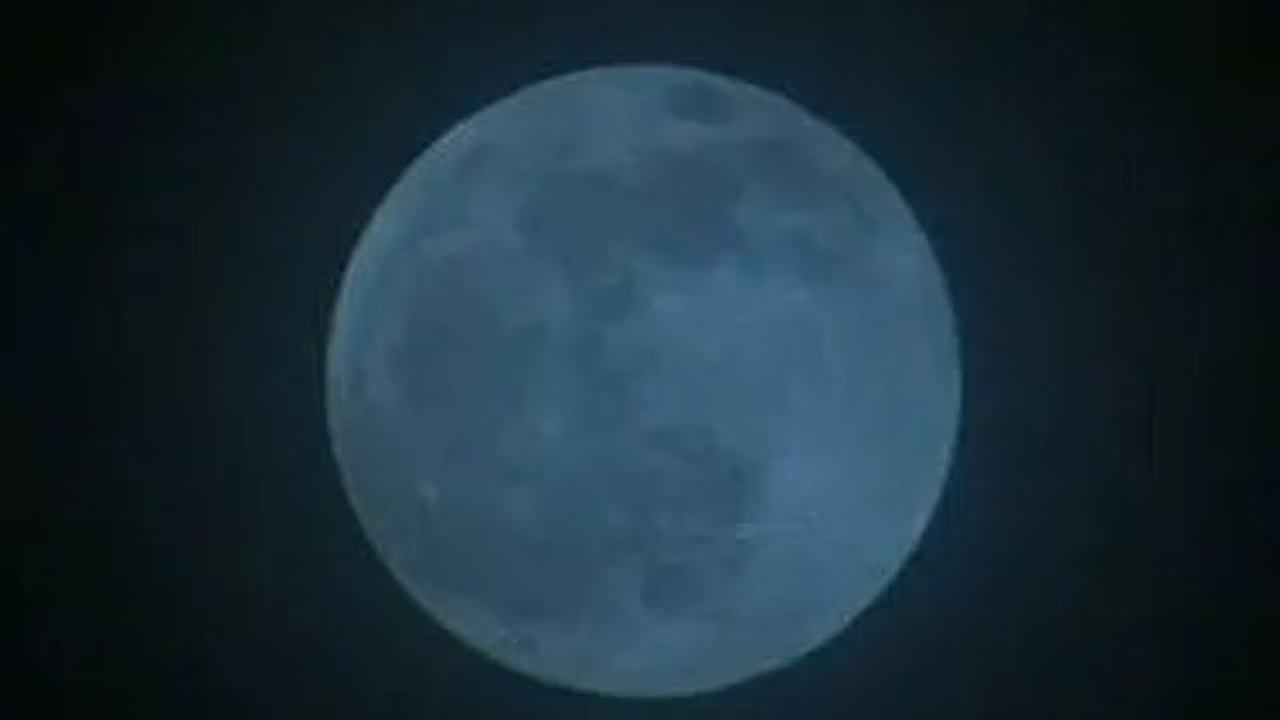
A monthly Blue Moon is the second Full Moon in a calendar month with two Full Moons.
Published: May 30, 2026, 12:43 PM IST
Share Article
https://www.india.com/news/india/blue-moon-2026-when-and-where-to-watch-the-spectacular-rare-full-moon-in-india-check-best-time-8430635/
Blue Moon 2026: When and where to watch the spectacular full moon in India? Check time(Photo Credit: NASA)
Blue moon date and time: Space lovers will be mesmerized to witness a breathtaking celestial spectacle in the night sky, as another rare astronomical event will be observed today, offering skywatchers an extraordinary opportunity to view a stunning phenomenon, so that even casual stargazers and seasoned astronomy lovers alike will be blown away.
But what is a blue moon? According to NASA, there are two kinds of Blue Moons. They are monthly Blue Moon and seasonal Blue Moon. A monthly Blue Moon is the second Full Moon in a calendar month with two Full Moons. Then, there’s a seasonal Blue Moon – the third Full Moon of an astronomical season that has four Full Moons.
Read more:
Super Blue Moon: Tourists Relish The Sight Of Super Blue Moon In Front Of Taj Mahal – Watch Video
The monthly blue moon is set to take place on May 31, 2026. Usually, the moon takes every 29.5 days to complete its cycle. However, in some months, the moon takes 30 or 31 days to complete its cycle. And so, an extra full Moon occasionally appears. In May 2026, the first full Moon occurred on May 1, while the second full Moon, known as the Blue Moon, will rise on May 30.
Although it is named the Blue Moon, it does not appear blue in colour. The term refers only to the timing of the lunar event and has nothing to do with the Moon’s appearance. When the Moon rises on May 30, it is expected to glow with orange or reddish hues, similar to a sunset. This colour change occurs because moonlight travels through a thicker layer of Earth’s atmosphere near the horizon. The atmosphere scatters shorter blue wavelengths more easily, allowing longer red and orange wavelengths to reach our eyes.
The Blue Moon will be visible across India on the evening of Saturday, May 30. At moonrise, the Moon may appear larger than usual and display a warm orange glow. As it climbs higher into the sky, it will gradually take on its familiar bright-white appearance.
According to the TimesNow report, the moon will become full on May 31, at 4:45 AM. However, it will appear fully round to the observers on Saturday evening.
Whereas you cannot look directly at a solar eclipse, you can safely see a lunar eclipse without any sort of protective equipment. You do not need glasses when seeing a lunar eclipse; however, astronomers and astronomy experts commonly use binoculars or telescopes for better and more detailed viewings of such events.