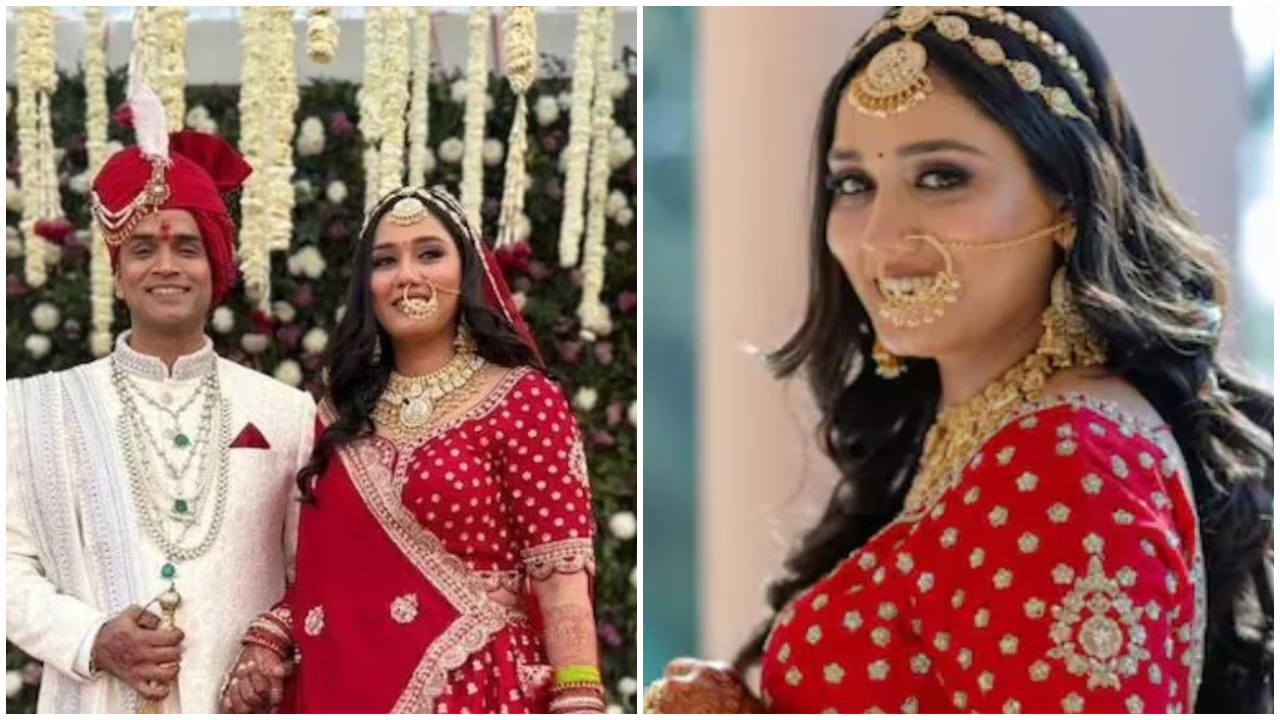
Navnidhi Sharma, father of alleged dowry death victim Twisha Sharma, expressed dissatisfaction with the CBI chargesheet, alleging it ignored key circumstantial evidence.
Published: August 25, 2026, 10:53 PM IST
Share Article
https://www.india.com/news/india/twisha-murder-case-big-update-not-satisfied-with-cbi-probe-says-victims-fathers-alleges-probe-agency-completely-avoided-circumstantial-evidence-8510025/
Twisha Sharma death case- File image
Twisha murder case: Navnidhi Sharma, father of alleged dowry death victim Twisha Sharma, expressed strong dissatisfaction on Tuesday regarding the Central Bureau of Investigation’s probe into his daughter’s suicide. He criticized the agency for filing the charge sheet primarily on the basis of the AIIMS second post-mortem report, while completely avoiding vital circumstantial evidence. The reaction comes days after the CBI submitted a detailed 636-page charge sheet, accusing Twisha’s husband Samarth Singh and mother-in-law Giribala Singh of abetment of suicide, mental cruelty, common intention, and dowry demands.
What father of alleged dowry death victim Twisha Sharma case on CBI probe?
Speaking to IANS, the father said: “We have been outrightly rejecting the claim that this was a suicideThis is a pre-planned murder case, which was covered up by AIIMS initiallyAnd we feel that the influence (by Twisha’s in-laws) is still at work.”
Alleging that the second post-mortem “also appears to be completely fabricated”, he said: “Though we have not yet been able to fully analyse the entire report, but it is clear from whatever we could that they have changed their statements multiple times which clearly indicates that the report has been prepared in a pre-planned manner so that it could be proved as suicide.”
Navnidhi Sharma claimed that all the evidence in the case has indicated from the first day itself that “it is not a suicide case”.
Family blames Twisha’s in-laws
Blaming Twisha’s in-laws, he said: “This is a pre-determined murder case where the accused (Twisha’s husband) was initially absconding, and his mother called up several influential people.”
“There are many examples like tampering of the CCTV footage,” he added while claiming that the family still has several unanswered questions.
However, Sharma remains optimistic regarding the court battle and emphasised that their fight for justice will gain further momentum as they will seek answers regarding the circumstantial evidence and also since both the post-mortem reports are “contradicting each other”.
Moreover, he alleged: “CBI has completely avoided the mention of the circumstantial evidence (in the charge sheet)There has not been any investigation into this angleThey have taken the case forward only on the basis of the AIIMS (second post-mortem) report.”
Twisha’s father said that the family will challenge the second post-mortem report in the court and would push for re-investigation.
(With inputs from agencies)