
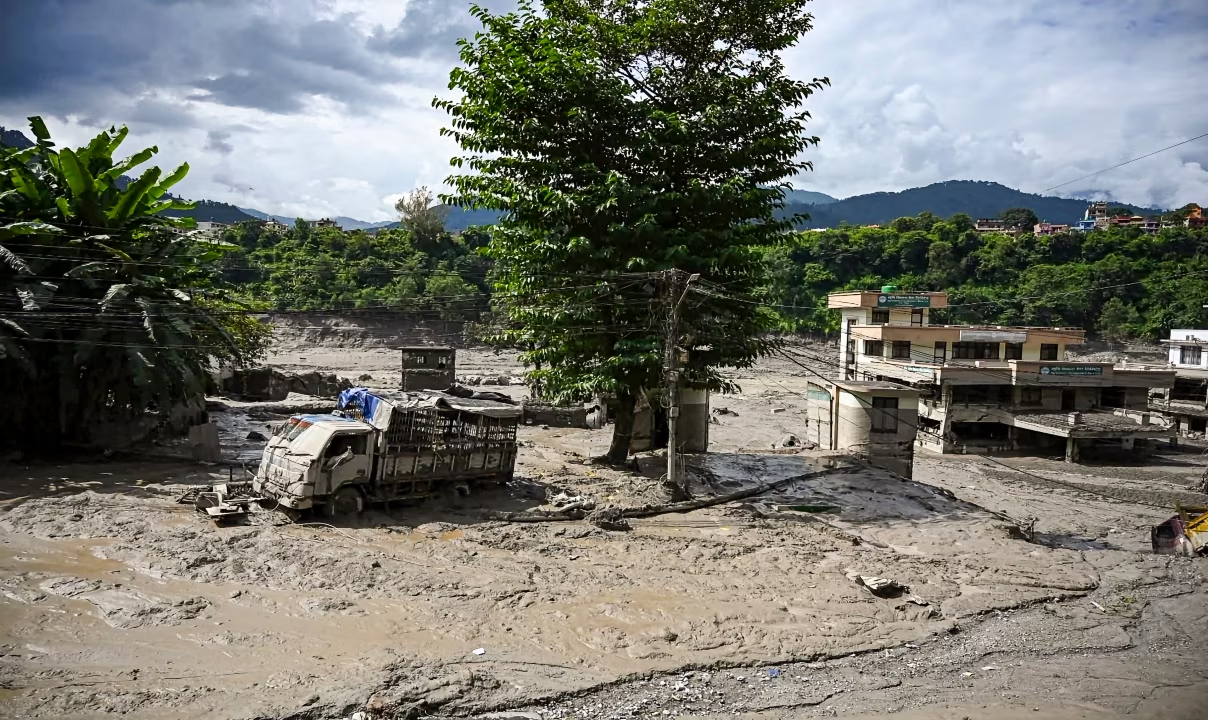
Nepal Flash flood waters reached Bihar via the Trishuli and Narayani riversAs soon as this water reached the Valmikinagar Gandak Barrage, the water level rose rapidly.
Updated: August 27, 2026, 10:25 AM IST
Share Article
https://www.india.com/news/india/how-did-bihar-escape-nepals-flash-floods-bordering-state-averted-a-major-disaster-as-calamity-threaten-gandak-basin-8511020/
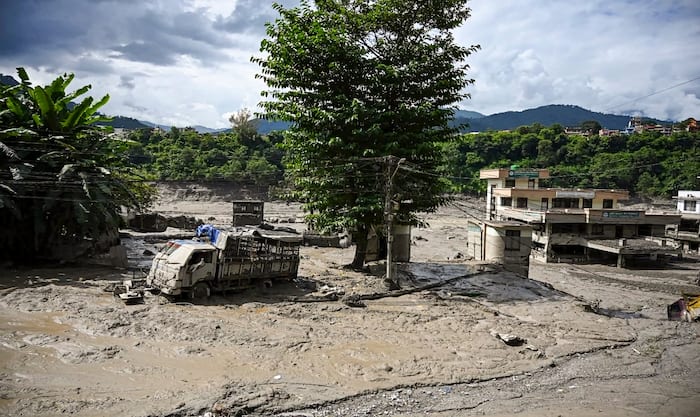
A truck and structures stand partially submerged in a thick layer of mud and debris following flash floods at Beni Ghat area, in Dhading district, Nepal, Wednesday (PTI)
Patna: Wednesday’s Nepal flash floods has wreaked havoc, killing at least 162 people and nearly 500 are still missingThe floods affected three districts in NepalIt’s reported that snow and rock debris fell from a mountain into the Lhende River, a tributary of the Bhote Koshi RiverThis blocked the river’s flowWater then suddenly began flowing rapidlyThe floods first hit the Timure area of Rasuwa district, where there was no rain in the area, so people were unaware of the flood.
More than 300 vehicles and trucks parked at the border checkpoint were also swept awayAmong the missing are 133 Indians and 37 NRIsMore than 50 of them were on the Kailash Mansarovar YatraBihar was also at risk from this floodIt was believed that devastation could occur in Bihar by late nightBut this danger has now been avertedLet’s understand in detail.
How was the danger from Bihar averted?
Bhote Koshi and Trishuli Rivers: Floodwaters first flowed into the Bhote Koshi River, which originates in TibetThe Bhote Koshi later joins the Trishuli RiverThe Trishuli River, a major river in central Nepal, bore the brunt of the floodThe waters then flowed into the Narayani River and then the Gandak River.
Water began arriving in the Gandak River from Nepal around 8 p.mAfter this, the river’s water level rose rapidlyLate last night, the discharge at the Valmikinagar Gandak Barrage reached approximately 150,000 cusecsHowever, there is now news of reliefThe Gandak River’s water level is rapidly fallingCurrently, approximately 81,000 cusecs of water is being released from the Valmikinagar Gandak Barrage.
It is being reported that the rising waters of Nepal’s Trishuli River have flowed through the Narayani RiverA large portion of the water has spilled into the Narayani River, resulting in less water reaching the Gandak River than expectedConsequently, the major flood threat in Bihar and Uttar Pradesh appears to be averted for nowRelief is also prevailing in the lower regionsFollowing the floods in Nepal, an alert was issued in Bihar and Uttar PradeshThe administration evacuated people to safer locations.
What caused the flash flood in Nepal?
A sudden flash flood in Nepal’s Rasuwa district on Wednesday morning caused massive devastationLarge amounts of mud and rocks were carried downstream along with the waterScientists are now trying to determine how the flooding occurred so quickly.
Where did the flood begin?
- The floods originated in the high mountainous region of the Nepal-China (Tibet) border and were most visible in the Timure and Syaprubesi areas of Rasuwa district.
- The Lhende River and the Bhote Kosi River upstream suddenly received a large influx of water and debris.
- Between 8:30 and 9:00 a.m., the water surged rapidly downstream.
- Scientists suspect that a large mass of ice and rocks slid from a high mountain, known as an ice avalancheThe ice and rock debris fell into the Lhende Khola, temporarily blocking the river’s flow.
- Water began to accumulate in the river, forming a natural damThen, the accumulated water suddenly broke free and flowed downstreamAlong with the water, large amounts of mud and large stones also began to flow.