The political split in the Shiv Sena originated in 2022 when Eknath Shinde and many MLAs revolted against Uddhav Thackeray’s rule, after which the Shinde faction split away from the Thackeray-led faction.
Published: June 19, 2026, 11:49 AM IST
Share Article
https://www.india.com/news/india/60-years-of-shiv-sena-from-raj-thackeray-to-eknath-shinde-key-exits-by-leaders-that-split-bal-thackerays-shiv-sena-what-triggered-biggest-rebellions-maharashtra-politics-8450827/
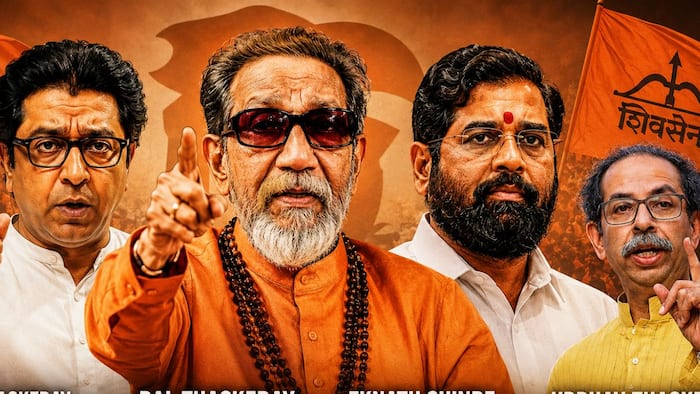
60 years of Shiv Sena: From Raj Thackeray to Eknath Shinde; Key exits by leaders that split Bal Thackeray’s Shiv Sena; what triggered biggest rebellions
Established on June 19, 1966, by Bal Thackeray, Shiv Sena, one of the most talked-about political parties, is celebrating its 60 years of its existence. Over the past six decades, the Shiv Sena has made a tremendous contribution to the development of Maharashtra’s political scene, starting from its roots as a regional activist group and growing into one of the most impactful parties at both the state and national levels. The Shiv Sena’s workers and leaders are celebrating this occasion as one of the major milestones of their organization’s political history.
The Eknath Shinde-led Shiv Sena and the Uddhav Thackeray-led Shiv Sena (UBT), both factions of the Shiv Sena, are celebrating the party’s foundation day separately amid heightened speculation over the alleged “Operation Tiger” and reports of possible defections from the Uddhav Thackeray-led camp.
The celebrations become even more important this year, given all the political buzz surrounding ‘Operation Tiger’ – referring to a term being used to describe the speculation that several Members of Parliament from Shiv Sena (UBT) are in touch with the Shinde-led Shiv Sena and may join the ruling alliance.
The political situation gained momentum after Shiv Sena MLC Chandrakant Raghuvanshi stated that 6 Shiv Sena (UBT) MPs are confident in Eknath Shinde and are aligned with his faction. Soon, the buzz started to build and spread. However, none of the MPs have formally confirmed these claims.
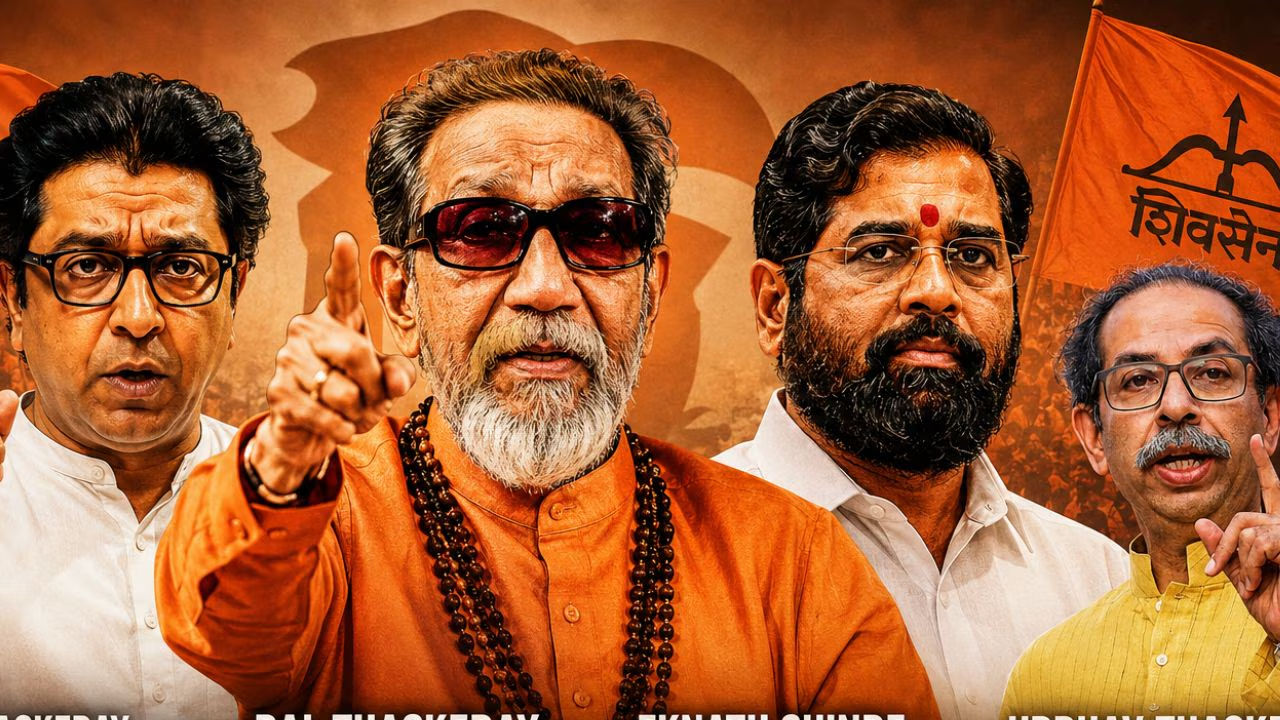
The political split in the Shiv Sena originated in 2022 when Eknath Shinde and many MLAs revolted against Uddhav Thackeray’s rule, after which the Shinde faction split away from the Thackeray-led faction. Political and legal battles followed, resulting in the Election Commission recognising the Shinde faction as the official Shiv Sena and allotting them the traditional ‘bow and arrow’ symbol, while the Thackeray faction became known as Shiv Sena (UBT).
As both camps seek to assert their political strength and legacy on the party’s foundation day, the developments surrounding the reported “Operation Tiger” are expected to keep Maharashtra politics in focus in the coming days.
Bal Thackeray
Bal Thackeray named the Shiv Sena party after Chhatrapati Shivaji Maharaj, a Maratha king from the 1700’s. Before his political career, he worked as a professional cartoonist. The Shiv Sena party was formed to promote the rights of Marathi-speaking people in Maharashtra; specifically, those who were residents of Mumbai. Over the years, Bal Thackeray emerged as one of the most influential politicians in Maharashtra. He was known for his strong anti-Congress stance and for mixing regional identity with Hindutva-based political ideology. Under the guidance of Bal Thackeray, Shiv Sena became more than just a regional party; it became a key player in Maharashtra politics. During Bal Thackeray’s 46 years in public life, he did not seek political office nor stand for election. He also did not formally get elected as the President of the political party that he headed, according to a BBC report(2012).
Raj Thackeray
As well as being an influential figure in Maharashtra politics, Raj Thackeray is also related to Bal Thackeray. He is Bal Thackeray’s nephew. He was widely seen as the political heir of the Shiv Sena’s founder. Raj Thackeray started in Shiv Sena and became known for his political skills and organizational abilities. In 2006, he set up the Maharashtra Navnirman Sena (MNS) following a split between himself and the leadership. Like his uncle, his politics have been largely about promoting Marathi identity, improving regional economies, building urban areas, etc. Raj Thackeray continues to have a major impact on the political landscape, famous for his sharp manner of speaking and unique way of doing politics.
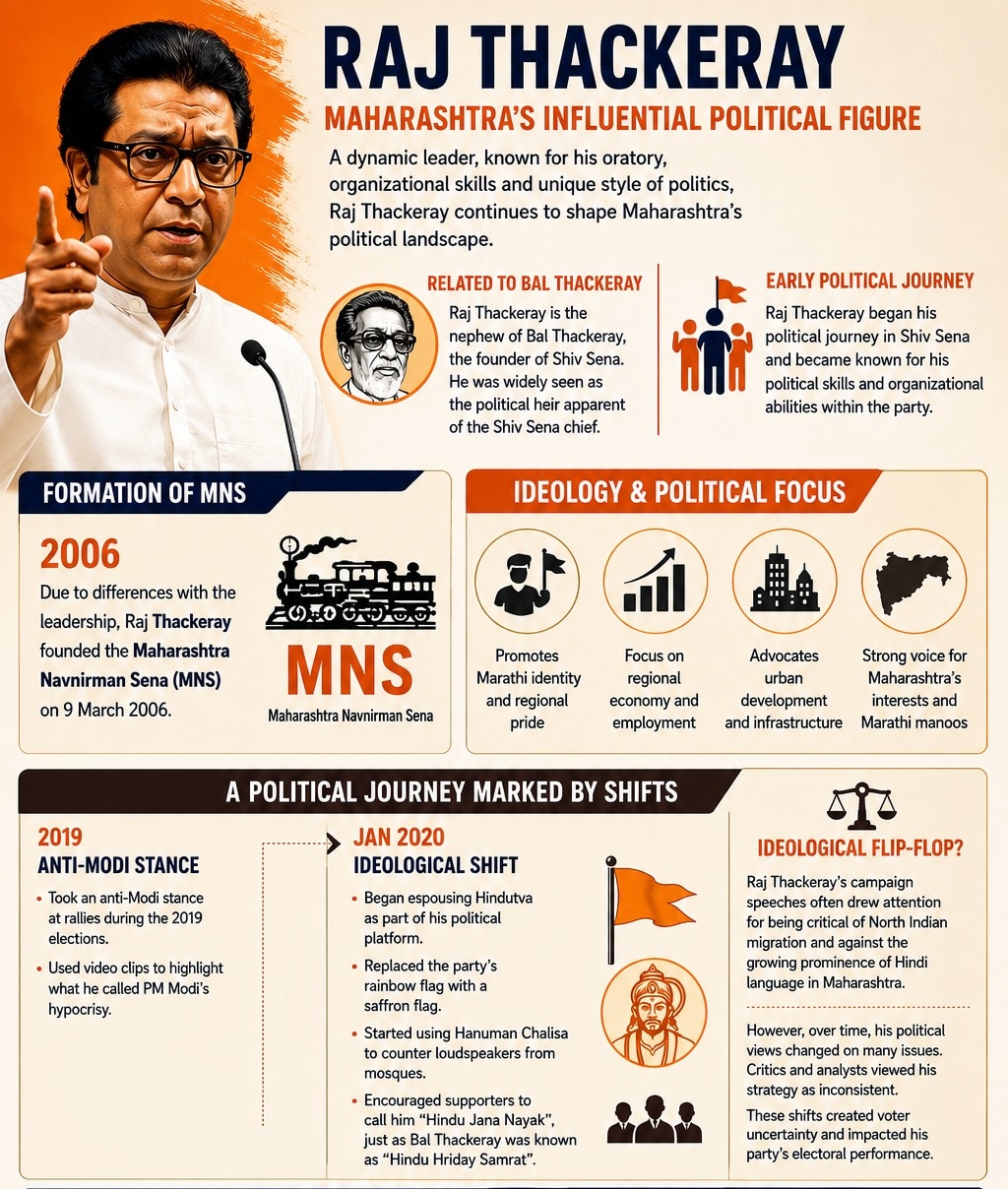
Thackeray took an anti-Modi stance at rallies in 2019. One example of his anti-Modi agenda was the use of video clips to highlight instances of PM Modi being hypocritical; however, in Jan 2020, he began espousing Hindutva as part of his political platform and removed the party’s rainbow flag in favor of a saffron flag and began using the Hanuman Chalisa as a countermeasure to audible sources of sounds from mosques — by encouraging his supporters to refer to him as “Hindu Jana Nayak,” which was how Bal Thakrey was identified as “Hindu Hriday Samrat.”
His campaign speeches often drew attention for being critical of North Indian migration and against the growing prominence of the Hindi language in Maharashtra. However, over time, on many issues, his political views changed, and his critics and those watching him in the political climate considered his strategy inconsistent. Analysts believed these shifts in strategy contributed to creating voter uncertainty and negatively impacted his party’s electoral success.
Major Splits that reshaped Maharashtra Politics
Amid all this, the biggest jolt in Shiv Sena’s history came when Chhagan Bhujbal exited the party, marking the first significant insurrection against Shiv Sena. Along with the 17 members of the Legislative Assembly, he resigned and joined hands with Sharad Pawar. Over subsequent years, Chhagan Bhujbal served as Deputy Chief Minister and Home Minister in Congress-NCP governments. His leaving Shiv Sena represented a major threat to the organisational structure of the party.
Ganesh Naik was an influential figure in Navi Mumbai politics. He left Shiv Sena for the Nationalist Congress Party (NCP). Later, Naik made a switch to the Bharatiya Janata Party (BJP) in 2019.