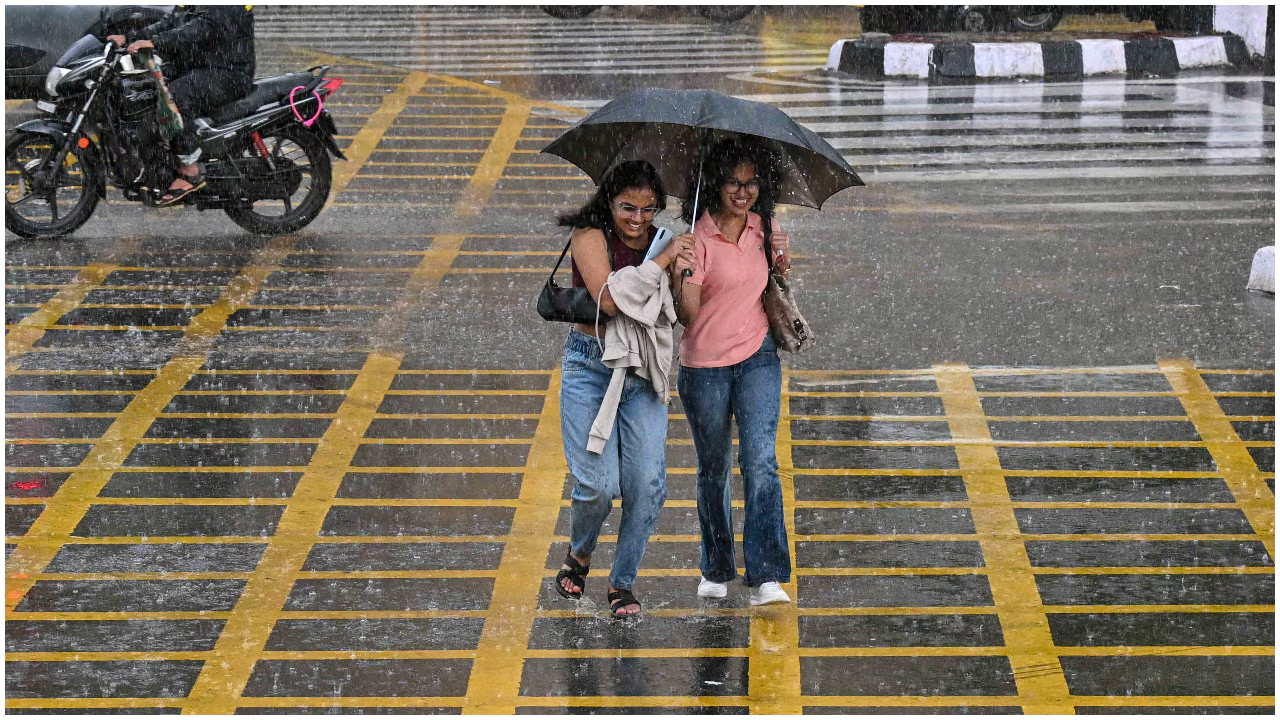
Union Ministers Amit Shah and Shivraj Singh Chouhan review India’s below-normal rainfall situation and El Niño’s impact to coordinate agricultural relief and water management.
Share Article
https://www.india.com/news/india/how-is-modi-government-planning-to-tackle-drought-preparedness-amid-el-nino-driven-rainfall-deficit-8464902/
IMD Weather Update
India El Nino: The Central government on Friday reviewed the emerging challenges of below-normal monsoon rainfall across multiple regions, driven by the El Niño weather pattern. Union Home Minister Amit Shah and Union Agriculture Minister Shivraj Singh Chouhan assessed the phenomenon’s impact on agricultural production, water availability, and national preparedness. To protect rural livelihoods, the ministers emphasized the urgent need for synchronized, coordinated measures across departments to minimize any adverse effects on the farming sector.
How will El Nino impact India?
El Niño, characterized by the warming of sea surface temperatures in the equatorial Pacific, frequently weakens the Indian summer monsoon and triggers deficit rainfall. In response, the Home Minister confirmed that the government is continuously monitoring potential drought conditions. He directed the Ministry of Agriculture and related bodies to maintain high vigilance and collaborate closely with state governments, ensuring farmers receive timely advisories on selecting the most appropriate, resilient crops for the current season.
Also read: IMD Monsoon tracker June 2: Monsoon reaches Delhi; rain lashes Patna, Bhubaneswar and Mumbai
Shah also instructed officials from the Department of Water Resources to monitor all water reservoirs across the country. He further emphasised the need to focus on alternative crops that require less water, such as fodder, millets, and pulses.
Shah directed the Secretary of the Union Ministry of Power to take necessary action to ensure a smooth and adequate supply of electricity.
During the meeting, the Home Minister was apprised that adequate quantities of essential food grains–including rice and wheat–are available in the country, and the prices of essential commodities remain stable.
The meeting was attended by Secretaries from the department of agriculture and farmers welfare; department of water resources, river development and ganga rejuvenation; department of consumer affairs; ministry of fisheries, animal husbandry and dairying; ministry of environment, forest and climate change; ministry of power; ministry of rural development, and department of science and technology; members and heads of divisions of the National Disaster Management Authority (NDMA); the Director General of the India Meteorological Department (IMD); the Chairman of the Central Water Commission; and officials from various other departments, including the Indian Agricultural Research Institute and the National Remote Sensing Centre.
(With inputs from agencies)