
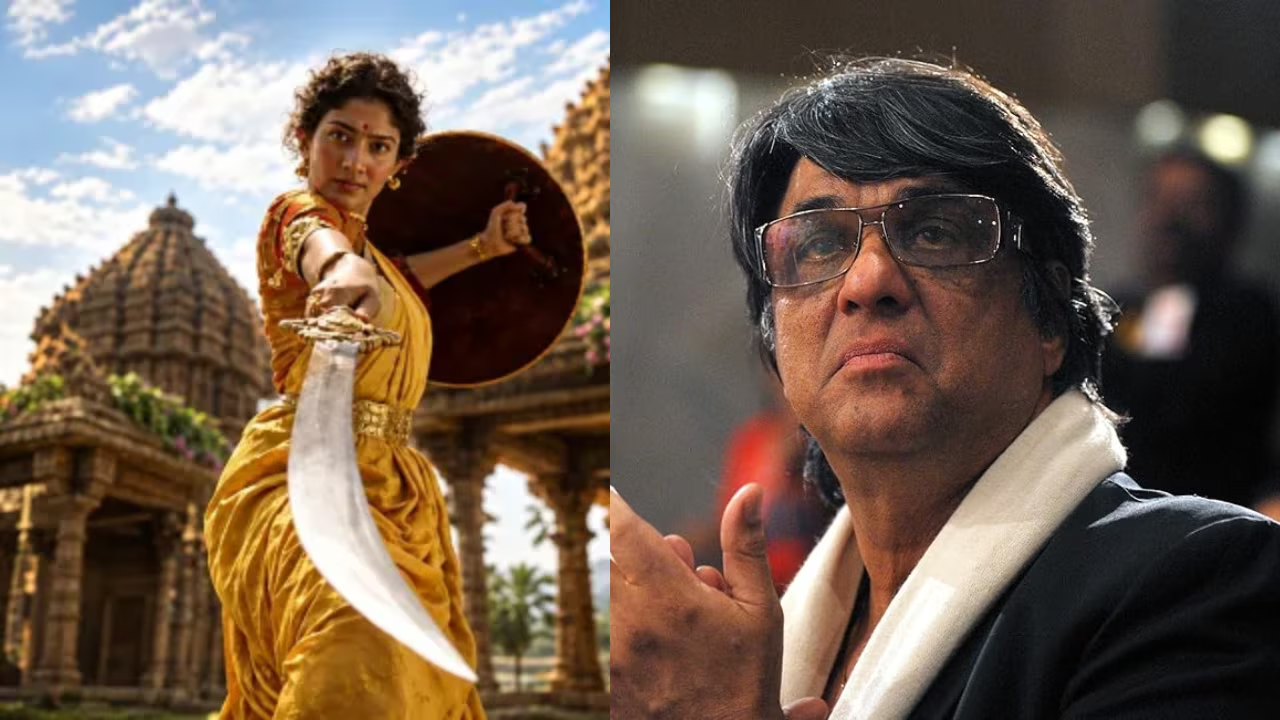
Mukesh Khanna has raised objections to Sai Pallavi’s warrior avatar as Goddess Sita in Nitesh Tiwari’s RamayanaThe veteran actor questions the fight sequence and says the makers should respect Valmiki’s original epic.
Published: November 10, 2026, 4:31 PM IST
Share Article
https://www.india.com/entertainment/bollywood/ramayana-mukesh-khanna-criticises-sai-pallavi-warrior-avatar-as-goddess-sita-says-you-should-be-ashamed-8543681/
Mukesh Khanna reacts to Sai Pallavi’s fight scene (PC: Instagram)
Nitesh Tiwari’s Ramayana continues to spark conversations, and not all of them are about its grand visuals, performances or box-office numbersWhile the film has attracted attention for bringing one of India’s most loved epics to the big screen, certain creative choices have also divided opinionsOne such discussion revolves around Sai Pallavi’s portrayal of Goddess Sita, particularly a sequence in which she is shown fighting demons alongside Lord RamaNow, veteran actor Mukesh Khanna has shared his strong objections to the sceneKnown for playing Bhishma Pitamah in Mahabharat, the actor believes that filmmakers need to be careful while adapting stories that hold religious and cultural importance for millions of people.
Mukesh Khanna objects to Sai Pallavi’s fight scene as Goddess Sita in Ramayana
Mukesh Khanna has strongly criticised the makers of Ramayana for showing Sai Pallavi’s Goddess Sita in a warrior avatarIn a video shared on his YouTube channel (Bheeshm International), the actor questioned the decision to show Sita fighting demons and engaging in combat alongside Lord Rama.
Read more:
Ramayana: Hema Malini reviews Ranbir Kapoor-Yash’s film, says ‘Went with least expectations’
According to Khanna, this particular portrayal does not appear in Valmiki’s RamayanaHe argued that Sita’s character has traditionally been associated with devotion, dignity, and strength, rather than physical fighting.
He also questioned why the filmmakers felt the need to introduce such a sequence into the storyReferring to Sita’s abduction by Ravana, Khanna argued that if she were being presented as a fighter, it raised questions about why she did not fight back during that incident.
While reacting to the fight sequence, the actor said, “Kya aap andaza laga sakate hai ki Sita Mata Rani Jhansi ki tarah fight kar rahi hai ya aajkal ki heroines jo macho ban jaati hai? Maine Valmiki ji ki Ramayan padhiUsmein kahin bhi aisa nahi likha hai ki Sita ji ne kabhi bhi jaakar fight ki hai (Can you imagine Maa Sita fighting like the Queen of Jhansi, or perhaps like the heroines of today who adopt a ‘macho’ persona? I have read Valmiki’s Ramayana; nowhere in it is it mentioned that Sita ever engaged in combat).”
He added, “Woh ek Maryada Purushottam ki patni thi jinhone ne seva bhav dikhaya haiWoh fighter nahi thiAgar woh fighter hoti toh woh Raavan se fight kartiKyun Raavan unhe chup chap pakad ke le gaye (She was the wife of a Maryada Purushottam (an ideal man of supreme righteousness), and she embodied a spirit of serviceShe was not a fighter; had she been one, she would have fought RavanaWhy, then, did Ravana manage to take her away without any resistance?)”
Mukesh Khanna questions Ramayana makers over creative liberties
Mukesh Khanna also raised concerns about filmmakers taking creative liberties with stories that have been part of Indian culture for generationsHe said that the Ramayana and Mahabharat are not ordinary fictional stories and that filmmakers should think carefully before changing the characters or adding new sequences.
He particularly questioned the makers’ explanation that the warrior portrayal of Sita was inspired by the Adbhuta Ramayana, another traditional version of the epic.
He said, “I was in shock after producer claimed that he didn’t take the particular scene from Valmiki’s RamayanaThey said that they took it from the Adbhuta Ramayan bookRamayana ek hi thi jo Valmiki ji ne likhi thiHow can he dare to speak about Ramayan? Yeh himmat aap kisi aur dharam mein karke dikhaiyeKya aap Quran ya Bible se chhed chad kar sakte hai? Agar nahi toh aapki hamare Geeta aur Ramayan se chhed chad karne ki himmat kaise huiStop putting your own narrative in the Ramayana of ValmikiSharam aani chahiye aapko.”
The veteran actor argued that filmmakers should not go beyond Valmiki’s account to introduce scenes according to their own interpretationHe also compared the situation with adaptations of other religious texts, questioning whether similar creative changes would be accepted in films based on the Quran or the Bible.
His comments have added another dimension to the ongoing discussion around artistic freedom and religious sentiments in mythological films.