

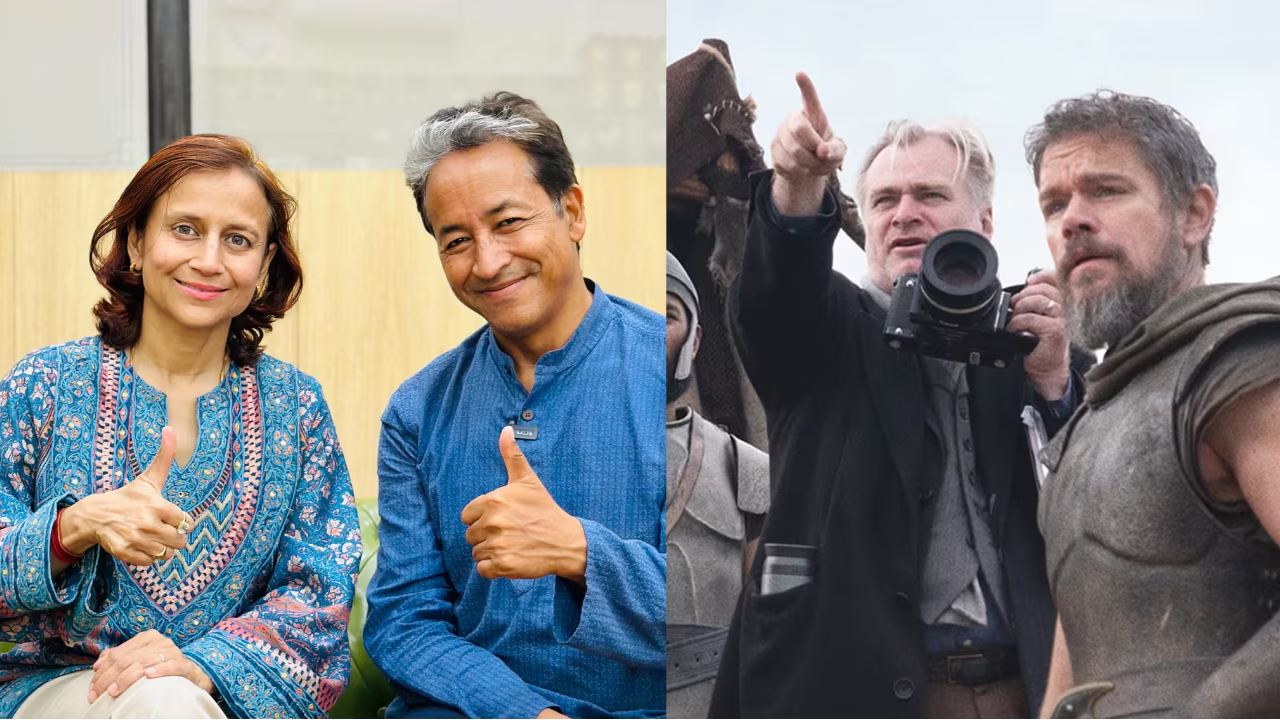
Sonam Wangchuk’s wife Gitanjali Angmo has praised Christopher Nolan’s The Odyssey, urging Indian filmmakers to revisit the country’s rich cultural epics through meaningful storytelling
Published: August 3, 2026, 11:14 AM IST
Share Article
https://www.india.com/entertainment/sonam-wangchuk-wife-gitanjali-angmo-praises-christopher-nolan-the-odyssey-urges-indian-filmmakers-to-revisit-deep-cultural-epics-bollywood-needs-to-rediscover-its-role-8491564/
Sonam Wangchuk’s wife praises Christopher Nolan’s The Odyssey (PC: Twitter)
Christopher Nolan’s The Odyssey continues to spark conversations far beyond its breathtaking visuals and box office successThe latest voice to join the discussion is Gitanjali Angmo, social entrepreneur, and wife of education reformer Sonam Wangchuk, who shared a heartfelt reflection after watching the filmCalling the cinematic experience “surreal”, Angmo praised Nolan’s ability to transform an ancient story into a deeply moving modern filmBut her appreciation didn’t stop thereShe also used the moment to encourage Indian filmmakers to look back at the country’s own vast cultural heritage, suggesting that India’s timeless epics deserve the same depth, care and cinematic ambitionGitanjali Angmo’s post has been appreciated by movie lovers, with many agreeing that Indian storytelling has a treasure trove of legends waiting to be explored.
Gitanjali Angmo says cinema is more than entertainment
After watching The Odyssey, Gitanjali Angmo took to social media to describe the film as a memorable cinematic experienceShe said the film reminded her that cinema has the power to do much more than entertain audiences.
She wrote on X, ” Watched Odyssey yesterdaySurreal to see on screen what was still a conversation when I accidentally met Christopher Nolan in New York in 2024. Its themes feel so familiar to the Indian imagination: the hero’s journey, dharma and destiny, exile, temptation, homecoming, the human being tested and transformed along the way.”
Reflecting on the experience, she shared in her post that great films can preserve history, celebrate culture and leave audiences thinking long after the credits rollGitanjali Angmo also recalled meeting Christopher Nolan in New York in 2024, saying the encounter made watching his latest work even more special.
Watched Odyssey yesterdaySurreal to see on screen what was still a conversation when I accidentally met Christopher Nolan in New York in 2024.
Its themes feel so familiar to the Indian imagination: the hero’s journey, dharma and destiny, exile, temptation, homecoming, the human… pic.twitter.com/Y7sWNXIz2v— Gitanjali J Angmo (@GitanjaliAngmo) August 2, 2026
Gitanjali Angmo urges Indian filmmakers to revisit country’s cultural epics
In her post on X, Gitanjali Angmo also encouraged Indian filmmakers to revisit the country’s own rich mythology and historical narrativesShe suggested that India has countless stories rooted in its civilisation that deserve to be told with authenticity and artistic visionShe further wrote in her post, “India is sitting on a treasure-house of such epicsImagine bringing them to cinema with scale, sensitivity and intellectual depthCinema is more than entertainmentIt shapes mindsPerhaps Bollywood needs to rediscover its role as one of our most powerful classrooms.”
Rather than simply creating large-scale spectacles, she stressed the importance of meaningful storytelling that connects audiences with the country’s cultural rootsHer remarks have resonated with many film lovers, especially at a time when conversations around adapting Indian epics for the big screen continue to grow.
The Odyssey continues to inspire conversations in India
Since its release in July 2026, Christopher Nolan’s The Odyssey has received widespread praise from critics and audiencesBeyond its commercial success, the film has reignited interest in ancient literature and epic storytelling, with many readers picking up Homer’s classic after watching the film.
Angmo’s remarks add another layer to the ongoing conversationHer message is not just about appreciating Nolan’s filmmaking but also about recognising the immense storytelling potential that exists within India’s own cultural heritage.