



There are moments in the evolution of a medical specialty when a conference becomes more than a conferenceIt becomes a statementA landmark global gathering in Mumbai is more than a medical conferenceIt reflects how far Emergency Medicine in India has travelled and where it must go next.
– By Dr Sandeep BGore, Director – Emergency Medicine, Fortis Hospital, Mulund, Mumbai & Organising Chairman, EMCON 2026.
For Emergency Medicine in India, EMCON 2026 in Mumbai is one such momentFrom October 30 to November 1, 2026, emergency physicians, global leaders, researchers, nurses, paramedics, educators, innovators and healthcare administrators will gather at The Westin Mumbai Powai Lake for the 28th National Conference of the Society for Emergency Medicine India which is all set to become biggest ever international academic event in Emergency Medicine in IndiaEMCON returns to Mumbai after 12 years, with more than 2,000 delegates, 300+ national faculty members and 50+ international faculty members expected.
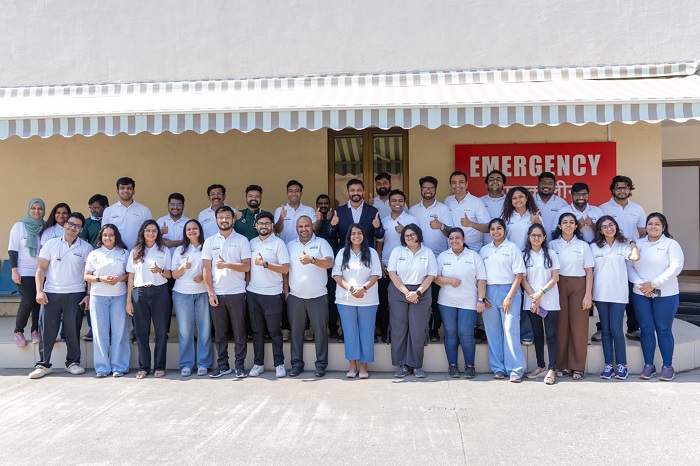 |
Fortis Hospital Mulund’s Dr Sandeep Gore (centre) with young EM fraternity in Mumbai
But numbers alone do not explain why this meeting mattersIts real significance lies in what they represent: the coming of age of Emergency Medicine in India.
Not very long ago, emergency care in many Indian hospitals was considered a transit point, a place where patients arrived before being referred to a physician, surgeon or intensivistThat world is changing.
The modern Emergency Medicine Department is a clinical command centre.
A patient with a blocked coronary artery cannot waitA stroke cannot waitSeptic shock cannot waitPolytrauma cannot waitA compromised airway certainly cannot waitIn those first few minutes, there is often no complete diagnosis and no luxury of timeThe emergency physician must recognise physiological collapse, establish priorities, initiate resuscitation, use bedside diagnostics, mobilise multidisciplinary teams and make decisions whose consequences may last a lifetime.
That is why I have always believed that Emergency Medicine is both the art of rapidly evaluating undifferentiated patients and transforming those presentations into decisive action, and the science of mastering resuscitation.
That philosophy lies at the heart of EMCON 2026Our theme, “Innovation, Collaboration and Excellence in Emergency Medicine,” reflects a simple belief: excellence in Emergency Medicine begins with excellence in resuscitation.
And resuscitation excellence cannot be built by doctors aloneIt requires nurses, paramedics, pre-hospital systems, hospital leadership, policymakers, researchers, technology, industry and collaboration with the global Emergency Medicine community.
Bringing the world to Mumbai
EMCON 2026 reflects how Indian Emergency Medicine is increasingly becoming part of the global conversationThe conference will bring together leaders from apex international Emergency Medicine organisations including the Dr Ian Higginsin – President of Royal College of Emergency Medicine (RCEM), Dr LAntony Cirillo, President of the American College of Emergency Physicians (ACEP), Dr Pauline Convocar – President of the International Federation for Emergency Medicine (IFEM) and Dr Julina Md Noor – President of the World Interactive Network Focused on Critical Ultrasound (WINFOCUS) as keynote speakers.
Another keynote is particularly meaningful to mePadma Shri Dr Himmatrao Bawaskar represents something profoundly Indian in medicine: the ability of meticulous bedside observation, scientific curiosity and perseverance to solve problems affecting patients far away from sophisticated academic centresHis pioneering work in scorpion envenomation reminds us that innovation does not always begin inside an expensive laboratorySometimes, it begins beside a critically ill patient in rural India.
Learning beyond the conference hall
We did not want learning to begin on October 30So, we took EMCON beyond the main conferenceThe 28 pre-conference workshops across institutions and cities cover skills that define contemporary Emergency Medicine, including Point of Care Ultrasound in Emergency Medicine POCUS in EM, Crisis airway management, Mechanical Ventilation in ED, Toxicology, advanced resuscitative simulation, artificial intelligence, Maternal arrest resuscitation, Resuscitative thoracotomy in ED, Clinical Governance in EM, high-reliability Emergency Departments, ECPR in ED bootcamps & Frontline ER (Workshop for paramedics).
The lesson is straightforward: Emergency Medicine cannot be learnt only from a podiumIt’s a hands-on discipline.
Emergency Medicine – Mastering the resuscitation
Emergency Medicine is no longer a new discipline in IndiaIt has become one of the most decisive front doors of modern healthcareOver the last couple of years, I have personally visited around 100 Emergency Medicine Departments across India and personally interacted with hundreds of Emergency Physicians across different states, institutions and healthcare systems government as well as privateThe infrastructure variesResources varyPatient volumes vary enormouslyBut one thing has become increasingly clear to meThe identity of Indian Emergency Medicine is becoming strongerAnd at the centre of that identity is resuscitation.
I often ask a simple question: What are Emergency Physicians masters of?
My answer is equally simpleWe are masters of resuscitation.
That does not mean merely performing CPR or managing cardiac arrestModern resuscitation begins much earlierIt is the ability to recognize physiological deterioration before collapse, understand why a patient is unstable, intervene rapidly, reassess continuously and change treatment based on the patient’s evolving physiologyThis is where Emergency Medicine has changed dramaticallyPoint-of-care testing (POCT) and Point of Care Ultrasound (POCUS) in Emergency Medicine has brought critical diagnostics closer to the bedsideBlood gases, lactate, cardiac biomarkers, ketones and other parameters can now influence decisions within minutes.
Resuscitative Point-of-Care Ultrasound has perhaps been one of the most transformative additions to Emergency MedicineThe Emergency Physician can assess cardiac function, lung pathology, volume status, internal bleeding and haemodynamic response during active resuscitation itself and can observe real time reversal of disease.
The clinical question is no longer simply: “Is the blood pressure low?” The better question is: Why is it low, and what does this patient need now?
Does the patient need fluid?
A vasopressor?
Inotropy?
Blood?
Drainage of a tamponade?
Relief of tension pneumothorax?
Immediate reperfusion?
That shift from generic resuscitation towards physiology-guided, patient-specific treatment represents the high end of Emergency Medicine today.
I describe it as Precision Emergency Resuscitation.
Preparing for the Emergency Department of tomorrow
Medicine is entering an extraordinary period of transformationArtificial intelligence, digital health, point-of-care diagnostics, advanced ultrasound, simulation and extracorporeal resuscitation are expanding what can be achieved during the earliest minutes of illness.
But technology is not the destinationBetter outcomes are.
Innovation without systems creates impressive technologyInnovation integrated into systems saves livesThis distinction is important because the future of Emergency Medicine will depend not only on what technology can do, but on whether we build the teams, training and systems required to use it effectively.
India needs an emergency-care ecosystem
The larger conversation therefore extends beyond EMCON.
India needs to think of emergency care as an ecosystemOur next challenge is to build systems that can deliver the right care, at the right place, in the shortest possible time, whether an emergency occurs in Mumbai or in a small-town hundreds of kilometres from a tertiary hospital.
I have previously described the Emergency Department as the front door of a hospitalIncreasingly, it is becoming something more: the point at which the preparedness of the entire healthcare system is tested.
Mumbai – the natural home for this momentThere could perhaps be no more appropriate city for this gathering than MumbaiMumbai understands emergenciesIt understands speed, uncertainty, resilience and teamworkIn many ways, it mirrors Emergency Medicine itself relentless, responsive and resilient.
When thousands of emergency-care professionals gather here, I hope we do more than exchange scientific knowledgeI hope we ask difficult questions.
How do we make every Emergency Department safer?
How do we bring advanced resuscitation closer to every Indian?
How do we strengthen pre-hospital care?
How do we train the next generation differently?
How do we use AI without losing clinical judgement?
How do we move from individual excellence to reliable systems?
And ultimately: How many more lives can Indian Emergency Medicine save over the next decade? That is the real agenda of EMCON 2026.
This is not just a conferenceIt is a calling.
EMCON 2026 will be hosted from 30 October to 1 November 2026 at The Westin Mumbai Powai Lake, Mumbai.