

World AMR Awareness Week (World Antimicrobial Resistance Awareness Week) is observed annually from 18 to 24 November to raise awareness of drug-resistant infections and promote responsible antimicrobial use across human, animal, plant, and environmental healthFor the 2026 observance, the World AMR Awareness Week campaign uses the theme “One Health, One Action: Prevent AMR Now,” aligned with the updated Global Action Plan on AMR (2026–2036).
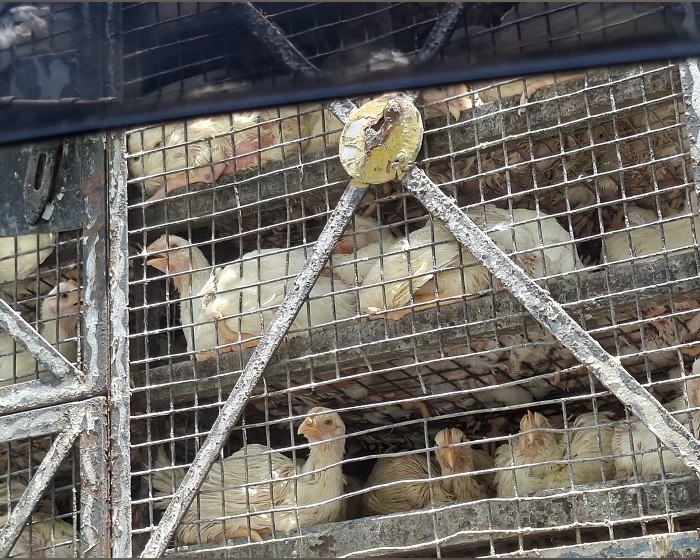 |
Chickens in factory farm conditions in Delhi photograph by Shubhobroto Ghosh
World AMR Awareness Week (WAAW) serves as a critical annual reminder that human health is inextricably linked to the environment and animal welfareWhile public awareness often focuses on the misuse of medicines in human clinics, World Animal Protection highlights a more devastating cause of antimicrobial resistance (AMR), the industrial food systemFactory farming, the commercial exploitation of wildlife, and the resulting contamination of natural ecosystems form a dangerous cocktail that breeds untreatable “superbugs.” World Animal Protection has produced a film on this subject named, ‘The Silent Killer,’: youtu.be/zpV_aC_vkKg?si=o6G21c7WjLYorMq8
Globally, approximately three-quarters of all critical antibiotics are not used to treat sick people, but are fed routinely to farmed animalsIn commercial factory farms, thousands of animals are crammed into stressful, squalid, and overcrowded cages or pens with no access to natural lightTo prevent these animals from dying due to poor immunity caused by severe stress and psychological distress, industrial systems rely on mass prophylaxis that involves dosing entire herds or flocks in their communal feed and water supply systems.
According to available research, the vast majority of global antimicrobials in animal agriculture are used for prevention or as artificial growth promoters rather than for targeted, individual medical treatmentThis mass, low-dose exposure provides an ideal evolutionary incubator for bacteria to mutate, develop resistance, and transform into lethal superbugsThese resistant pathogens then exit the farm gates and find their place on the meat itself, threatening consumers with hard-to-treat foodborne illnesses worldwide.
The threat of AMR does not stop at the agricultural perimeter, it leaks heavily into the environment and impacts wildlife and wildlife habitatSuperbugs and antibiotic residues escape factory farms through untreated manure spread on crop fields, liquid waste discharged directly into nearby waterways, and airborne dust traveling from massive ventilation systemsThis process creates a severe ecological crisis for wild animalsWhen rivers, soils, and natural foraging habitats are contaminated with industrial farming waste, wild animals, from migratory birds to rodents and aquatic animals ingest these resistant pathogensThis toxic exposure disrupts the natural homes of wild animals and leaves them vulnerable to disease.
Furthermore, the commercial exploitation of wildlife for traditional medicine, luxury meats, and the exotic pet trade mimics the worst conditions of factory farmingWild animals captured and bred in intensive captivity suffer high stress and crushed immune systems, leading breeders and traders to routinely dose them with antibioticsThe resulting zoonotic spillover risks are two-fold, not only can new viruses emerge from wildlife markets, but they can be accompanied by drug-resistant bacterial infections that modern medicine cannot easily cure.
World AMR Awareness Week strongly champions the One Health framework, which recognises that human, animal, and environmental health are a single, interconnected systemTo halt the rise of superbugs, World Animal Protection argues that society must fundamentally transform global food systems away from intensive confinement that is inherent in factory farming of animals, including cows, pigs, chickens, ducks, turkeys and other animals.
The primary solution lies in adopting high-welfare farming practices and responsibly limiting the use of antibioticsWhen animals are raised with adequate space, natural light, and low-stress environments, they develop robust, natural immunityThis naturally eliminates the need for routine, preventative antibioticsAdditionally, enacting global moratoriums on the expansion of factory farming will prevent further environmental antibiotic pollution and protect local wildlife habitats from waste and effluents of factory farmingOn 18 November, 2026, the United Nations World Health Organization declared that, “Common bacteria are becoming highly resistant to front-line and even “last-resort” antibiotics,” warning that the situation today is worse than it was in 2019.
Finally, a global shift toward plant-based diets can reduce the overall demand for intensive animal agricultureUltimately, safeguarding life-saving antimicrobial medicines requires an urgent end to the cruel practices of factory farming and the exploitation of wildlife“True global health security cannot be achieved without putting animal welfare at the heart of our food production systemsIntensive farming practices and the irresponsible use of antibiotics pose serious risks to animal health, human health and the environmentWe need to move towards more humane, equitable and sustainable food systems that prioritise animal welfare, responsible antibiotic use and a greater shift towards plant-based proteinsIn India, World Animal Protection is working with corporates and other stakeholders to integrate these principles into food production practices and supply chainsBy making animal welfare an integral part of responsible food production, we can contribute to preventing antimicrobial resistance and building a healthier future for animals, people and the planet,” says Gajender Kumar Sharma, Country Lead, World Animal Protection.
For more information, please contact: Gajender Kumar Sharma, Country Lead, World Animal Protection
Email: [email protected]
Mobile phone: 9313333283