


A large-scale study of yoga-based cardiac rehabilitation (Yoga-CaRe), funded by the Indian Council of Medical Research and coordinated by the Centre for Chronic Disease Control, under the leadership of ProfDorairaj Prabhakaran MD, DM, Executive Director, CCDC, and President-Elect, World Heart Federation, among people having heart failure with reduced ejection fraction improved quality of life, functional capacity, and quality-adjusted utility indexAlthough clinical events fell by 10%, the reduction was not statistically significantThe authors presented these results as a late-breaking science at the American Heart Association’s Scientific Sessions on November 7, 2026, in Chicago.
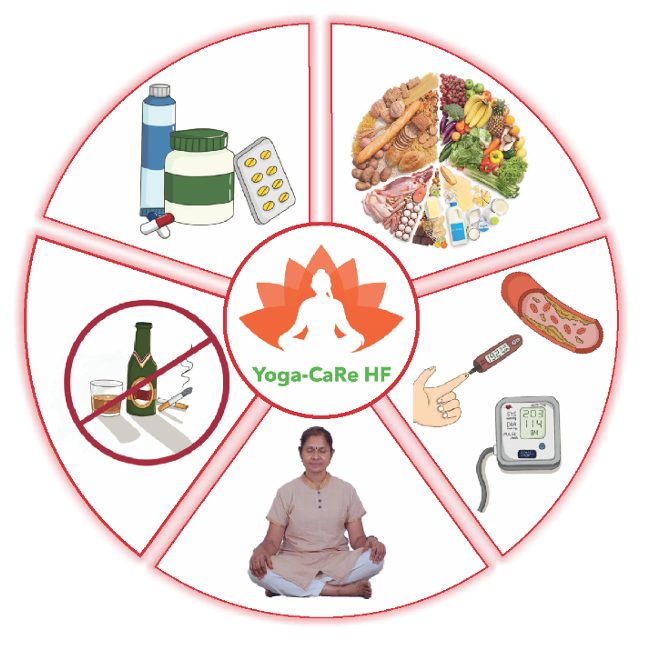 |
The Yoga-CaRe HF programme combines yoga, medication, nutrition and lifestyle modifications to support heart failure management and improve quality of life
“Improving quality of life and functional capacity in patients with heart failure is essential everywhere but particularly in India, where roughly 1.8 million new heart failure cases are diagnosed each year, and very few receive cardiac rehabilitation,” said Dorairaj PrabhakaranGlobally, the Yoga-CaRe HF trial is the largest cardiac rehabilitation trialWe demonstrated that a comprehensive multicomponent program, delivered by a single trained person, can be an alternative approach to multidisciplinary team-based conventional cardiac rehabilitation in India and other resource-constrained settingsHe also said that guideline-directed medical management, complemented by Yoga-CaRe, can help patients live longer with better quality of life.
The clinical study was conducted in nearly 3,500 people having heart failure with reduced ejection fraction recruited through 16 hospitals across the countryPatients were randomly allocated to receive either enhanced standard care, which includes three health education sessions using a “Healthy Living with Heart Failure” booklet over three months, or a Yoga-based cardiac rehabilitation program.
The Yoga-CaRe program involves three major components – a) health education with the “Healthy Living with Heart Failure” booklet; b) guided behaviour change, which involves goal-setting-based approaches to improving patients’ inadequacies in lifestyle behaviours and control of risk factors to foster patient engagement; and c) a standardized set of yoga practices including physical postures (asana), breathing practices (pranayama) and meditation and relaxation practices tailored to patients exercise capacityA board-certified Yoga & Naturopathy practitioner was trained to delivered the program. The patient training consisted of 20 sessions (both in-person and online) over three monthsPatients were advised to practise yoga at home for 50–55 minutes daily for up to 24 months and adhere to lifestyle changes, supported by a booklet and recorded videosParticipants attended a median of 19 supervised sessions and practised at home approximately five days a week for 35–40 minutes per day.
ProfSC Manchanda, Former Head, Department of Cardiology, All India Institute of Medical Sciences, New Delhi, Senior Consultant Cardiologist, Sir Ganga Ram Hospital said, “For me, yoga is a lifestyle polypill with much relevance for all cardiac patientsThe board-certified Yoga & Naturopathy physicians who delivered the Yoga-CaRe program motivated patients to practice yoga almost every day, with around 255 minutes of home practice per weekImportantly, they were able to improve several health behaviours such as physical activity, dietary changes, and avoidance of tobacco and alcoholThese holistic changes are the essential components of a cardiac rehabilitation programI am delighted to be a part of yet another landmark trial led by ProfPrabhakaran, building on more than three decades of our work on Yoga’s role in other cardiac conditions.
At three months after enrolment, patients who underwent the Yoga-based cardiac rehabilitation program had a better quality of life as measured by the Minnesota Living with Heart Failure Questionnaire (MLHFQ, 8.1 unit improvement in comparison to the control group), increased distance walked in six minutes (25.5 meters higher than the control group) and quality-adjusted utility-values (0.05 higher than the control group)All these differences were statistically and clinically significant, and importantly they persisted through 24 monthsAmong patients who performed prespecified duration of yoga practice, it led to a reduction in the composite clinical event of death, hospitalisation, and stroke.
ProfAmbuj Roy, Department of Cardiology and Head, Skill, e-Learning and Telemedicine Facility, All India Institute of Medical Sciences, New Delhi, and co-lead of the study said, “Guideline-directed medical management in heart failure with reduced ejection fraction has improved remarkably over the last couple of decades, and we have been able to transfer those benefits to our patientsHowever, the penetration of cardiac rehabilitation benefits has been limitedThis trial addresses that major gap in our patient care and will help improve the quality of life of the patients living with this debilitating diseaseHe added that this trial, along with a similar large trial in patients with heart attack done earlier by the same group, is also a testament that traditional practices like yoga can be tested through the most rigorous modern scientific methods of efficacy testingSuch studies provide greater credence for our traditional practices as medicine today demands evidence before adoption into practice guidelines.
The number of people who died or who were admitted to hospital for emergency care (not including the planned elective hospital admissions) was numerically lower in the Yoga-CaRe groupHowever, these differences were not statistically significantPatients also showed notable improvements in frailty and tobacco cessationVery importantly, caregivers’ quality of life improved with a reduction in depression.