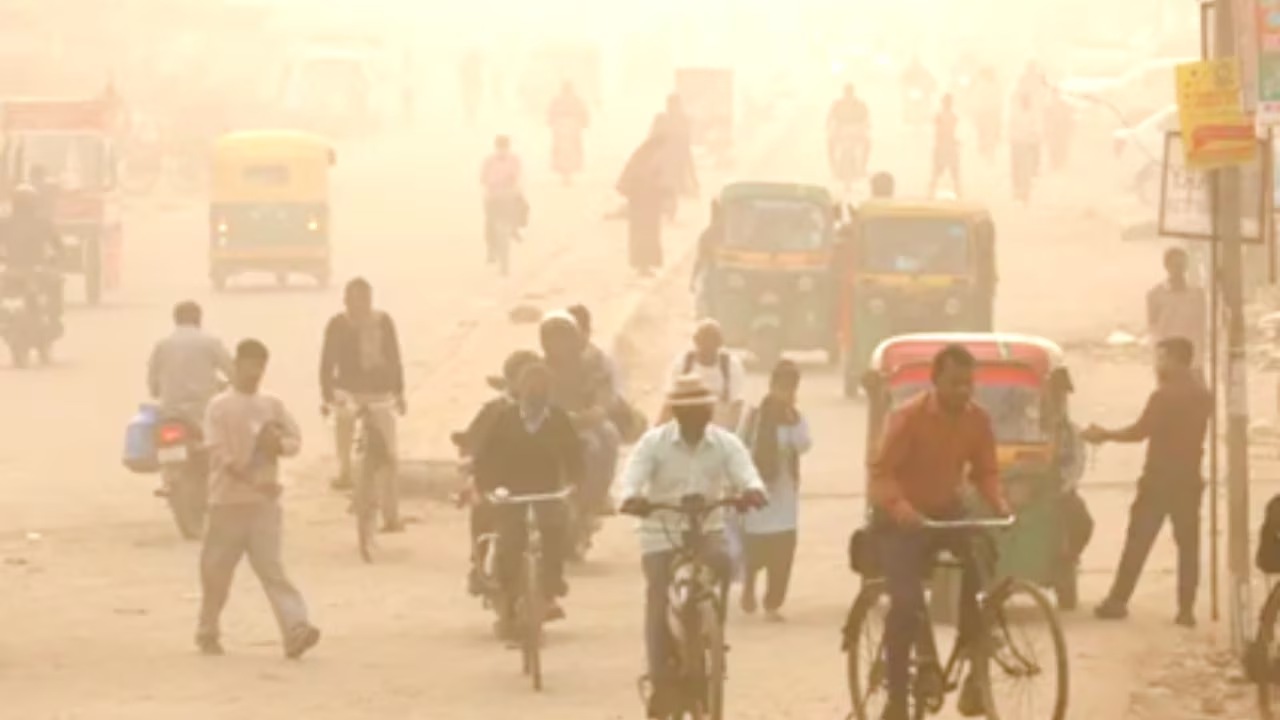
Delhi will completely ban construction activities from December 10 to January 20 to tackle winter air pollution.
Share Article
https://www.india.com/news/india/banned-delhi-government-completely-bans-construction-activities-from-this-date-to-curb-air-pollution-smog-aqi-delhi-air-quality-8506771/
BANNED: Delhi government completely bans construction activities from this date to curb air pollution | Image: ANI
Delhi Bans Construction Activities: Taking a major step to curb air pollution during the winter season, the Delhi government has completely banned construction activities from December 10 to January 20Giving details, Chief Minister Rekha Gupta said that the Delhi government will monitor construction sites above 500 square metresShe took to X and requested citizens to report any kind of violation, saying construction sites above 500 square metres will be monitored by the Dust Portal and AI-enabled cameras.
“Construction will be completely banned from 10 December to 20 JanuaryIf you spot any violation, inform MCD, your MLA, or me directly,” she said.
CM Gupta stated in the 2025 winter season, despite the implementation of Graded Response Action Plan (GRAP), construction activities at some sites had continued, with work being carried out behind covers.
“Last time, even under GRAP, some construction continued behind covers,” she said.
Inform, tag, complain and stop them!
Last time, even under GRAP, some construction continued behind covers.
This time, sites above 500 sqmetres will be monitored through the Dust Portal and AI-enabled camerasAlerts will reach our Control and Command CentreNotices,… pic.twitter.com/5H2EOn3zUw
— Rekha Gupta (@gupta_rekha) August 21, 2026
The Delhi Government is going to monitor such sites in real time via the Dust Portal and AI-enabled camerasThe government’s Control and Command Centre has already been instructed.
“Notices, warnings and fines will follow,” Gupta wrote, urging people to “inform, tag, complain and stop them”.
To strengthen monitoring, the Delhi government launched the AI-powered Dust Portal 2.0 to improve and enhance the monitoring system. The portal is capable of integrating compliance at construction sites that are above 500 square yards.
The system issues colored alerts (yellow, orange, red) based on pollution levels and automatically sends out compliance certificates or violation notices online.
The upgraded portal lets officials and contractors monitor construction sites remotely through live cameras, sensor data and AI analysisIt also has a dashboard option to track pollution trends, district data and high-risk hotspots.