The Supreme Court has sought suggestions for former judges, ex-DGPs and retired CBI directors to form a panel investigating alleged excessive force against protesting students.
Published: August 18, 2026, 7:50 PM IST
Share Article
https://www.india.com/news/india/big-development-in-july-20-cjp-protest-as-sc-to-form-panel-to-probe-police-excesses-against-students-8504565/
(File)
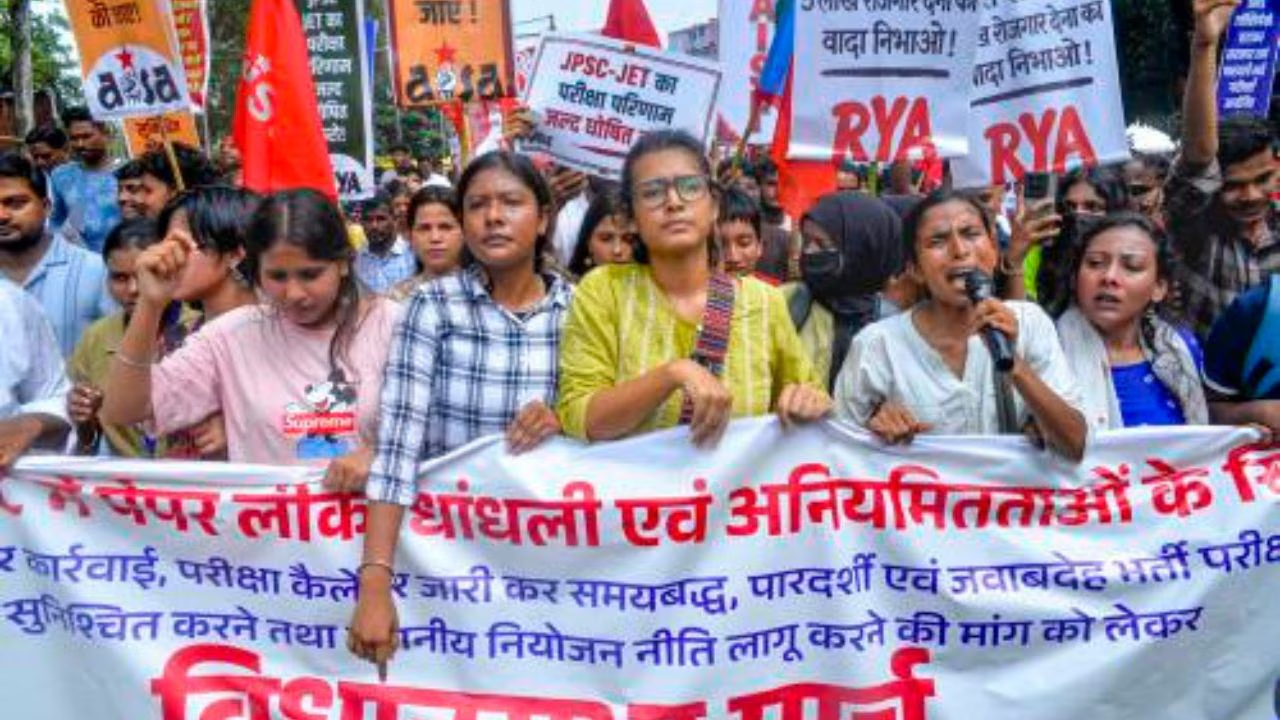
New Delhi: The Supreme Court on Tuesday announced its decision to constitute a high-powered fact-finding committee to scan CCTV footage of the students’ march from Jantar Mantar towards Parliament on July 20 and investigate allegations of police excessesA bench headed by Chief Justice Surya Kant sought suggestions from the parties on former judges, ex-DGPs or retired CBI directors who could be included in the panel that will examine the question of whether excessive force was used against students protesting against NEET paper leak and irregularities in other testsHere are all the details you need to know about Apex court said on student protests in Delhi and Bihar.
What Apex court said on student protests in Delhi and Bihar?
The apex court was hearing a batch of petitions related to student protests in Delhi and BiharDuring an earlier hearing, the apex court had said that the right to peaceful protest was “absolutely guaranteed”, noting that a “lathi charge” cannot be justified merely because there is an agitation.
Read more:
Jharkhand students protest big update: Rahul Gandhi backs protesters, writes to ally CM Hemant Soren
On Tuesday, the apex court said that the fact-finding committee may be asked to present periodic reports so that the bench could pass necessary directions, especially in the backdrop of alleged sexual assault and online harassment of female protestors, a report by IANS news agency said.
Also read: Big action amid row over AK-47 use during student protest as top cop in Bihar’s Siwan transferred
‘There can be no excuse and no justification’: Supreme Court on protest
“Whosoever is responsible, there can be no excuse and no justificationIt must be taken seriously and taken to its logical conclusionThat is why we are constituting a high-powered committeeThe committee will look into each and every aspect of these matters,” said the bench headed by CJI Surya Kant.
The CJI, however, clarified that larger constitutional questions related to facial recognition technology, surveillance and privacy will be decided by the apex court itself and not by the committee.
(With inputs from agencies)