
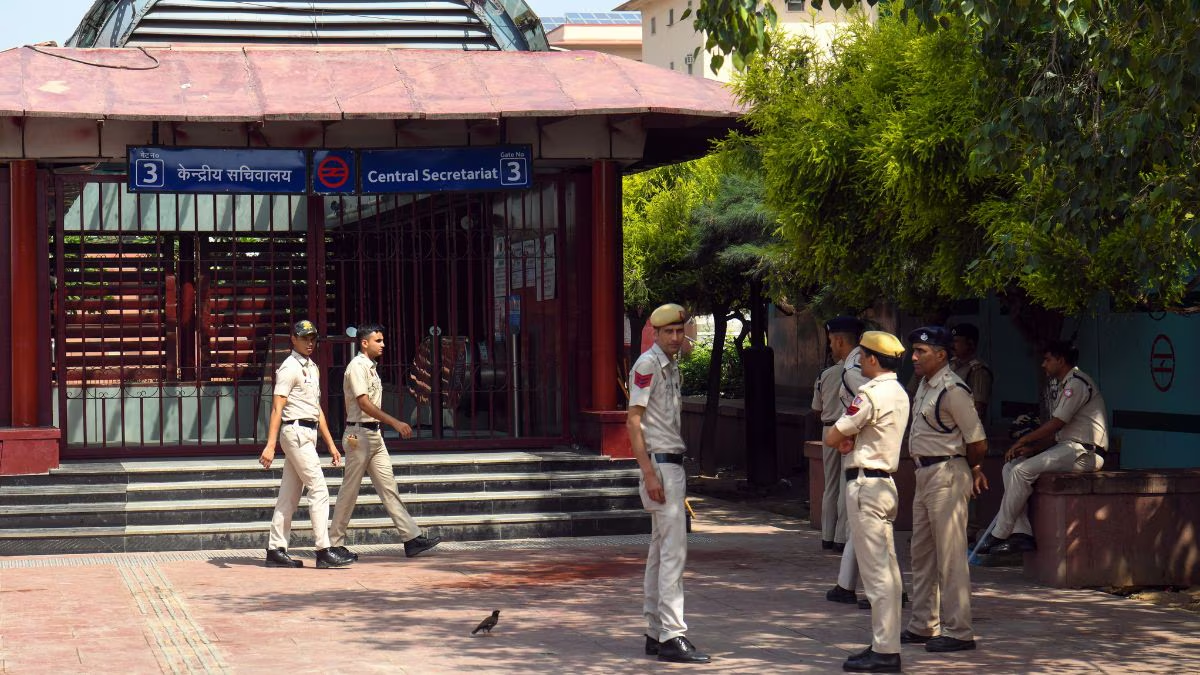
Commuters come first, the court signalledEverything can’t be shut, it told the Centre, because people travel from every corner of the cityIt asked for a rethink on the metro and train restrictions.
Published: October 9, 2026, 4:40 PM IST
Share Article
https://www.india.com/news/india/supreme-court-raps-centre-police-asks-authorities-to-regulate-movement-ahead-of-cjp-october-10-protests-saya-cant-put-a-complete-ban-on-trains-capital-8534401/
The Supreme Court raped Delhi Police Police and Centre over the closures of several metro stations in the national capital ahead of the CJP protestsRepresentational image
The Supreme Court on Friday directed authorities to ensure that metro services are not fully suspended ahead of the October 10 protests in Delhi, and asked the Centre to consider regulated operations of the metro and other rail services to spare commuters inconvenienceHearing a plea challenging the restrictions in the national capital, a bench of Chief Justice of India Surya Kant and Justices Joymalya Bagchi and V Mohana underlined the difference between a complete prohibition on movement and the regulation of public transport in the interest of law and order.
Recording the assurance given by Solicitor General Tushar Mehta, appearing for the Centre, the apex court said the authorities would reconsider the restrictions and allow metro trains and other railway services to operate in a suitably regulated manner, keeping in mind the principle of proportionality.
“…there shall be no complete prohibition on the movement of metro trains,” the top court clarified in its order.
Read more:
CJP to hold October 2 Mumbai rally against CEC Gyanesh Kumar: Here’s all you need to know
Ensure regulated movement
The bench further directed the authorities to ensure that their decision on the regulated movement of metro trains and other railway services receives wide publicity so that commuters are informed in advance and further inconvenience is avoided“Such a decision shall be given wide publicity to avoid further inconvenience to commuters,” the apex court saidDuring the hearing, the CJI expressed concern over the complete closure of metro station entry gates, pointing out that the restrictions affected thousands of people travelling to Delhi from Gurugram, Greater Noida and other parts of the national capital region for work and education.
The bench observed that students, employees and senior citizens depend on public transport for their daily commute and that security measures should not bring movement to a complete halt“Solicitor… we are mainly concerned about the complete closure of these metro station entriesWe have serious concerns about thisOur concern is not with respect to any protesters or any individualOur concern is about the hundreds and thousands of commuters who come from Gurugram, Greater Noida, East Delhi and South Delhi to Delhi for their livelihoodThey are students, employees and senior citizens who travel by public transportWe are speaking on behalf of the common citizens of this city,” said the CJI.
“The law enforcement authorities are certainly entitled to take regulatory measuresThere is no doubt about thatIf you want to restrict unruly movement, you can do so, but that does not mean you can bring everything to a halt and leave people without any transport facilityEverybody does not have a carEverybody does not have access to private transportPeople depend on public transport,” the bench further saidThe apex court stressed that while law enforcement authorities were entitled to regulate movement to maintain law and order, such measures must remain proportionate and take into account the rights and needs of the general public.
Appropriate measures to be taken
Solicitor General Tushar Mehta assured the court that he would take its concerns back to the government and that proportionate measures would be consideredMeanwhile, the bench asked the Centre to take an appropriate decision on reconsidering Jantar Mantar as the designated protest venue and identifying an alternative location, after Solicitor General Tushar Mehta assured it that the government would consider redesignating the protest siteThe top court was hearing the petitions filed by CPI(M) General Secretary MA Baby and other petitioners challenging the curbs imposed by the authorities ahead of the protests.
The apex court’s directions came amid restrictions imposed in Delhi ahead of the proposed October 10 protestsThe bench underscored the need to balance security considerations with the public’s ability to access essential transport servicesSenior advocate Kapil Sibal mentioned the matter for urgent hearing regarding the restrictions imposed in Delhi ahead of the October 10 protest called by the Cockroach Janata Party (CJP) against Chief Election Commissioner Gyanesh Kumar.
Sibal, appearing for Baby, flagged the cancellation of trains to Delhi, closure of metro stations, internet curbs and restrictions on hotel bookings“What is happening to my country?” he asked“All trains have been cancelled, 57 metro stations are shut, people are being denied accommodation in hotels, and Nizamuddin has been closedRWAs are reportedly being told not to allow people to step outWhat is happening to my country? This is a peaceful protestHow can this be allowed to happen?” said Sibal.
With inputs from ANI