
India has criticised a UN report by special rapporteur Ben Saul for factual errors concerning underworld don Dawood IbrahimIndian diplomat Raghoo Puri questioned the report’s accuracy and impartiality, reiterating New Delhi’s claim that Ibrahim is based in Pakistan and calling for greater accountability in UN reporting.
Share Article
https://www.india.com/news/india/dawood-ibrahim-in-same-country-where-osama-bin-laden-was-found-india-flags-factual-errors-in-un-report-rapporteur-ben-saul-8537996/
(ANI)
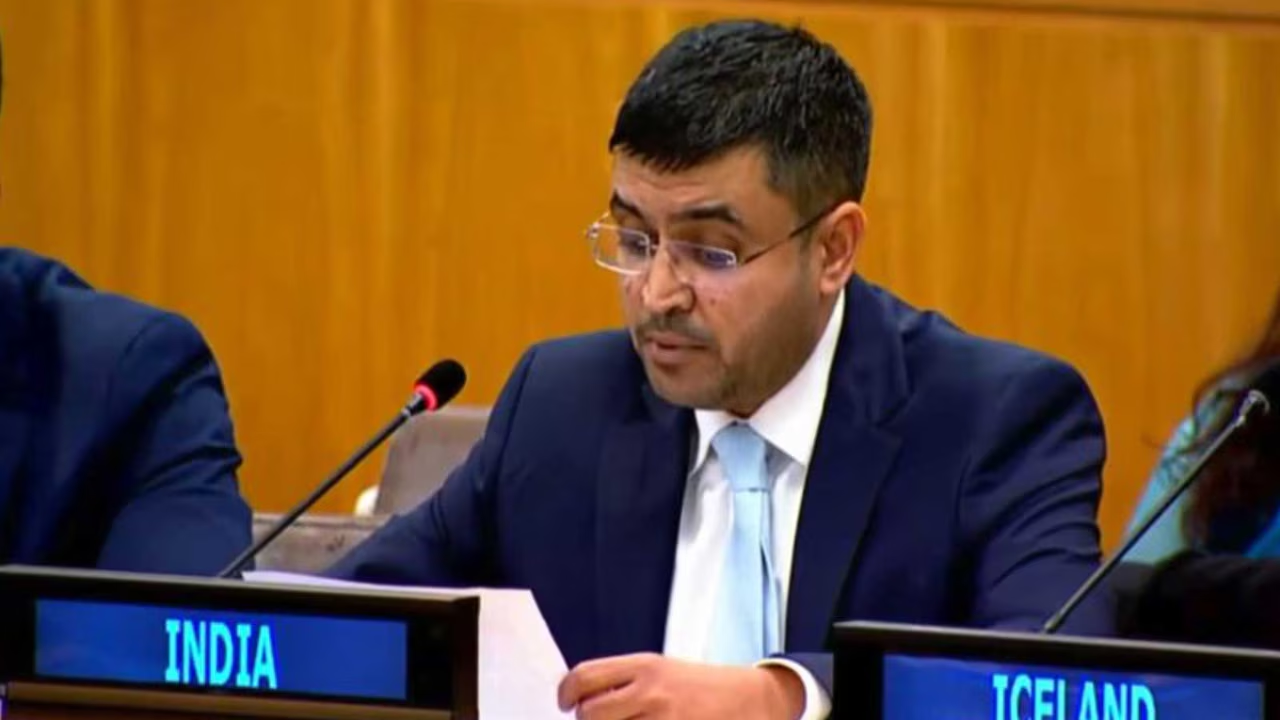
India has strongly criticised a United Nations report for describing underworld don Dawood Ibrahim as the leader of an India-based criminal network, saying the claim ignores important facts about his history and whereaboutsSpeaking at the UN, Indian diplomat Raghoo Puri, First Secretary at India’s Permanent Mission to the United Nations, raised concerns over a report by Ben Saul, the UN Special Rapporteur on the promotion and protection of human rights and fundamental freedoms while countering terrorism.
Puri said the report contained serious factual errors and called for greater accountability when such reports make claims about countriesHe warned that inaccurate information could damage the credibility of the United Nations.
The dispute centres on Dawood Ibrahim, who is wanted in India in connection with the 1993 Mumbai serial bomb blasts and is listed under the UN Security Council’s sanctions regime for links to al-QaedaIndia maintains that he fled the country before his listing in 2003 and is living in Pakistan.
India questions Dawood Ibrahim reference in UN report
Addressing the issue, Puri said the report’s reference to the 2003 listing presented an incomplete picture of Dawood Ibrahim’s backgroundHe pointed out that Dawood and his criminal network, D-Company, had been linked to terror attacks in India since 1993According to the Indian diplomat, this information is included in the UN Security Council’s official listing records.
Puri argued that leaving out this history could give readers a misleading understanding of the case.
He also said Dawood had left India before being listed by the UN for his association with al-Qaeda and Osama bin Laden.
India has repeatedly maintained that Dawood is in PakistanIn a statement to Parliament in 2015, the Indian government said it had provided Pakistan with information about his reported addresses and Pakistani passports and had asked Islamabad to locate and hand him over to IndiaPakistan’s authorities have not publicly confirmed his presence there.
The UN Security Council’s sanctions records list Dawood Ibrahim under its al-Qaeda-related sanctions framework and include addresses in Karachi, PakistanThese records are central to India’s argument over the report’s description of the wanted fugitive.
“The report mentions that in 2003, the Security Council listed the leader of one criminal group, D-Company, for association with Al-QaedaRead in isolation, this line paints a very different picture from the actual realityThis organization and its listed leader, Dawood Ibrahim, has been wanted in India for terror attacks since 1993This is clearly written in the narrative summary of reasons of listing under the 1267 sanctions regimeNot mentioning this fact is regrettable, and such incompetent— incompetence on part of special mandate holders does this organization tremendous harmLet me correct it for the recordThis individual fled India much before the 2003 listing, and it was during this period, from outside our country, that he was listed for being associated with Al-Qaeda and with Osama bin LadenTo date, he remains a wanted criminal in my country, and as per the UN’s listing entry, resides in the same country where Osama bin Laden was found and neutralized,” the Indian diplomat said.
India raises concerns over impartiality
Puri also questioned the fairness of the report and called on UN special mandate holders to maintain high standards of accuracy, independence and impartiality.
He said reports containing serious factual errors, without an effective system of accountability, could harm the standing of the international organisation.
The diplomat also expressed concern about what India sees as bias in parts of the reportHe argued that human rights principles should not be used to defend terrorism or justify the actions of those responsible for violent attacks.
Special rapporteurs are independent experts appointed by the UN Human Rights Council to examine specific human rights issues or country situationsThey are not UN employees and do not receive a salary directly from the organisation for their workTheir reports are intended to provide independent assessments and recommendations.
India targets Pakistan over terrorism
During his remarks, Puri also criticised Pakistan over its statements against India at the United NationsHe accused Islamabad of using international platforms for political purposes and reiterated India’s position that terrorism cannot be justified under the cover of human rights.
India has long accused Pakistan of providing shelter to individuals wanted in connection with attacks on Indian soilNew Delhi has repeatedly pointed to the discovery of al-Qaeda leader Osama bin Laden in Abbottabad, Pakistan, in 2011 as an example of its concerns about terrorist safe havens.
Bin Laden was killed by US forces during an operation in Abbottabad, a city with a major Pakistani military presence.
India has also demanded action against those accused of planning and carrying out the November 2008 Mumbai terror attacksSeveral suspects linked to the attacks have been the subject of long-running investigations and legal proceedings.
Puri has also rejected the Pakistani delegation’s remarks concerning Jammu and Kashmir and Ladakh, describing them as politically motivated.