



Permission was denied for today’s CJP protest at Jantar MantarPolice detained several protesters who had arrived without permission.
Updated: October 10, 2026, 1:12 PM IST
Share Article
https://www.india.com/news/india/delayed-information-poor-track-record-why-was-cjp-denied-permission-to-protest-at-jantar-mantar-8534664/
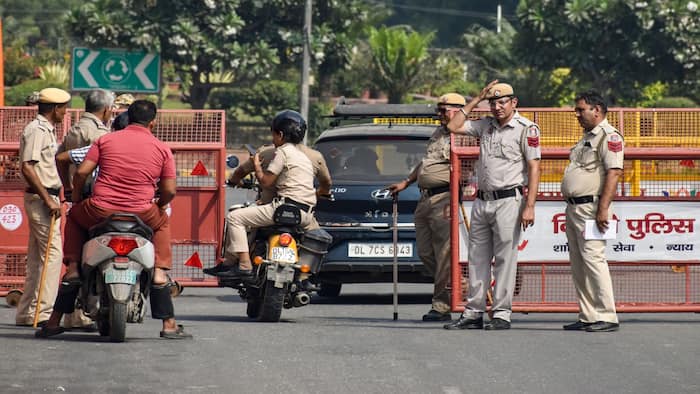
Security personnel stand guard and inspect as heavy police deployment and entry restrictions are enforced ahead of a planned protest by Cockroach Janta Party (CJP) members against Chief Election Commissioner (CEC) Gyanesh Kumar (PTI)
A dispute has erupted between the police and the Cockroach Janata Party (CJP) in Delhi over a protest by the partyThe CJP had announced a protest against Chief Election Commissioner Gyanesh Kumar at Jantar Mantar on October 10thHowever, the Delhi Police denied permissionDespite this, party supporters arrived in Delhi for the protestPolice detained over 150 protesters, including CJP leaders Abhijeet Dipke, Sourav Dam, Ashutosh Ranka, and Dhruv Rathi.
The Delhi Police cited three main reasons for denying permission for the protestFirst, the delay in providing information about the protestSecond, the failure to adhere to the conditions set for previous protestsThird, concerns about law and order and securityThe police say that the CJP provided information on October 7th, while the protest was scheduled for October 10thThis means the police only had three days to prepare.
The question is: is it necessary to obtain prior permission for a demonstration in Delhi? How many days in advance does one have to apply? Can the police stop any demonstration? Let’s understand the whole matter.
Reason 1: Delay in providing performance information
The Delhi Police says that applications for demonstrations at Jantar Mantar must be submitted at least 10 days in advanceThis gives the police sufficient time to prepare for security and traffic arrangementsThe CJP submitted its application for the October 10th demonstration on October 7th, thus submitting its application well behind schedule.
During a protest at Jantar Mantar, the police have to manage crowd size, security, and trafficThe surrounding area also houses government offices and other important locationsPolice say that receiving last-minute information could complicate necessary preparations.
Second reason: Allegations of CJP not following the previously agreed conditions
The Delhi Police also cited the CJP’s record of past protests as a reasonNew Delhi ‘s Joint Police Commissioner, Nupur Prasad, stated that the organization had not followed established guidelines and legal requirements during previous protestsThe police allege that prior assurances and directives were violatedThis raises questions about granting permission this time.
Third reason: Concerns about law and order and security
Police have also expressed concerns about public safety and traffic managementThe protests at Jantar Mantar and the surrounding area could disrupt road trafficMaintaining security could also become challenging if the crowds swell.
In addition, the police cited restrictions imposed under Section 163 of the Indian Civil Security Code (BNSS)Under this section, the administration can prohibit the assembly of people under certain circumstances, with the aim of preventing imminent danger or public disorder.
What are the rules for permission to protest in Delhi?
To hold a demonstration anywhere in Delhi, organizers must submit an application to the relevant police officerFor demonstrations at Jantar Mantar, the application process applies to the Deputy Commissioner of Police of New Delhi DistrictThe application must include the purpose of the demonstration, the date, time, information about the organizers, and the expected crowd size.
The police assess security and traffic conditions based on this informationIf necessary, certain conditions may be imposed on the organizersSimply informing the police does not equate to receiving permissionThe permission process must be completed.