

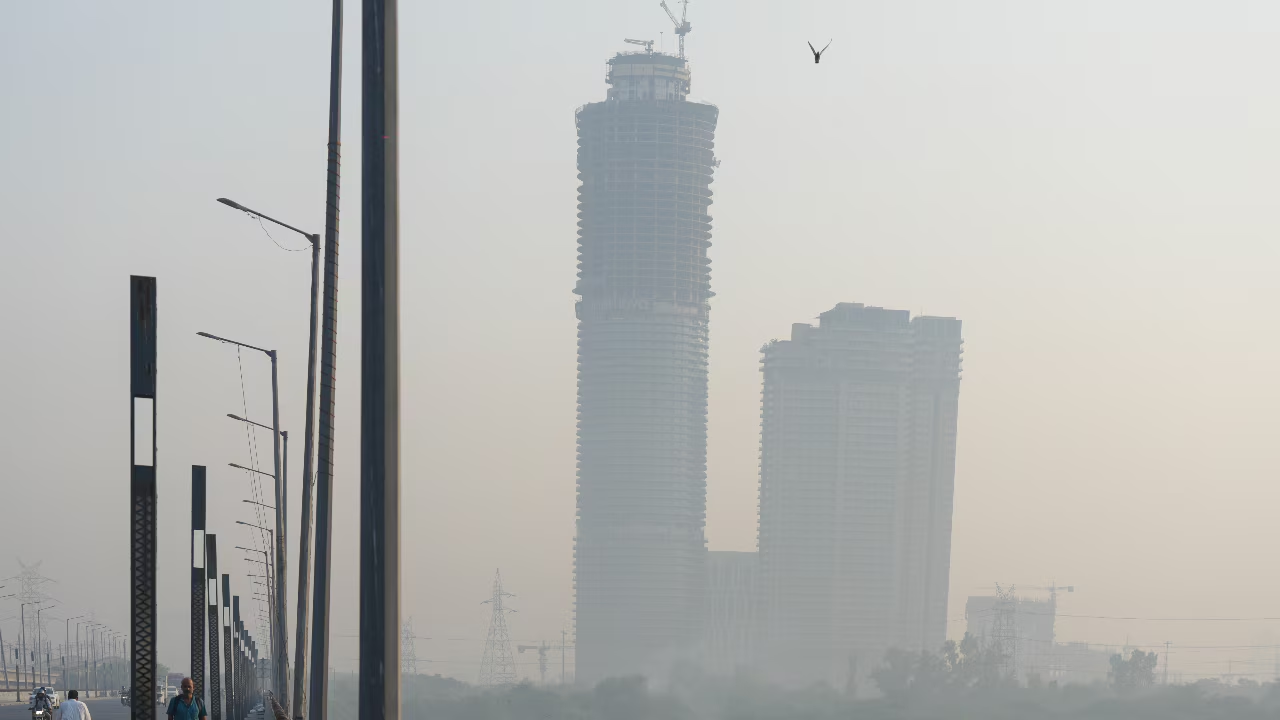
Delhi recorded an overall AQI of 175 on Tuesday, with several areas reporting poor air quality despite the city remaining in the moderate categoryMeanwhile, temperatures continued to fall, with light rain forecast later this week.
Share Article
https://www.india.com/news/india/delhi-ncr-pollution-aqi-update-jahangirpuri-mathura-road-rohini-most-polluted-areas-as-capital-wakes-up-to-hazy-skies-check-aqi-in-your-area-cpcb-8539565/
Delhi-NCR pollution update: Jahangirpuri, Mathura road, Rohini most polluted areas as Capital wakes up to hazy skies; Check AQI in your area (Image: PTI)
Delhi woke up to a hazy morning on Tuesday as air pollution continued to affect the national capitalThe city’s Air Quality Index (AQI) stood at 175, placing it in the ‘moderate’ category, according to data from the Central Pollution Control Board (CPCB) recorded at 7 amAlthough the overall AQI remained moderate, several parts of Delhi reported higher pollution levels, with some monitoring stations entering the ‘poor’ categoryCRRI Mathura Road recorded the highest AQI among the listed stations at 257, followed by Jahangirpuri at 251, Rohini at 239 and R.KPuram at 230.
Other areas with relatively high pollution levels included Mundka at 229, Dwarka Sector 8 at 223, IIT Delhi at 216, Bawana at 214, Sirifort at 214 and IGI Airport Terminal 3 at 211Wazirpur recorded an AQI of 203, while Chandni Chowk stood at 201.
Several locations reported moderate pollution levelsBurari recorded an AQI of 146, Badarpur 131, Vasundhara Enclave 130, Shadipur 148 and Mandir Marg 158Anand Vihar registered 175, while Pusa recorded 178.
Fine particulate matter, known as PM2.5, and coarser particles called PM10 were identified as the main pollutants affecting Delhi’s air.
Air Quality in Delhi-NCR
Pollution levels across neighbouring cities also remained in the moderate category on Tuesday morningGurugram recorded an AQI of 165, while Noida stood at 139 and Ghaziabad at 133Faridabad reported an AQI of 117, followed by Greater Noida at 115.
PM2.5 and PM10 were the main pollutants in Gurugram, Noida, Ghaziabad and Greater NoidaIn Faridabad, PM10 was the dominant pollutant, according to CPCB data.
GRAP Stage 1 measures remain in force
The Commission for Air Quality Management (CAQM) introduced Stage 1 of the Graded Response Action Plan (GRAP) across Delhi-NCR on October 21 as air quality began to worsen.
The first stage includes steps to control pollution from different sourcesThese include restrictions on burning coal and firewood in tandoors at hotels, restaurants and open-air eateries, as well as limits on the use of diesel generator sets, with exemptions for essential and emergency services.
Other measures under Stage 1 focus on controlling dust from construction activities, improving road cleaning and preventing the open burning of waste.
The GRAP measures are intended to reduce pollution before air quality deteriorates furtherResidents are advised to follow official pollution alerts, avoid unnecessary exposure to polluted air and take extra care if they experience breathing difficulties.
Delhi records another drop in minimum temperature
Meanwhile, Delhi’s minimum temperature fell for the second consecutive day on Monday, even as pollution levels remained a concernThe minimum temperature settled at 16.2 degrees Celsius, down from 17 degrees Celsius recorded on Sunday.
The maximum temperature stood at 31.4 degrees Celsius, according to the weather data cited in the report.
The India Meteorological Department (IMD) has forecast a further fall in temperaturesLight rain is also likely on Thursday and Friday due to a cyclonic system over the Bay of Bengal.
The changing weather could bring some relief from the daytime heat, but the impact on pollution levels will depend on factors such as wind speed, rainfall and the movement of pollutants.