

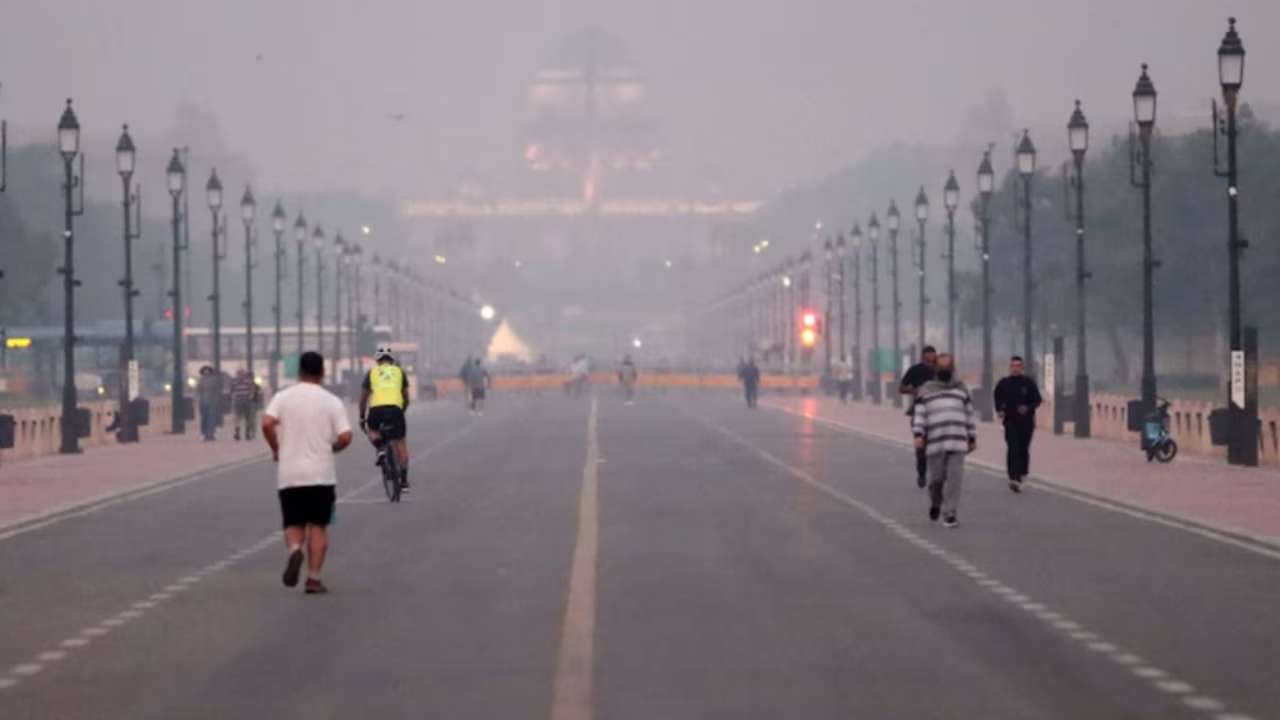
The southwest monsoon has completely withdrawn from Delhi-NCR, bringing a change in weather across the regionWhile bright sunshine and warm afternoons continue, mornings and evenings have started feeling slightly cooler.
Share Article
https://www.india.com/news/india/delhi-ncr-weather-monsoon-withdraws-completely-daytime-heat-continues-as-mornings-evenings-turn-cooler-check-imd-forecasts-for-coming-days-8532545/
Delhi-NCR weather: Monsoon withdraws completely, daytime heat continues as mornings, evenings turn cooler; Check IMD forecasts for coming days(Image: PTI/File)
Delhi experienced a slight rise in daytime temperature on Saturday as the capital continued to see mostly clear weatherThe India Meteorological Department (IMD) has forecast sunny to mainly clear skies over the next few days, with no major change expected in weather conditionsAt Safdarjung, Delhi’s main weather station, the maximum temperature reached 37.1 degrees Celsius, which was 1.1 degrees higher than FridayThe minimum temperature was recorded at 23.2 degrees Celsius, around 0.9 degrees above normal.
Other parts of the city also recorded a small rise in temperaturesPalam recorded a maximum of 34.8 degrees Celsius and a minimum of 22.6 degrees CelsiusThe minimum temperature at Lodhi Road was 22.4 degrees Celsius, while Ayanagar recorded 22.8 degrees Celsius.
Sunny weather likely to continue
According to the IMD, Delhi is likely to remain mostly clear over the next few daysThe weather office has forecast a maximum temperature of around 36 degrees Celsius on Sunday, while the minimum is expected to remain close to 23 degrees Celsius.
The IMD’s Delhi-NCR forecast indicates mainly clear conditions through the coming days, with temperatures remaining in the mid-30s during the afternoon.
The weather comes after a spell of rain and thunderstorms in parts of Delhi-NCR in late SeptemberThe recent showers had brought down daytime temperatures before the mercury started rising again.
Monsoon completely withdraws from Delhi-NCR, mornings turn cooler
The southwest monsoon has completely withdrawn from Delhi-NCR, marking a clear change in the weather across the national capital regionWith the rainy season now over, Delhi is witnessing mostly dry conditions, bright sunshine during the day and a slight coolness during the morning and evening hours.
The IMD confirmed that the monsoon withdrew from Delhi on September 23, two days before its normal withdrawal date of September 25.
Delhi weather changes after monsoon exit
The withdrawal of the monsoon has brought a noticeable change in Delhi’s weatherRainfall activity has reduced sharply, while dry air and clear skies are becoming more common.
Mornings and evenings have started feeling slightly cooler, although afternoons remain warm under strong sunshineThis transition is typical as Delhi moves from the monsoon season towards the drier autumn period.
The IMD considers factors such as a sustained break in rainfall, changes in wind patterns and a fall in moisture levels while declaring the withdrawal of the southwest monsoon.
What happens next in Delhi?
With the monsoon now gone, Delhi will gradually move towards its post-monsoon weather patternDays are likely to remain warm for some time, while nighttime temperatures can slowly fall as the season progresses.
For now, Delhi-NCR residents can expect sunny afternoons, dry weather and mildly cool mornings and evenings, signalling the beginning of the seasonal shift towards winter.
Delhi AQI stays in moderate category
While the weather remained mostly dry and sunny, Delhi’s air quality continued to be a concernThe city recorded a 24-hour average AQI of 171 at 4 pm on Saturday, keeping it in the moderate categoryThe reading was slightly better than Friday’s AQI of 174.
According to the Central Pollution Control Board (CPCB), an AQI between 101 and 200 is considered moderateThe range of 201-300 is classified as poor, 301-400 as very poor and 401-500 as severe.
Delhi’s air quality has remained in the moderate range in recent daysOn October 1, the city recorded an AQI of 161 in the morning, according to a report citing IMD and air-quality data.
With clear skies and warmer afternoons expected, residents can expect typical early-October weather in the capital, while keeping an eye on air-quality levels as the post-monsoon season progresses.