In a welcome relief for National Capital Region residents, Delhi’s air quality index has shown a notable improvement, driven by favorable meteorological conditions and stronger surface wind speeds.
Updated: October 22, 2026, 8:09 PM IST
Share Article
https://www.india.com/news/india/delhi-pollution-update-good-news-for-residents-as-air-quality-improves-check-details-here-8538269/
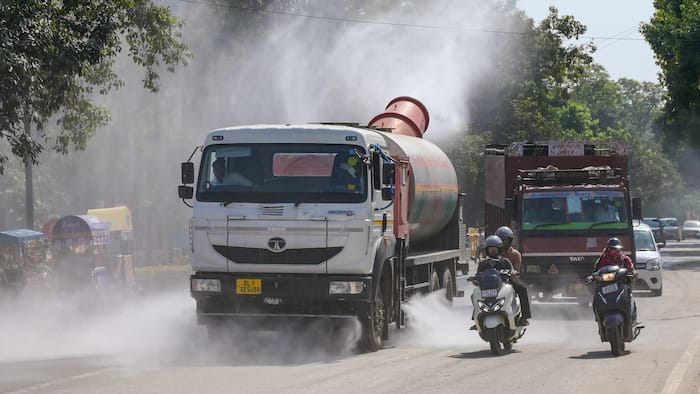
Delhi Pollution (Representational Image)
Delhi’s air quality remained in the ‘poor’ category for the second consecutive day on Thursday, with the 24-hour average Air Quality Index (AQI) settling at 223, while the maximum temperature at Safdarjung settled at 32.5 degrees Celsius.
According to the Central Pollution Control Board (CPCB), the AQI stood at 223 in the ‘poor’ category, down from 245 on Wednesday.
Jahangirpuri recorded ‘very poor’ air quality, with an AQI of 305 at 7 pm, according to the CPCB’s Sameer app.
Of the 54 monitoring stations in the national capital, 29 recorded ‘poor’ air quality, one recorded ‘very poor’ air quality, and the remaining stations were in the ‘moderate’ category.
According to CPCB standards, an AQI between zero and 50 is classified as ‘good’, 51 and 100 as ‘satisfactory’, 101 and 200 as ‘moderate’, 201 and 300 as ‘poor’, 301 and 400 as ‘very poor’, and 401 and 500 as ‘severe’.
According to the Air Quality Early Warning System, Delhi’s air quality is likely to remain in the ‘poor’ category on October 22 and from October 23 to 25The outlook for the subsequent six days also indicates that air quality is likely to remain in the ‘poor’ category.
A ventilation index below 6,000 square metres per second, coupled with an average wind speed of less than 10 kilometres per hour, is considered unfavourable for the dispersion of pollutants.
According to the Decision Support System for Air Quality Management in Delhi, developed by the Indian Institute of Tropical Meteorology (IITM), Pune, stubble burning contributed a mean of 7.4 per cent to Delhi’s PM2.5 mass concentration.
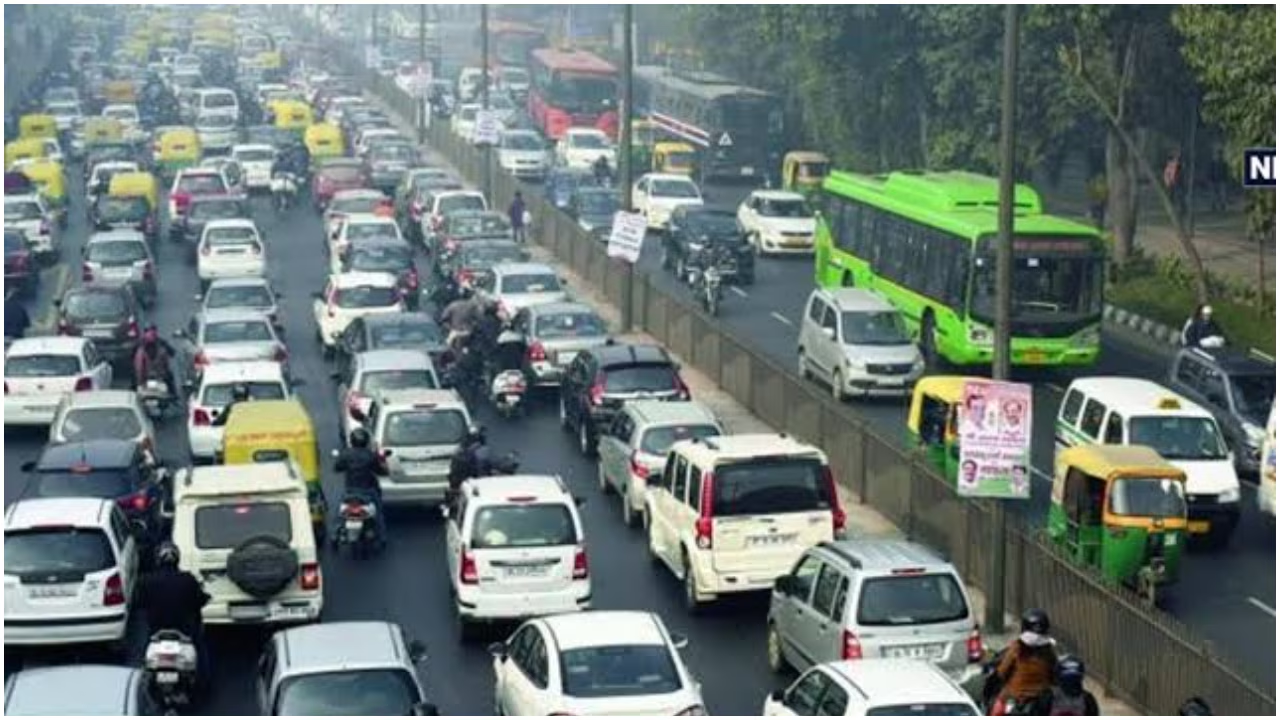
The city’s transport sector was the largest contributor at 19.2 per cent, followed by other sources at 15.5 per cent.
Among Delhi-based sources, residential emissions contributed 4.9 per cent, industries 4.03 per cent, construction 2.5 per cent, energy 1.8 per cent, waste burning 1.7 per cent, road dust 1.3 per cent and other sources 1.2 per cent.
Among the National Capital Region districts, Jhajjar contributed 6.1 per cent, Gurugram 5.1 per cent, Gautam Budh Nagar 4.4 per cent, Faridabad 3.2 per cent and Rajasthan’s Alwar 2 per cent.
Other regional contributors included Sonipat at 3.3 per cent, Panipat at 2.2 per cent, Bahadurgarh at 1.9 per cent, Karnal and Bhiwani at 1.2 per cent each, and Muzaffarnagar at 0.9 per cent.
The maximum temperature at Safdarjung, Delhi’s base weather station, settled at 32.5 degrees Celsius, 0.1 degree below normal, while the minimum temperature was recorded at 19.7 degrees Celsius, 1.3 degrees above normal.