
The proposed Delimitation Bill 2026 allows the Election Commission to redraw constituencies in Pakistan-occupied Kashmir (PoK) if the region comes under India’s control in the futureThe provision covers 24 Assembly seats that currently remain vacant.
Share Article
https://www.india.com/news/india/delimitation-bill-2026-gives-more-power-to-ec-it-can-redraw-pok-constituencies-if-region-comes-under-indias-control-of-24-vacant-seats-8548698/
Delimitation Bill 2026 gives EC more powers, allows redrawing of PoK seats if region comes under India’s control (IANS)
The proposed Delimitation Bill, 2026, includes a provision allowing the Election Commission of India (ECI) to redraw constituencies in Pakistan-occupied Kashmir (PoK) if the region comes out of Pakistan’s control in the futureAccording to the proposed legislation, the Election Commission will be able to carry out delimitation in areas of the Jammu and Kashmir Union Territory currently under Pakistan’s occupation, once they are no longer under its control.
The provision is part of the Delimitation Bill, which the Centre plans to introduce in Parliament on November 30The proposed clause states that the Election Commission may carry out delimitation of constituencies in the Legislative Assembly of Jammu and Kashmir falling under Pakistan’s occupation whenever the area ceases to remain under such occupation.
PoK has 24 vacant seats in Jammu and Kashmir Assembly
Under the existing arrangement, the Jammu and Kashmir Legislative Assembly has 90 elected seatsHowever, another 24 seats have been reserved for areas under Pakistan’s occupationThese 24 seats remain vacant and are not included while calculating the total strength of the AssemblyThe provision has been part of the legal framework governing Jammu and Kashmir.
The proposed Bill seeks to retain this arrangement until the region comes under India’s control and people living there are able to elect their representatives.
If that happens, the Election Commission will be able to undertake delimitation to decide the constituencies and their boundaries in the regionThe provision does not mean that the 24 seats will be filled immediatelyIt only lays down a framework for a possible future exercise.
What is the Delimitation Bill 2026?
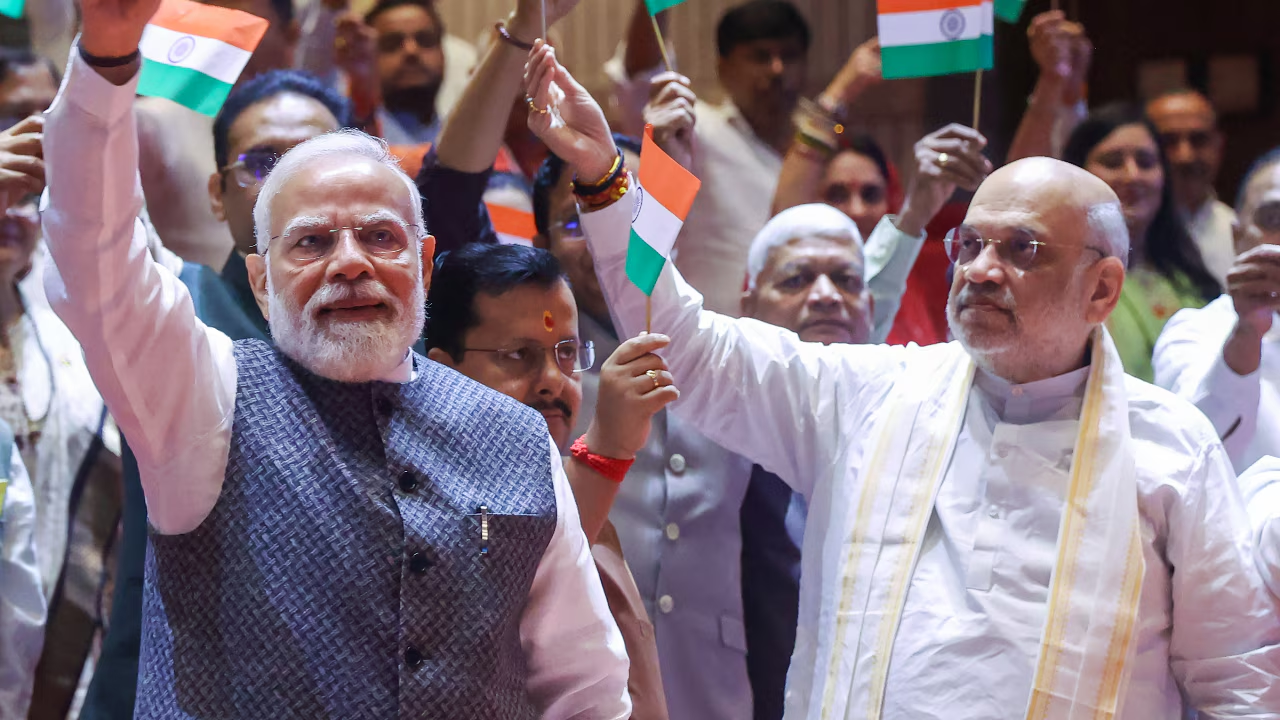
The proposed Delimitation Bill is part of the Centre’s larger plan to increase the number of seats in Parliament and state legislative assemblies and introduce 33 per cent reservation for womenThe Union Cabinet, chaired by Prime Minister Narendra Modi, cleared the Constitution (One Hundred and Thirty-Second Amendment) Bill, 2026, on November 27.
The proposed amendment seeks to increase the maximum strength of the Lok Sabha from its current 550-seat constitutional limit to 850 membersIt also proposes increasing the maximum strength of state legislative assemblies to 650 members.
Under the proposal, the number of Lok Sabha seats allocated to every state and Union Territory would increase by 50 per centThe number of seats in state and Union Territory assemblies would also rise by the same proportion.
The government has proposed this increase to address concerns raised by regional parties, particularly those in southern India, over the impact of population-based delimitation on their political representation.
How will women’s reservation be implemented?
The proposed constitutional amendment also seeks to bring the 33 per cent reservation for women in the Lok Sabha and state assemblies into effect through the delimitation exercise.
The Women’s Reservation Act, passed in 2023, provides for one-third reservation for women in the Lok Sabha and state legislative assemblies, including seats reserved for women from Scheduled Castes and Scheduled Tribes.
However, its implementation was linked to a Census and a subsequent delimitation exercise.
The new proposal aims to speed up the process and make the reservation effective after the first delimitation exercise under the amended law, potentially ahead of the 2029 Lok Sabha elections.
The proposed legislation also seeks to maintain the existing proportion of seats allocated to different states until 2051, addressing concerns that states with lower population growth could lose their share of representation.
The special session of Parliament is scheduled to begin on November 30 in the Lok Sabha, while the Rajya Sabha will meet from December 2The proposed Bills are expected to be taken up during the session.