
New Delhi: The air pollution crisis in Delhi-NCR is expected to persist over the coming days, with no rainfall in sight and little respite from prevailing temperatures despite an approaching Western D
Share Article
https://www.india.com/news/india/delhi-pollution-air-quality-index-noida-ghaziabad-faridabad-ambala-ndmc-imd-weather-update-iit-safdarjung-burari-vasundhara-enclave-8543546/
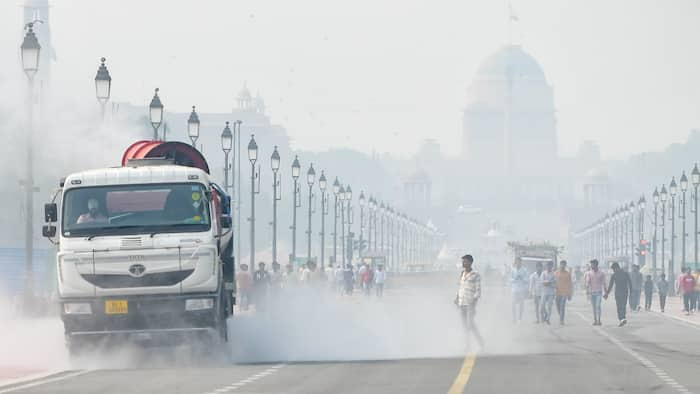
Delhi Pollution
New Delhi: The air pollution crisis in Delhi-NCR is expected to persist over the coming days, with no rainfall in sight and little respite from prevailing temperatures despite an approaching Western DisturbanceThe India Meteorological Department (IMD) has forecast no rainfall in the national capital between November 10 and 15.
Delhi’s overall Air Quality Index (AQI) stood at 311 (very poor) as of 6 am, while several monitoring stations recorded readings close to the 400 mark (severe).
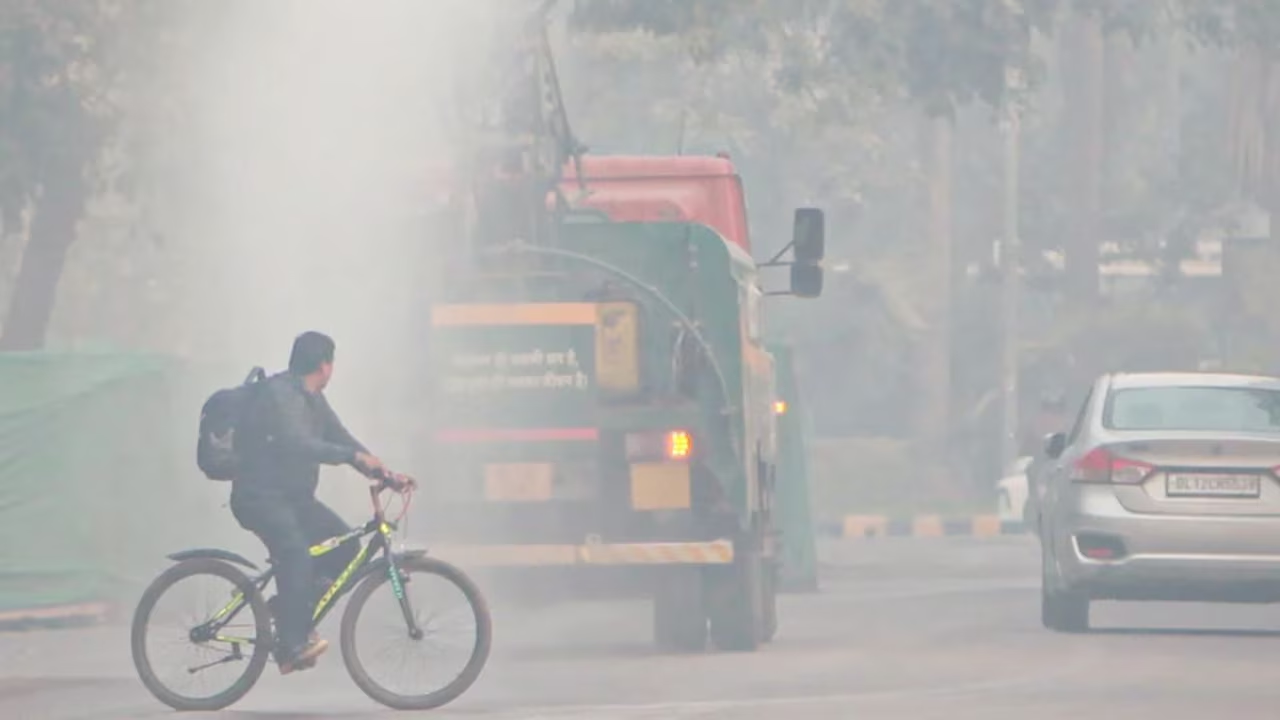
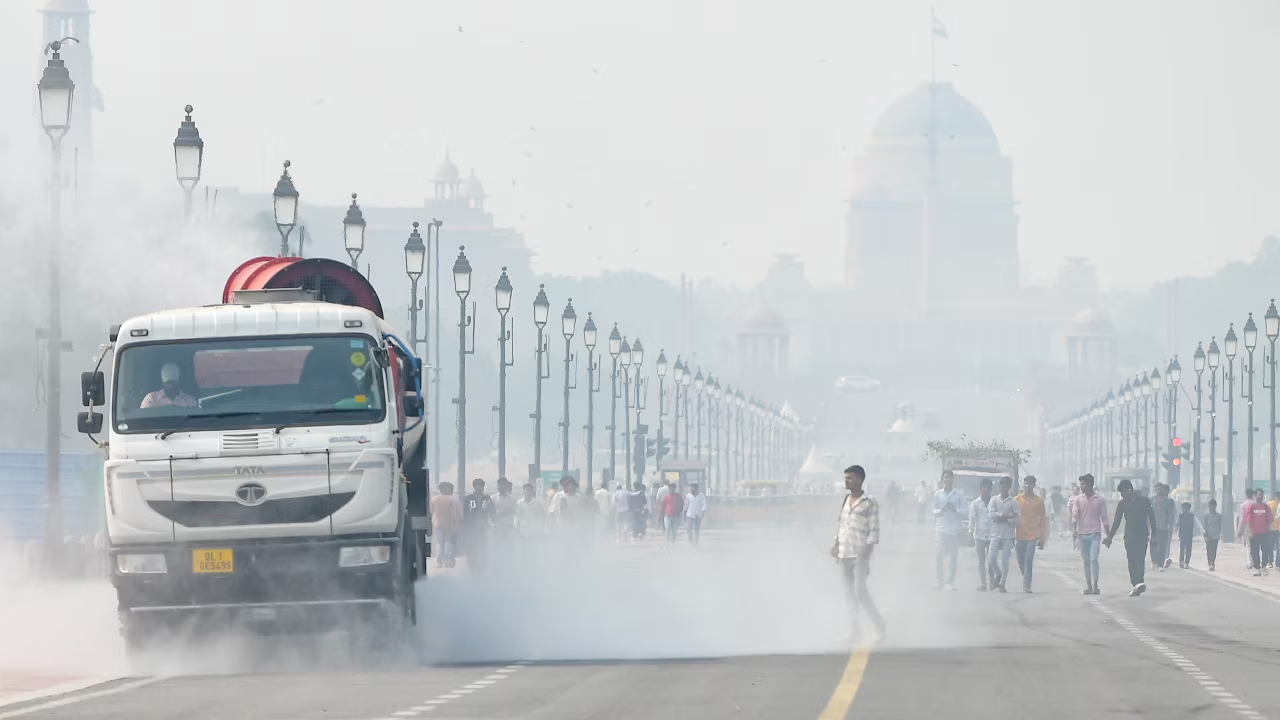
#WATCH | Delhi: An anti-smog gun by New Delhi Municipal Council (NDMC) being used to spray water to mitigate air pollutionVisuals around Janpathhttps://t.co/BKgAYj3uWu
— ANI (@ANI) November 10, 2026
Delhi Air Pollution: Here are some of the key details
- Chandni Chowk recorded the highest AQI at 400, followed by Pusa at 398 and NSUT Jaffarpur at 384.
- Commonwealth Sports Complex recorded an AQI of 380
- Sirifort stood at 375 and Talkatora Garden at 373.
- Mathura Road recorded an AQI of 372, IIT Delhi 361, Aya Nagar 360, Burari Crossing 364 and Shadipur 325.
- Lodhi Road recorded an AQI of 324, while Burari stood at 315 and Mandir Marg at 307.
- Vasundhara Enclave recorded an AQI of 295, while Tikri Kalan reported 296.
- A Delhi Pollution Control Committee (DPCC) report had recorded a marginal improvement in the city’s air quality on the morning after Diwali
- The 2.9 per cent improvement was attributed to meteorological factors, including higher wind speeds.
- Morning wind speeds had increased from 5-10 kmph on Diwali to 10-15 kmph the following morning.
- The post-Diwali AQI reading of 371 was still the highest recorded for the corresponding morning in the four-year comparison presented in the report.
- The overnight decline also contrasted with the trend in the previous three years, when the AQI had increased after Diwali.
- It rose from 210 to 301 in 2023, from 331 to 359 in 2024 and from 341 to 359 in 2025.
Air Quality in NCR Cities
As per the Central Pollution Control Board (CPCB), Ambala in Haryana recorded an AQI of 250 at 7 am on Tuesday, falling under the ‘Poor’ categoryGurugram recorded an AQI of 250.
Ghaziabad in Uttar Pradesh recorded an AQI of 366 at 7 am, while Noida registered 340.
According to the CPCB, an AQI between 401 and 500 is classified as ‘Severe’Such air quality can affect the health of even healthy individuals and may have serious consequences for people with existing health conditionsAn AQI between 301 and 400 is classified as ‘Very Poor’Prolonged exposure to such air can lead to respiratory illnesses.
The CPCB considers an AQI between 0 and 50 to be ‘Good’.