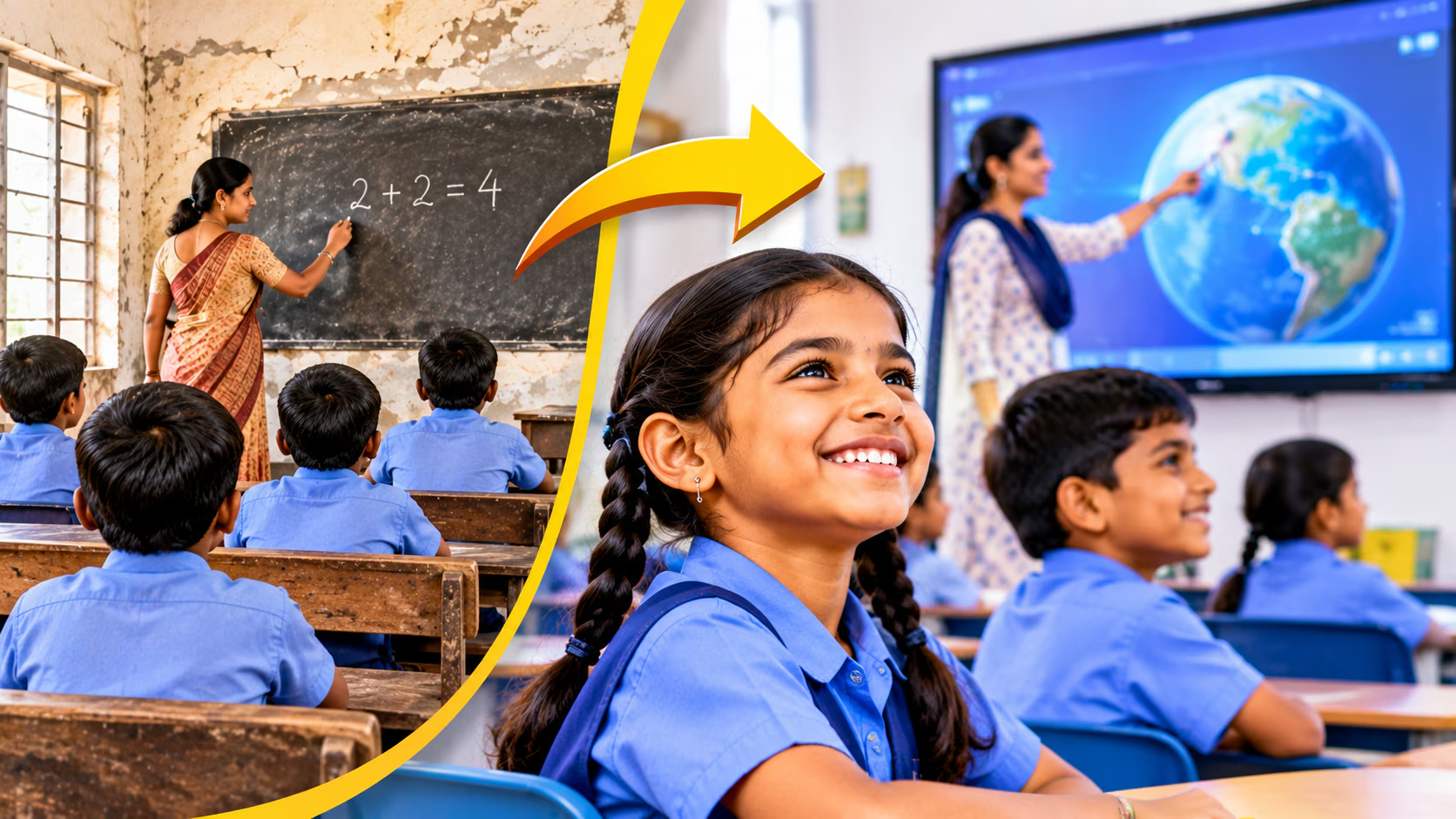
The shift is not simply about introducing computers or renovating school buildings but making education more accessible, inclusive and effective while improving the overall learning experience for students.
Published: November 26, 2026, 7:16 PM IST
Share Article
https://www.india.com/news/india/india-story-from-smart-classrooms-to-upgraded-buildings-what-changes-are-taking-place-in-indian-government-schools-8548226/
One of the most visible changes in government schools is the growing use of digital technology in classroomsChatGPT
Schools in India are undergoing a significant change, with schools embracing digital technology, improved infrastructure and innovative approaches to learningWhile these public schools earlier consisted of overcrowded classrooms, inadequate facilities and traditional teaching methods, these schools are turning to technology to better prepare young mindsThe advanced facilities consist of smart classrooms, computer laboratories, sanitation facilities, modern libraries, and activity-based education, among other perks.
The shift is not simply about introducing computers or renovating school buildings but making education more accessible, inclusive and effective while improving the overall learning experience for studentsGovernment initiatives, investments in educational infrastructure and the growing use of technology are playing an important role in reshaping public education.
However, all is not as rosy as it seemsWhile some government schools have made considerable improvements, others continue to struggle with teacher shortages, limited resources, inadequate digital access and gaps in foundational learningSo, understanding both sides of the transformation is important to assessing the future of government education in India.
How are digital classrooms bringing technology into everyday learning?
One of the most visible changes in government schools is the growing use of digital technology in classroomsWith increasing use of smart boards, projectors, computers, educational videos and internet-enabled learning resources are gradually changing how teachers deliver lessons and how students engage with subjects.
Instead of relying entirely on textbooks and blackboards, teachers can now use animations, presentations, interactive exercises and digital demonstrations to explain difficult conceptsFor instance, science students can understand complex processes through visual simulations, while mathematics teachers can use digital tools to demonstrate calculations and geometric concepts.
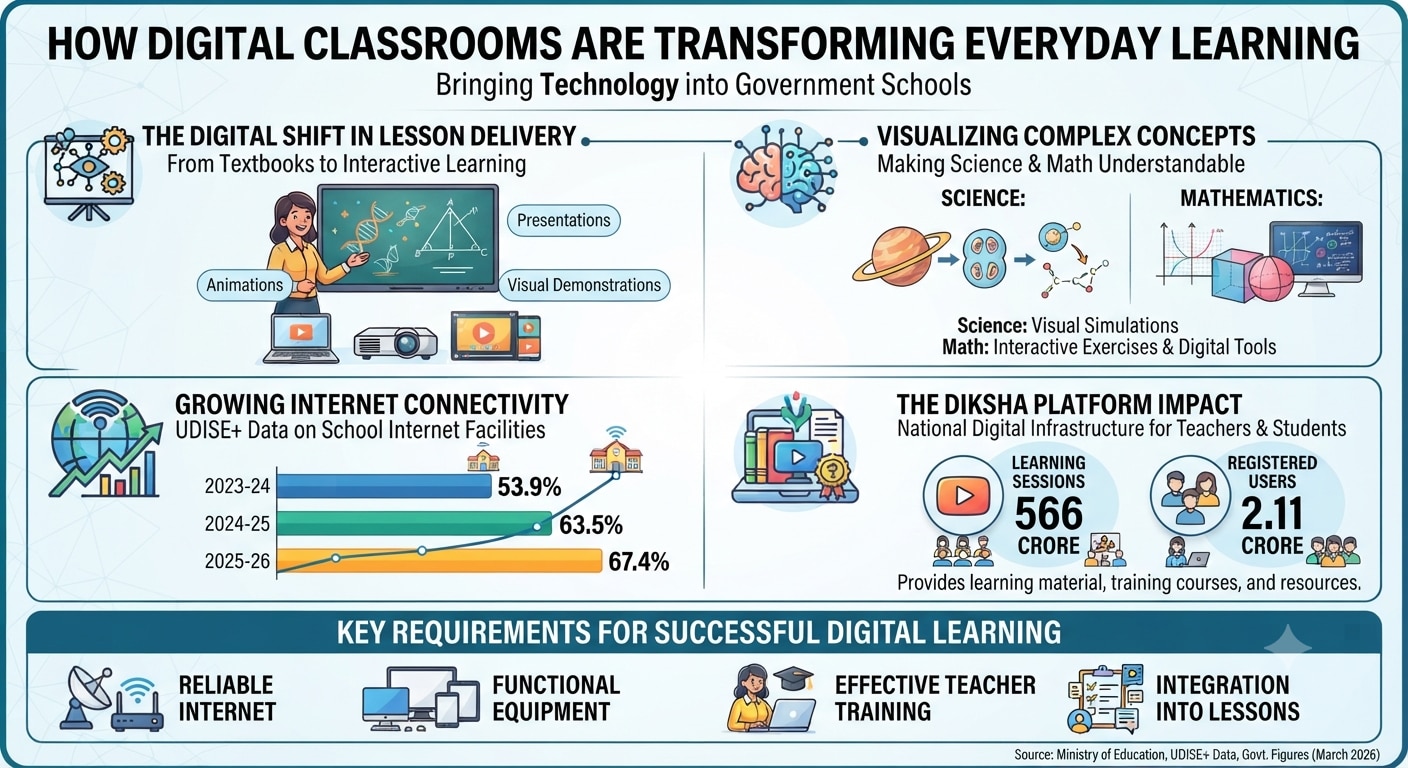
The expansion of internet connectivity reflects this shiftAccording to the Ministry of Education’s UDISE+ data, the proportion of schools with internet facilities increased from 53.9 per cent in 2023-24 to 63.5 per cent in 2024-25A subsequent government update reported that the figure rose further to 67.4 per cent in 2025-26.
The government’s DIKSHA platform has also become an important part of this digital transitionLaunched in 2017, the platform provides digital learning material, teacher training courses and educational resourcesAccording to government figures released in March 2026, DIKSHA had recorded 566 crore learning sessions and 2.11 crore registered users.
These developments are helping students access educational content beyond classroom hoursHowever, the availability of technology alone does not guarantee better learningSchools also need reliable internet connections, functional equipment, and teachers who can effectively integrate digital resources into their lessons.
Better infrastructure is making schools more student-friendly
Alongside digitalisation, improvements in basic infrastructure are playing a crucial role in changing the face of government schoolsClean classrooms, electricity, drinking water, functional toilets, libraries and playgrounds are essential for creating an environment where children feel comfortable and motivated to learn.
Government data for 2025-26 highlights progress in this areaAround 95 per cent of schools had electricity, 99.5 per cent had drinking water facilities, while 98.5 per cent had toilets for girls and 97.2 per cent had toilets for boysHandwashing facilities were available in 96.9 per cent of schoolsMeanwhile, library facilities have also expanded, with 90.5 per cent of schools reporting access to libraries in 2025-26, reported the Press Information Bureau PIB citing the Ministry of Education’s UDISE+ 2025-26 figures.
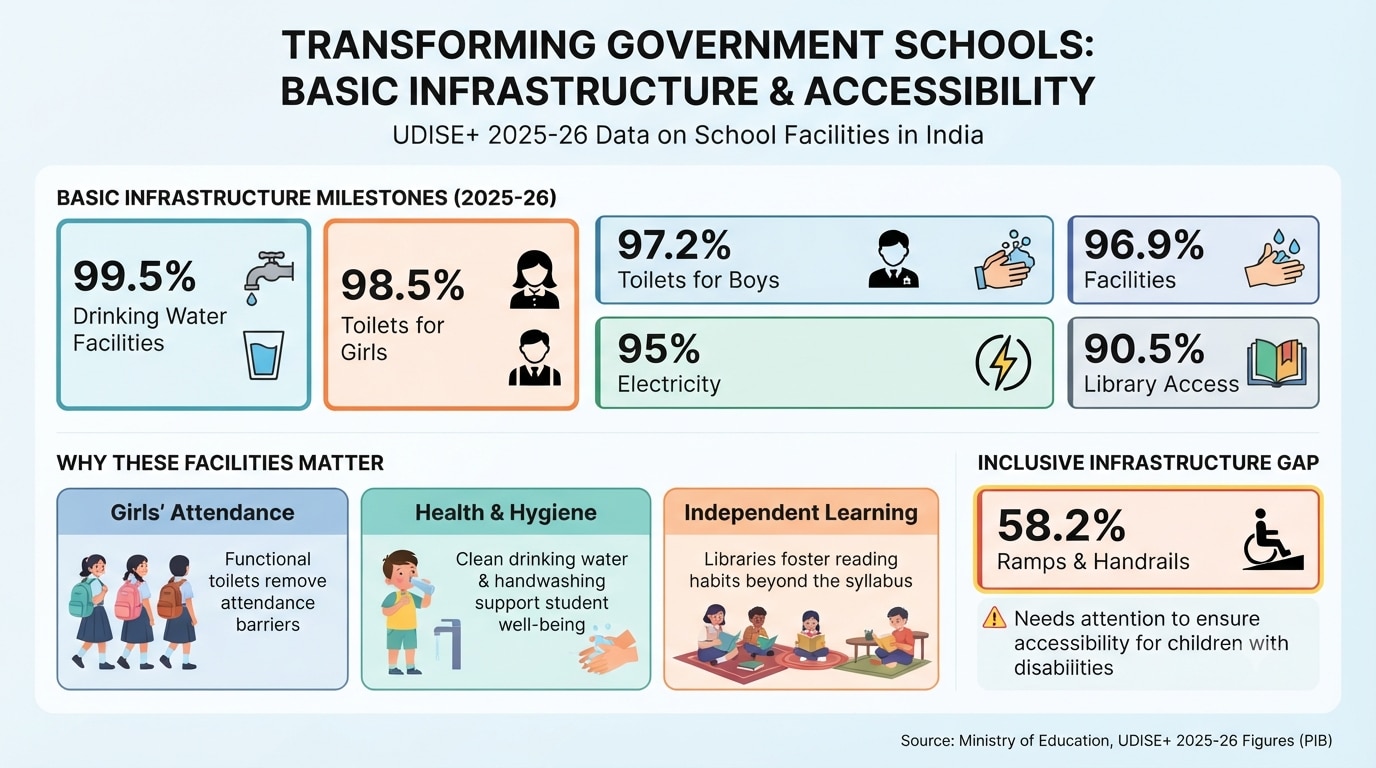
These improvements have implications beyond convenienceFunctional girls’ toilets can help address barriers to girls’ attendance, while clean drinking water and handwashing facilities support students’ health and hygieneLibraries provide opportunities to develop reading habits, explore subjects beyond the prescribed syllabus and improve independent learning.
Accessibility is another important aspect of school infrastructureRamps and handrails can make school premises easier to navigate for children with disabilitiesYet, the government reported that only 58.2 per cent of schools had ramps and handrails in 2025-26, showing that inclusive infrastructure still needs attention.
New teaching methods are moving beyond rote learning
Another significant change is the gradual shift from memorisation-based education towards experiential and competency-based learning.
The National Education Policy (NEP) 2020 emphasises learning through activities, experiments, discussions, storytelling, arts and sportsThe objective is to help students understand concepts, apply knowledge and develop critical-thinking and problem-solving skills rather than simply memorising information for examinations.
For example, mathematics can be taught through practical calculations involving money, measurements and everyday situationsSimilarly, science lessons can include classroom experiments, group activities and observation-based exercises.
Teachers are also being encouraged to make classrooms more interactive through discussions, peer learning, project work and collaborative assignments.
The emphasis on foundational literacy and numeracy is particularly importantUnder the NIPUN Bharat Mission, the government aims to ensure that children acquire essential reading, writing and arithmetic skills during their early school years.
This approach recognises that students cannot progress effectively to advanced subjects without a strong understanding of basic concepts.
Learning outcomes show signs of improvement
The impact of these changes can also be seen in improvements in students’ foundational learning abilitiesThe Annual Status of Education Report (ASER) 2024, published by Pratham Education Foundation, highlighted encouraging improvements in reading and arithmetic among children attending government schools.
According to the report, the percentage of Class 3 students in government schools who could read a Class 2-level text increased from 16.3 per cent in 2022 to 23.4 per cent in 2024Similarly, the proportion of Class 3 students who could solve at least a basic subtraction problem rose from 20.2 per cent to 27.6 per cent during the same period.
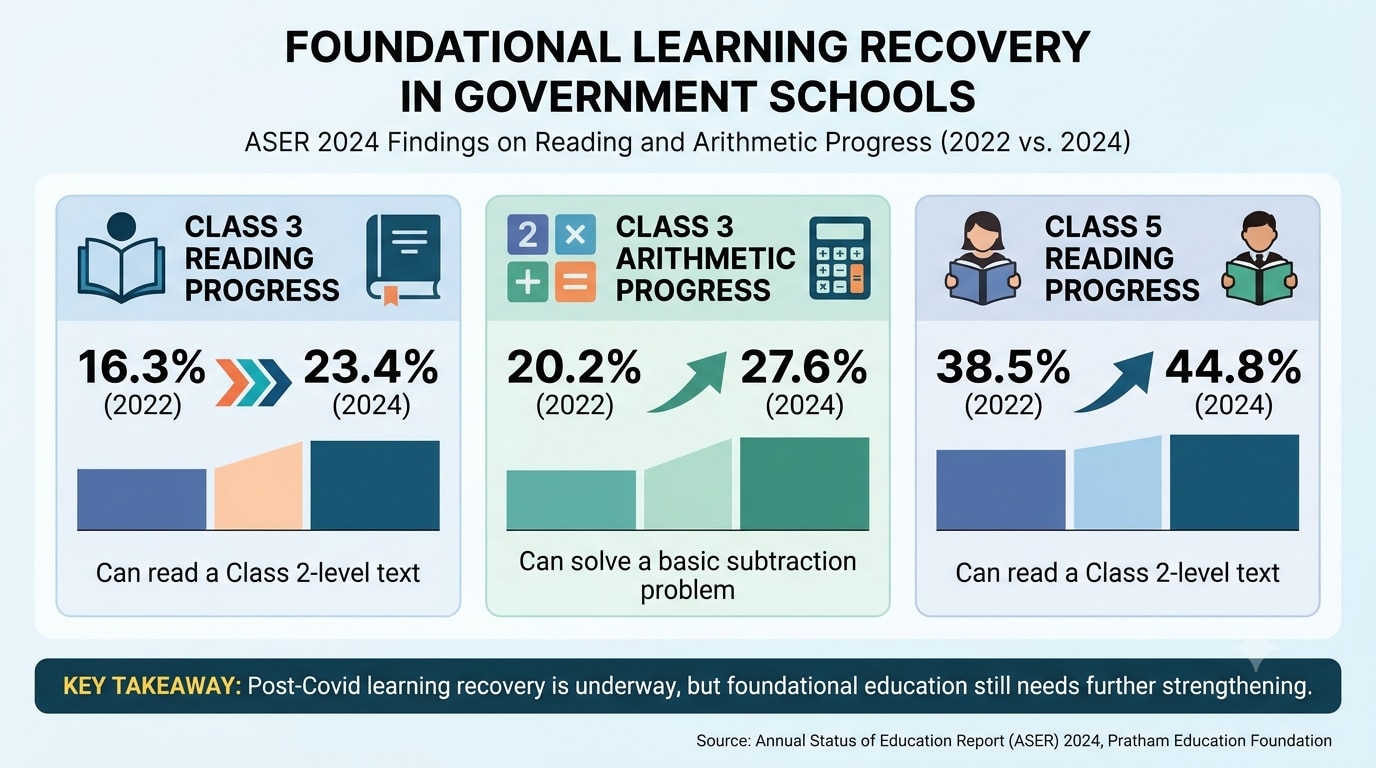
Class 5 students in government schools also showed improvement, with 44.8 per cent able to read a Class 2-level text in 2024, compared with 38.5 per cent in 2022.
These figures suggest that learning recovery is taking place, particularly after the disruptions caused by the Covid-19 pandemicHowever, they also highlight the need to strengthen foundational education further.
Government initiatives are supporting the transformation
Several government programmes are contributing to the modernisation of public educationThe PM SHRI (Pradhan Mantri Schools for Rising India) initiative aims to develop selected government schools as model institutions showcasing the implementation of NEP 2020These schools are intended to offer improved infrastructure, modern teaching facilities, technology-based learning, and environmentally sustainable practices.
Similarly, Samagra Shiksha provides financial support to states and Union Territories for improving school infrastructure, teacher training, digital education, and inclusive learning facilities.
The DIKSHA platform complements these initiatives by making educational resources and professional development opportunities available to teachers and students across the countryTogether, these programmes seek to improve not only the physical condition of schools but also the quality of education delivered inside classrooms.
Challenges that still need attention
Despite considerable progress, the transformation of government schools remains uneven across IndiaA NITI Aayog analysis of UDISE+ 2024-25 data found significant differences in the availability of functional smart classrooms across statesChandigarh reported 95.2 per cent coverage, followed by Lakshadweep at 86.1 per cent, Punjab at 80.1 per cent and Delhi at 75.7 per centIn contrast, coverage remained below 20 per cent in several states, including Bihar, Jharkhand, Uttar Pradesh and Madhya Pradesh.
The digital divide is therefore still a major concernSchools in remote and rural areas often face connectivity problems, inadequate equipment and limited access to technical supportTeacher training is equally importantDigital classrooms cannot deliver meaningful results if teachers are not adequately trained to use technology effectivelyRegular maintenance of equipment, sufficient teaching staff and consistent monitoring of learning outcomes are also necessary.
Moreover, infrastructure improvements must be accompanied by efforts to address teacher vacancies, overcrowded classrooms and differences in educational opportunities between rural and urban areas.
The road ahead: Building stronger public education
The changing face of government schools represents an important step towards making quality education more accessible to children from different economic and social backgroundsDigital classrooms, improved infrastructure and modern teaching methods are creating opportunities for students to learn in more engaging and inclusive environmentsAt the same time, improvements in foundational literacy and numeracy indicate that focused interventions can produce measurable results.
However, the real success of this transformation will depend on how effectively these facilities are usedInstalling smart boards, providing computers or renovating classrooms is only the beginningWhat matters is whether students are learning better, teachers are receiving adequate support and every child has access to a safe and stimulating educational environment.
Ultimately, the goal should be to ensure that a child’s educational opportunities are not determined by whether they attend a government or private schoolStrengthening public education is essential not only for individual student development but also for reducing educational inequality and building a more skilled generation.