CJP spokesperson Ashutosh Ranka raised issues over the Public Examinations (Prevention of Unfair Means) Amendment Bill, 2026, cleared in Lok Sabha. According to him, important aspects of the examination system were left out of the discussion.
Published: July 30, 2026, 4:14 PM IST
Share Article
https://www.india.com/news/india/cjp-ashutosh-ranka-abhijeet-dipke-slam-anti-paper-leak-amendment-bill-questions-how-govt-plans-on-stopping-paper-leaks-8488302/
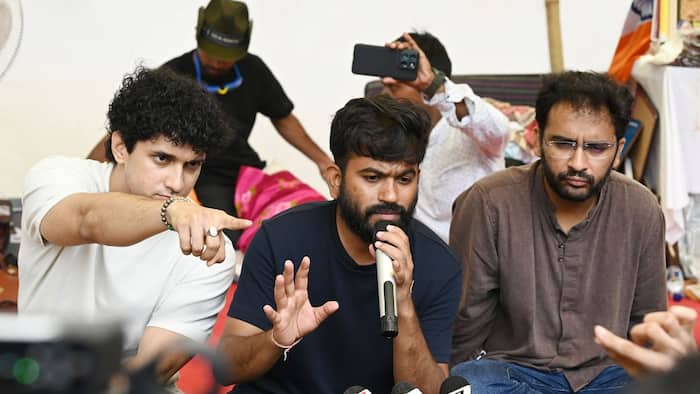
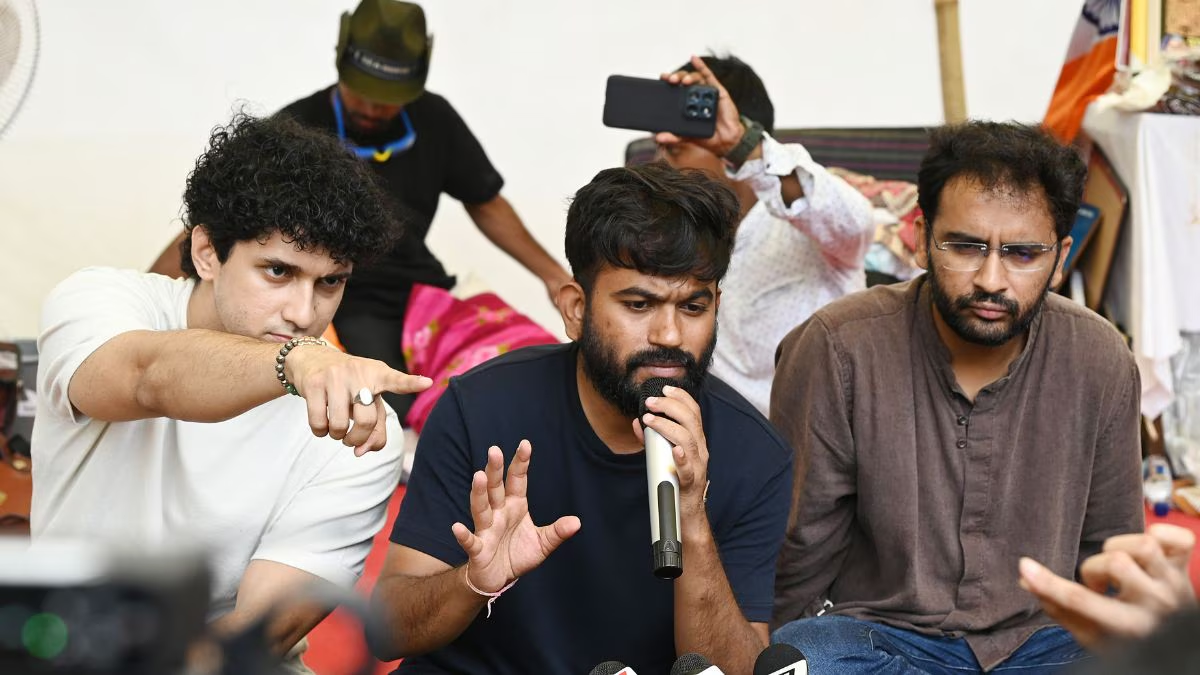
CJP founder Abhijeet Dipke with spokespersons Saurav Das and Ashutosh Ranka. ANI
Cockroach Janta Party (CJP) spokesperson Ashutosh Ranka criticised the Public Examinations (Prevention of Unfair Means) Amendment Bill, 2026, cleared by the Lok Sabha. He stated that the proposed legislation focuses on punishing offenders after question papers are leaked instead of fixing the reasons behind such incidents. He further stated that the anti-paper leak amendment bill is not enough, but the Centre should explain measures to prevent paper leaks in the first place.
Attacking the government, Ranka said the meeting did not include any discussion on strengthening the country’s examination infrastructure, regulating coaching centres, improving exam schedules, revising the syllabus, enhancing transparency, or reforming agencies such as the NTA, SSC and other exam-conducting bodies. He also noted that the role of vendors involved in the examination process was not discussed.
CJP slams anti -paper leak amendment bill
In a video shared on X, Ashutosh Ranka said the proposed anti-paper leak amendment bill takes a reactive approach by focusing on punishment after a leak, rather than improving the examination process to minimise the chances of such incidents.
“You have been talking about everything after the paper leak, whether it is fast-track courts, harsher punishments or penalties. But you have not talked about what you are doing to stop paper leaks,” he said.
Are we really trying to stop paper leaks? pic.twitter.com/OSsutev9AK
— Ashutosh Ranka (@AshutoshRanka) July 29, 2026
“There was no discussion on strengthening exam infrastructure, regulating coaching centres, improving exam schedules, revising the syllabus, ensuring transparency, or reforming the NTA, SSC and other examination-conducting bodies. There was also no discussion on the vendors involved in the examination process. Unless these structural issues, which are responsible for paper leaks, are addressed, such incidents will continue,” he said in the video.
He further said, “Applying a bandage after an injury is one thing, but the real question is… what are you doing to prevent the injury from happening in the first place? This Bill did not address that. We have submitted a five-point charter of demands to the government and urge it to implement those recommendations. The government had sought four weeks’ time. We will have to work together with all stakeholders to develop a meaningful reform agenda. Otherwise, this country has seen many laws being passed over the years, but legislation alone is not enough.”
What is the anti-paper leak amendment bill?
The amendments are aimed at making the Public Examinations (Prevention of Unfair Means) Act, 2024 more robust. Under the existing law, every offence is classified as cognisable, non-bailable, and non-compoundable. Under the proposed changes, individuals found guilty of adopting unfair means in examinations will face stricter punishment. The minimum imprisonment has been enhanced to five years from the existing three years, while the maximum jail term has been extended to 10 years. The maximum penalty has also been increased fivefold, from Rs 10 lakh to Rs 50 lakh.
Under the proposed changes, service providers responsible for conducting examinations will face much stricter action for violations. The maximum fine has been increased fivefold, from Rs 1 crore to Rs 5 crore, while the period of debarment from examination-related work has been extended from four years to eight years. Organised attempts to manipulate examinations will also attract a minimum prison sentence of seven years and fines of up to Rs 10 crore.
For the first time, the bill proposes a specific timeline for completing investigations by introducing Sections 12A and 12B. After a case is referred by the Centre, authorities will have to finish the investigation within two months, whether the matter is handled by a central agency or the new Special Task Force.