


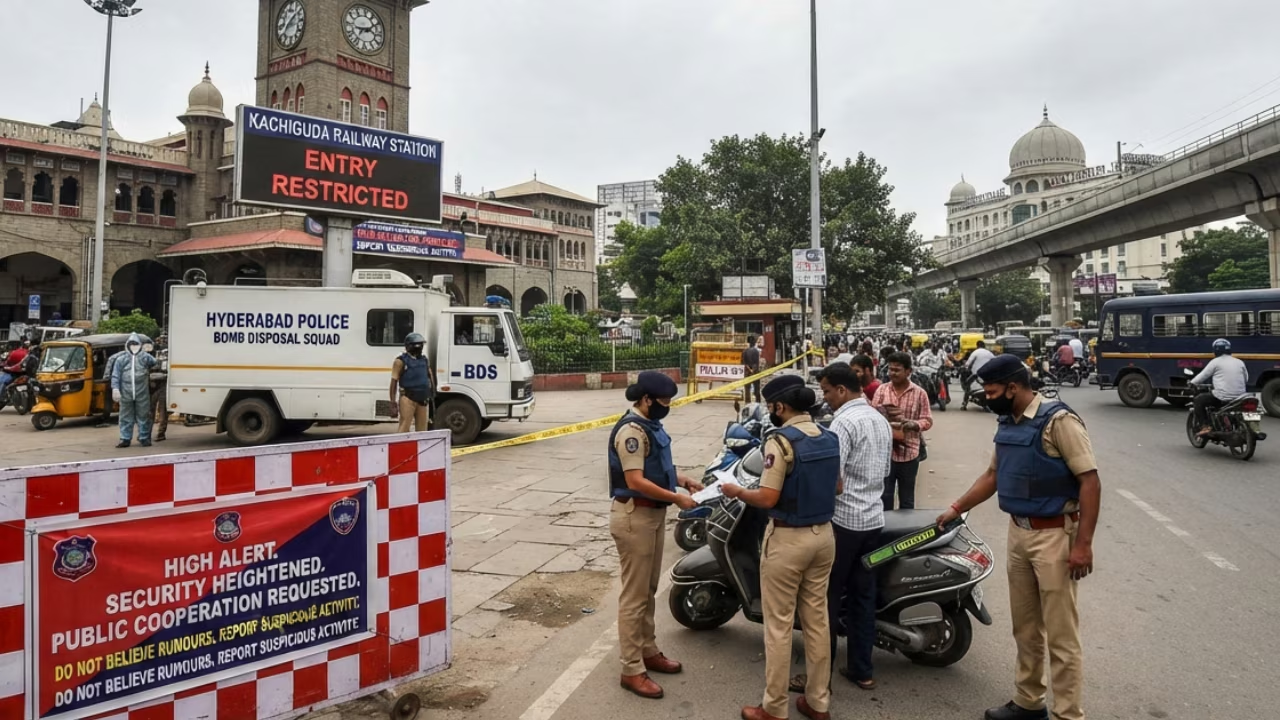
Hyderabad Police have tightened security across the city after receiving an email threatening 26/11-style terror attacks that could kill at least 300 peopleThe message, allegedly sent in the name of LeT, named Hotel Tourist Plaza and Kachiguda Railway Station as possible targets.
Share Article
https://www.india.com/news/india/hyderabad-on-high-alert-after-let-email-threatens-26-11-style-attacks-warns-of-300-deaths-hotel-tourist-plaza-kachiguda-railway-station-named-8547226/
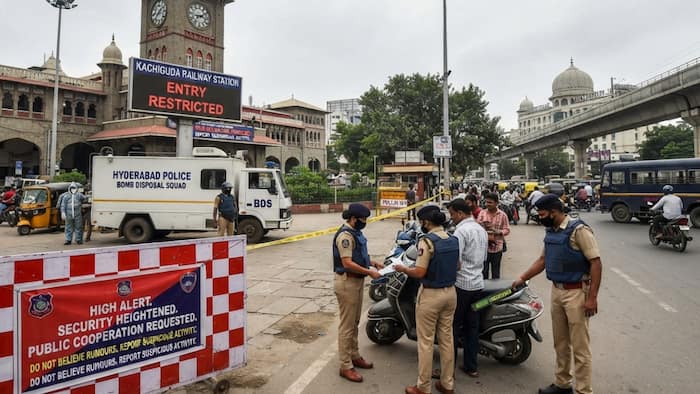
Hyderabad on high alert after LeT email threatens 26/11-style attacks, warns of 300 deaths; 2 locations named (Image: AI/representational)
Hyderabad Police have stepped up security across the city after receiving an email threatening bomb attacks similar to the 26/11 Mumbai terror attacksThe message, which allegedly claimed to be from the Pakistan-based terror group Lashkar-e-Taiba (LeT), warned that at least 300 people could be killedThe email was received by Hyderabad Police on November 21It reportedly named two locations as possible targets: Hotel Tourist Plaza in Kachiguda and Kachiguda Railway Station.
The sender allegedly threatened to repeat the November 26, 2008, Mumbai attacks in HyderabadThe message also claimed that the planned attacks were in retaliation for the killing of LeT commander Lateef Bhat and some of his associates by the Indian Army in Jammu and KashmirHowever, the email did not mention a specific date or time for the alleged attacks.
Read more:
Rakul Preet Singh’s brother Aman Preet Singh named in fresh drugs case, investigation underway
Hyderabad terror threat: What action has police taken?
Following the threat, Hyderabad Police issued an alert and increased security at several sensitive locations across the cityPolice teams carried out anti-sabotage checks at Hotel Tourist Plaza and Kachiguda Railway Station, the two places mentioned in the emailSecurity arrangements have also been strengthened at other railway stations, bus terminals, hotels, religious places, crowded public areas and important government buildings.
Police personnel have been asked to remain alert and keep a close watch on suspicious people, vehicles and unattended objects.
According to a report by The Times of India, the locations mentioned in the email and several other crowded areas were searched, but no explosives were found.
Police suspect email could be a hoax
Although the sender claimed links with Lashkar-e-Taiba, the police have not confirmed the authenticity of the claimA police official told PTI that the email appeared to be a hoaxHowever, the investigation is continuing to identify the person responsible for sending the threat.
The Cyber Crime Police are working to trace the sender and find out whether the message has any connection with a terror organisation or was sent by someone to create fear and panic among residents.
Police have also intensified patrolling and visible security arrangements as a precaution.
Hyderabad Police issue advisory for citizens
Hyderabad Police Commissioner Mahesh Muralidhar Bhagwat has appealed to people not to panic or believe unverified information circulating on social mediaCitizens have been advised to stay alert and immediately inform the police if they notice anything suspicious.
People can contact the police by calling the emergency helpline number 112They have also been asked not to touch or approach unattended bags or other suspicious objects.
Police said security measures have been put in place to protect public safety and urged residents to cooperate with the authorities.
What happened during the 26/11 Mumbai terror attacks?
The November 26, 2008, Mumbai terror attacks were among the deadliest terrorist attacks in India’s historyTen heavily armed terrorists belonging to Lashkar-e-Taiba entered Mumbai by sea and carried out coordinated attacks at several locations, including the Taj Mahal Palace Hotel, Oberoi-Trident Hotel, Chhatrapati Shivaji Terminus railway station and Nariman House.
The attacks continued for nearly three days and left 166 people dead, while more than 300 others were injured.
The incident led to major changes in India’s internal security arrangements, coastal surveillance and counter-terrorism operations.