
Bollywood actor Imran Khan has reportedly been told to leave the country by October 28, following his participation in the protest against CEC Gyanesh Kumar in Mumbai.
Published: October 15, 2026, 4:29 PM IST
Share Article
https://www.india.com/news/india/imran-khan-controversy-can-oci-cardholders-join-protests-in-india-what-the-rules-say-8536330/
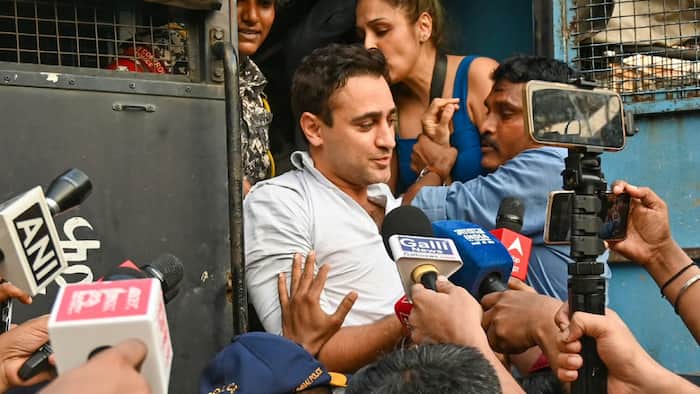
FIR filed against Imran Imran Khan has been asked to leave IndiaRepresentational image
Actor Imran Khan has reportedly been directed to leave India by October 28Khan, reportedly a US national and OCI cardholder, participated in a Mumbai protest seeking the resignation of Chief Election Commissioner Gyanesh Kumar.
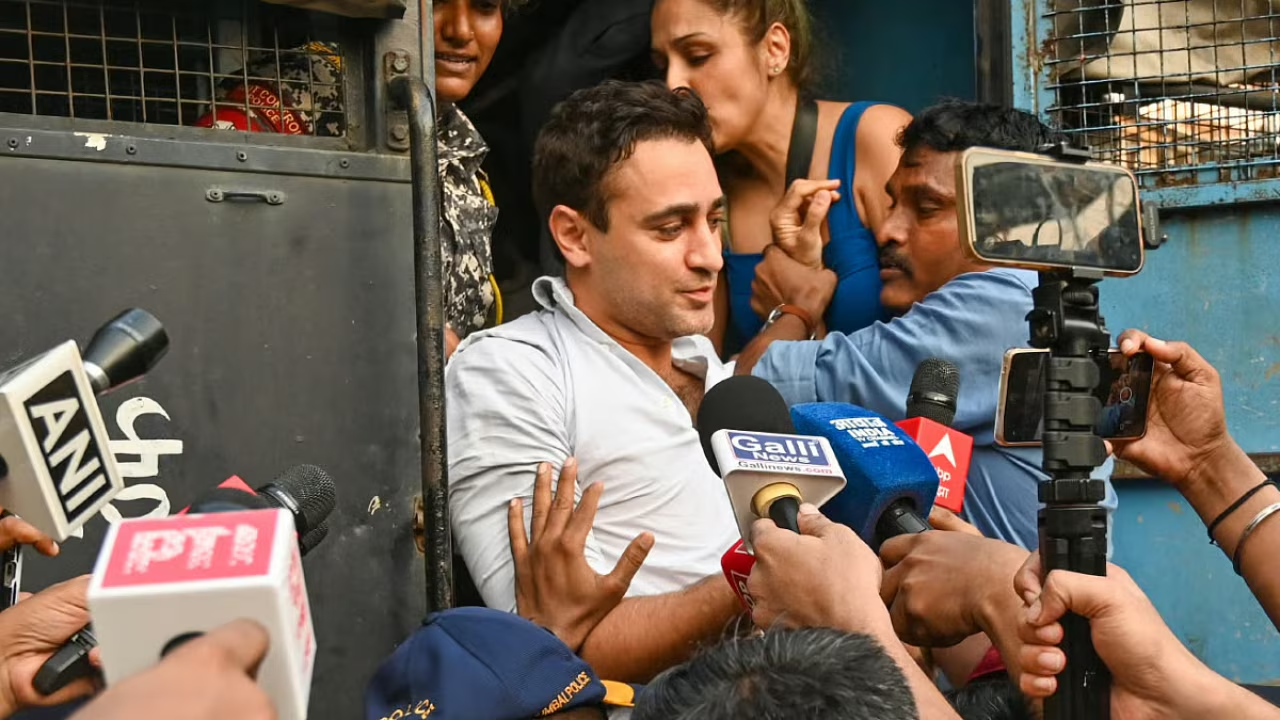
The Foreigners Regional Registration Office (FRRO) in Mumbai issued the notice after BJP leader Kirit Somaiya filed a complaint against the actorSomaiya questioned Khan’s participation in a political protest despite being a foreign citizenKhan was among hundreds of people detained during the protest at August Kranti Maidan on October 10.
Read more:
Why is Aamir Khan’s nephew Imran Khan asked to leave India by October 28? Protest case explained
The notice has got people asking what an OCI card actually lets you do in IndiaAre cardholders allowed to join political protests? And can the government tell them to leave?
What is an OCI Card?
The Overseas Citizenship of India (OCI) scheme was introduced in 2005 for eligible people of Indian origin who are citizens of another country.
The card makes it easier for them to visit and stay in IndiaBut despite its name, OCI does not give a person dual citizenshipAn OCI cardholder remains a foreign citizen and travels on a passport issued by their country.
Also Read | Why is Aamir Khan’s nephew Imran Khan asked to leave India by October 28? Protest case explained
According to the Ministry of External Affairs (MEA), OCI cardholders generally get a lifelong visa that allows them to enter India multiple timesThey are also usually exempt from registering with the FRRO or Foreigners Registration Office (FRO), regardless of the length of their stay, subject to the rules in force.
What rights do OCI cardholders have in India?
With an OCI card, you don’t need a fresh visa every time you travel to IndiaCardholders also get a few perks that NRIs have, mainly in education and money matters, though all of these are subject to government rules.
An OCI card, however, does not confer the rights of an Indian citizenHolders are not eligible to vote in Indian elections or to contest polls to Parliament or state legislatures, and they are barred from certain constitutional posts, including the offices of President and Vice-President of India.
OCI cardholders are generally not eligible for government jobs, unless specific rules allow itThey also cannot normally buy agricultural land, farmhouses or plantation properties in India, subject to applicable laws.
Can OCI cardholders take part in political protests?
Article 19 of the Indian Constitution gives citizens the right to speak freely and gather peacefully without weaponsThese rights are subject to certain restrictions and are not available to foreign nationals in the same way.
Though they have Indian roots and enjoy special privileges, OCI cardholders are foreign citizensHowever, a foreign national does not automatically violate the law by attending a protest.
Whether their participation is allowed depends on the circumstances, the laws that apply, and any conditions attached to their stay in IndiaThe reasons given by the authorities also matterIn Khan’s case, his presence at the protest led to a complaint by Somaiya, followed by action from the FRRO.
Can the government cancel an OCI card?
Yes, it canThe Citizenship Act, 1955 lets the government cancel an OCI registration under certain conditionsOne is if the person got the card through false information, concealed facts or fraudAnother is certain conduct against the Indian Constitution, as the law provides.
Also Read | Aamir Khan’s nephew Imran Khan detained during CJP protest in Mumbai, video goes viral
here are a few more groundsOne is certain dealings with an enemy during a war India is part ofAnother is a qualifying jail term handed down within five years of getting the registrationThe government can also cancel a card if it thinks that is needed to protect India’s sovereignty, security, foreign relations or the publicStill, cancelling a card and telling someone to leave the country are not the same thing, and the reasons and procedures can differ.
The notice issued to a person, the law under which it was issued and the reasons behind the decision are important in determining whether the action can be challengedIn Khan’s case, the FRRO has reportedly directed him to leave India by October 28The notice came after Somaiya complained about his participation in the Mumbai protest.
What is the Imran Khan case?
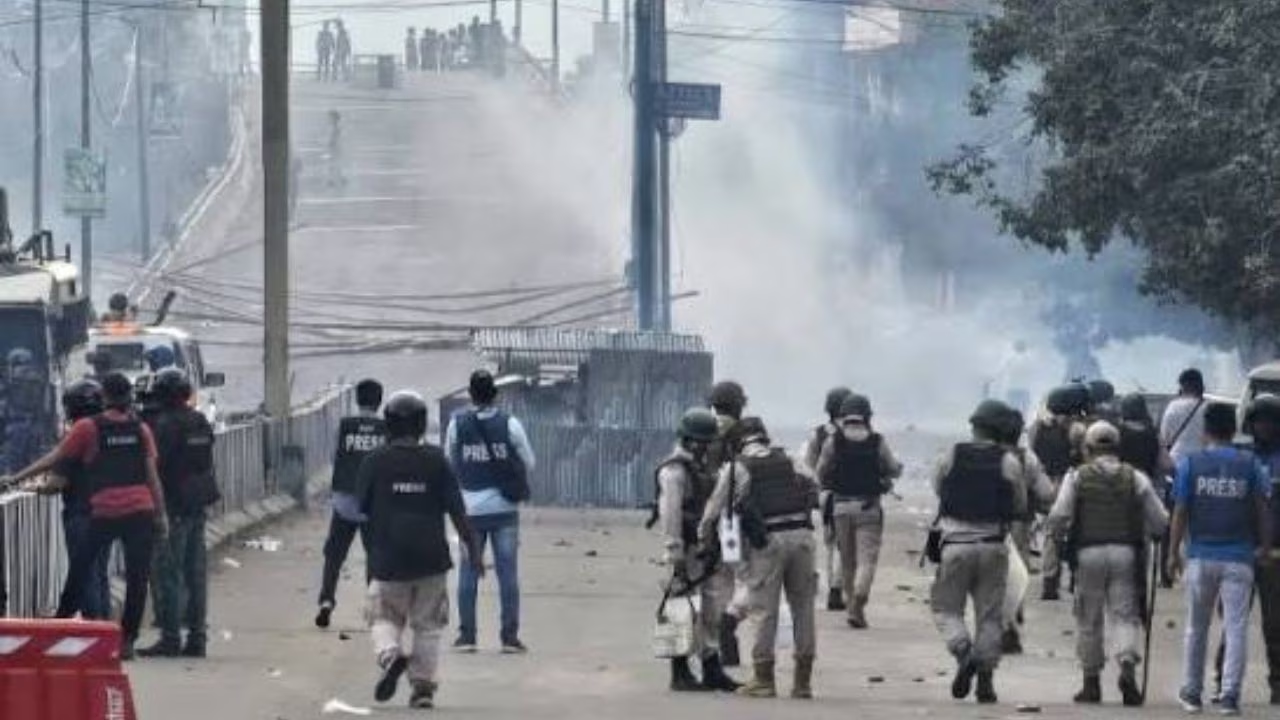
Khan was one of several hundred people picked up by police at the October 10 protest at Mumbai’s August Kranti MaidanThe protesters wanted Chief Election Commissioner Gyanesh Kumar to resign, citing alleged irregularities in the Special Intensive Revision (SIR) of electoral rolls.
The protest was held in support of demands raised by the Campaign for Judicial Accountability and ReformsTushar Gandhi, the great-grandson of Mahatma Gandhi, was also among those detained.
After the protest, Somaiya approached the police and raised questions about Khan’s citizenship and his participation in the demonstrationThe complaint was then forwarded to the FRRO, which issued the notice asking the actor to leave India by October 28.