
India has rejected the US allegation of excess manufacturing capacity, insisting that no such situation exists in any sectorThe response comes after Washington proposed tariffs of up to 25% on Indian imports.
Share Article
https://www.india.com/news/india/india-denies-excess-manufacturing-capacity-claim-as-us-proposes-up-to-25-tariffs-says-notice-under-examination-8548001/
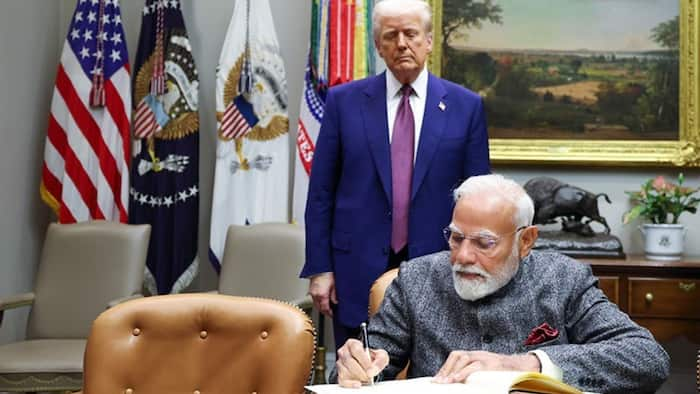
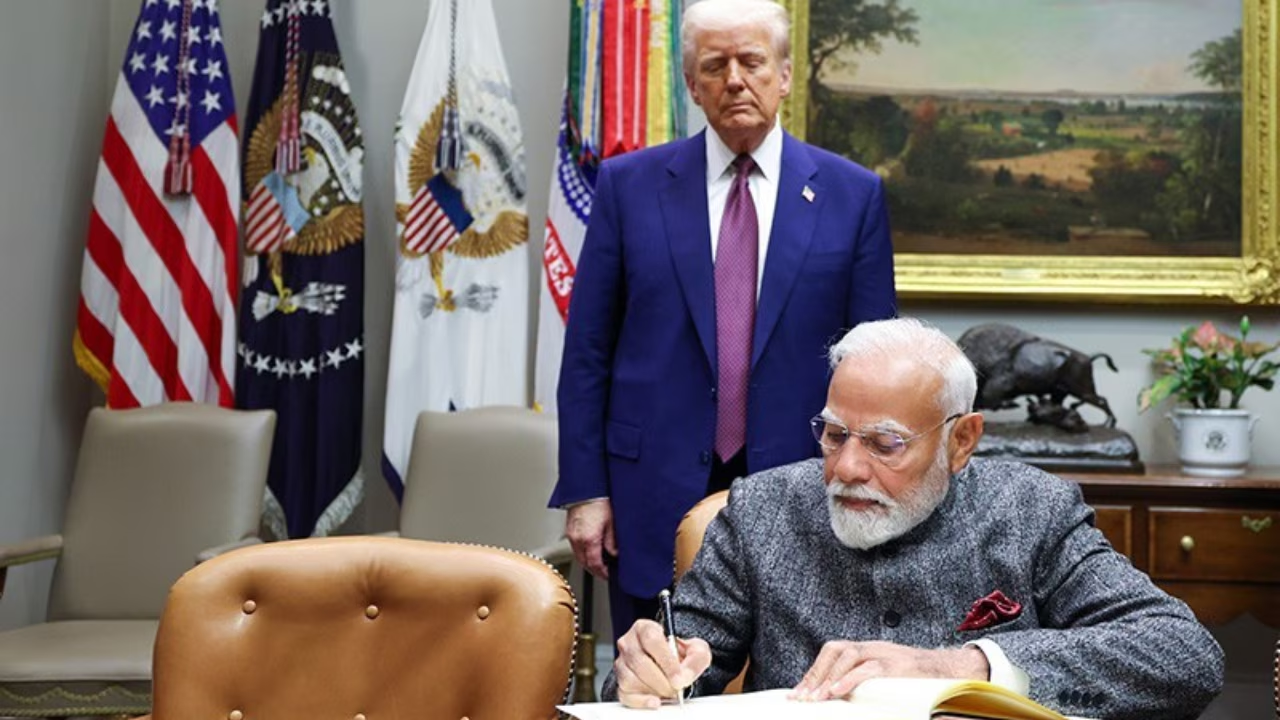
India denies excess manufacturing capacity claim as US proposes up to 25% tariffs, says ‘notice under examination’ (Photo: X/The White House)
India has strongly rejected the United States’ allegation that it has excess manufacturing capacity, saying that there is no such situation in any sector of the countryNew Delhi has also urged Washington to address all trade-related issues through ongoing negotiations for the India-US Bilateral Trade Agreement (BTA)The response came after the US Trade Representative (USTR) proposed additional tariffs of up to 25% on Indian goods following an investigation into alleged excess manufacturing capacityIndia’s Commerce Ministry said it had taken note of the US decision and was examining the notice.
In an official statement, the ministry said India had cooperated with the investigation and presented its position during the proceedingsThe government maintained that India does not have structural excess capacity in any manufacturing sector.
“Government of India has taken note of the Notice of Determination and Request for Comments issued by the United States Trade Representative (USTR) in the Section 301 Investigation concerning Acts, Policies, and Practices of 14 economies, including India, relating to Structural Excess Capacity and Production in Manufacturing SectorsThe Notice is currently under examination,” the ministry said in a statement.
US proposes up to 25% tariffs on Indian goods
On Wednesday, November 25, the USTR proposed additional duties of up to 25 per cent on goods imported from IndiaThe US has, however, indicated that the proposed rate could be reduced to 17 per cent if the two countries reach a trade agreement that addresses Washington’s concerns.
The investigation covers 14 major trading partners, including India, China, Japan, South Korea, Vietnam, Bangladesh, Singapore and the European Union.
According to the USTR, certain government policies and industrial practices in these economies have encouraged manufacturing beyond market demandWashington argues that such practices affect American manufacturers, reduce business opportunities for US companies and put pressure on domestic industries.
In its findings on India, the US has raised concerns over industrial policies, labour protections, financial practices and restrictions on market accessIt has also pointed to sectors such as pharmaceuticals, medical devices, steel, solar energy and information and communications technology.
The proposed 25 per cent duty is not yet a final tariffThe US has invited public comments and will hold hearings before deciding on further action.
India-US tariff rates: What happens if trade deal is signed?
The proposed tariff structure could put India in a different position depending on the outcome of the ongoing trade negotiations.
If India and the US reach an agreement, Washington has proposed reducing the additional tariff rate to 17 per centHowever, if the negotiations fail to produce a deal, Indian exports could face duties of up to 25 per cent, subject to the final US decision.
The USTR has also proposed different tariff rates for other trading partners, taking into account their existing trade arrangements and commitments with Washington.
The proposed duties are part of US President Donald Trump’s efforts to protect American manufacturing and encourage domestic production.
India wants trade concerns resolved through negotiations
Responding to the US move, the Commerce Ministry said India and the United States were already discussing a Bilateral Trade Agreement and that trade-related differences should be settled through this processThe ministry also reiterated India’s commitment to working with Washington to complete the agreement at the earliest.
The government referred to the announcements made on February 2, 2026, and the joint statement issued on February 7, 2026, as part of the ongoing efforts to strengthen trade ties between the two countries.
“India and the United States are engaged in negotiations for a Bilateral Trade AgreementIt has been India’s position that any trade-related concerns should be addressed within the framework of these negotiationsGovernment of India remains committed to working closely with the United States towards the early conclusion of the India-U.SBilateral Trade Agreement, as announced on 2nd February 2026 and in accordance with the Joint Statement issued on 7th February 2026,” the Commerce Ministry added.
Meanwhile, the US has set January 5, 2027, as the deadline for submitting written comments on the proposed actionPublic hearings are scheduled to begin on January 25, 2027.