Emphasizing that safety is a non-negotiable requirement for all elevators, the Supreme Court on Wednesday confirmed over ₹3.01 crore in compensation for the family of a RAW officer killed in a 2003 lift accident.
Published: July 30, 2026, 6:44 PM IST
Share Article
https://www.india.com/news/india/who-takes-the-blame-when-a-lift-falls-whos-liable-for-the-crime-heres-what-supreme-court-said-in-landmark-judgement-8488433/
Lift file image (Unsplash)
When you step into an elevator, your life rests entirely on a system you cannot control and now, the law ensures complete accountability for itIn a landmark ruling, the Supreme Court of India, declared lifts to be “common carriers” akin to public transport, establishing that liability for accidents must be shared among manufacturers, maintenance agencies and building owners alikeRuling on an appeal by Otis Elevator Company (India) Ltd, Justices PS Narasimha and Alok Aradhe reinforced that everyone involved carries a crucial duty of care.
The verdict upholds a 2014 decision by the National Consumer Disputes Redressal Commission (NCDRC), dismissing Otis Elevator’s challengeThe apex court highlighted that passengers place absolute trust in an elevator’s safety once inside, leaving zero room for negligence by any entity responsible for building, servicing, or operating the system.
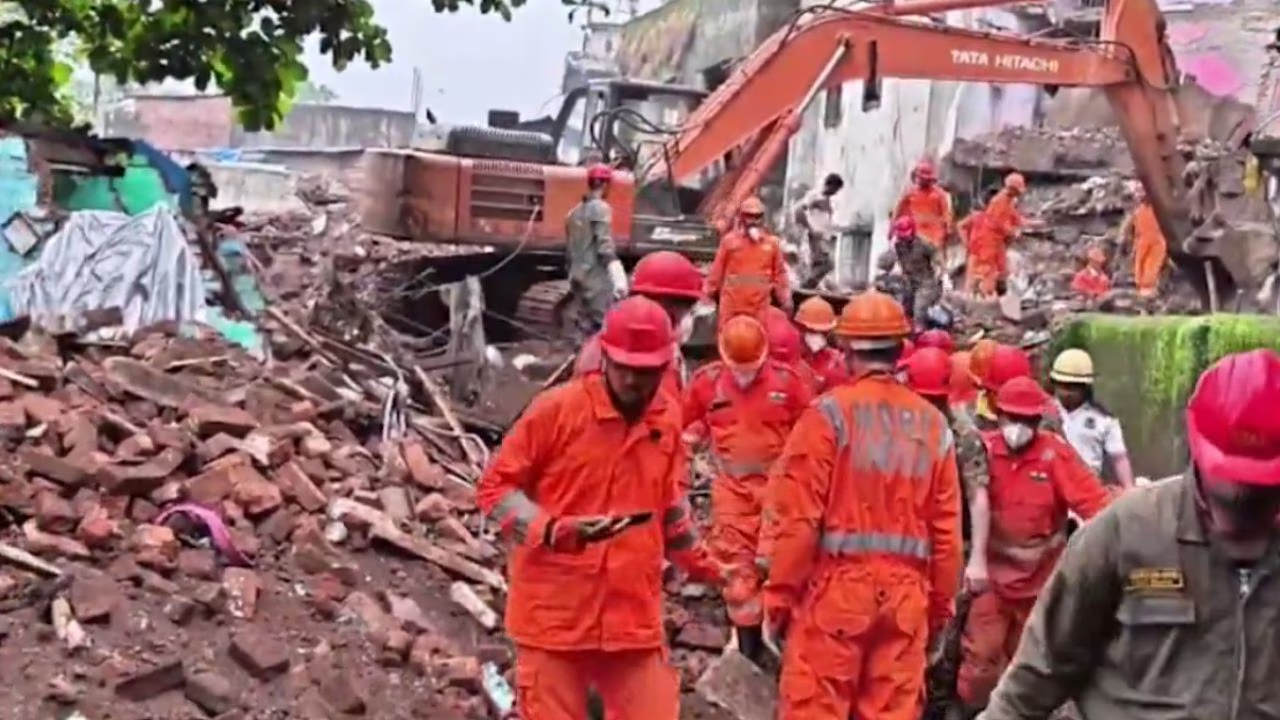
This ruling stems from a tragic 2003 accident at the R&AW headquarters that claimed the life of RAW officer Vipin HandaSecuring relief for his family, the court maintained a compensation payout of ₹3.01 crore with 9 percent annual interest from the date of the incident, jumping to 12 percent if unpaid within 90 days and asked the NCDRC to guarantee compliance.
Lift liability: Three major principles established by Supreme Court
1Building owners cannot transfer their legal responsibility
The Court noted that obtaining maintenance services from a private lift company does not absolve the building owner of responsibilityThe statutory obligation continues because the lift remains part of the building under the owner’s control.
2Regular maintenance and inspection are mandatory safety obligations
The Court highlighted that Lift Acts require:
- Permission before installation
- Licensing of lifts
- Periodic inspection
- Ongoing maintenance
These requirements exist specifically to prevent accidents caused by defective operation or poor maintenanceThe Court states that these provisions are intended to ensure that persons using lifts are not exposed to danger because of defects in installation or maintenance.
Supreme Court delivers landmark judgement in RAW agency death case
Observing that safety is a fundamental assurance that every elevator must provide, the Supreme Court on Wednesday upheld a compensation of over Rs 3.01 crore to the next of kin of a RAW officer who died in a lift mishap in 2003.
A bench of Justices P S Narasimha and Alok Aradhe dismissed the appeal filed by Otis Elevator Company (India) Limited while upholding the order passed by the National Consumer Disputes Redressal Commission (NCDRC).
The top court refused to interfere with the finding of the NCDRC that OTIS was the party principally deficient in service.
“A party that undertakes the comprehensive maintenance of a machine, which is in the nature of a vehicle, owes a heightened duty of care towards its usersOTIS was not a stranger to the defect that culminated in the accident.
“It was cognisant of the problem, and it had itself proposed the remedyHaving done so, its failure to ensure that the remedy was implemented, or, alternatively, to render the lift safe by other means pending its installation constitutes deficiency of service,” the bench said.
The top court, in its judgment, said elevators have become an essential part of modern urban life as, due to the limited availability of urban space, cities are growing vertically rather than horizontally.
Supreme Court’s ruling on elevator safety and legal liability: Here’s what you should know
In light of the Supreme Court’s ruling on elevator safety and legal liability, building owners, property managers, commercial spaces, and residential societies must audit their safety standardsManagement committees need to ensure every lift holds a valid license, undergoes regular inspections by designated officials, and fully adheres to relevant State Lift Acts and RulesWhile maintenance contracts with elevator firms should explicitly outline service and repair duties, societies must keep in mind that hired maintenance does not erase their underlying legal responsibility.