

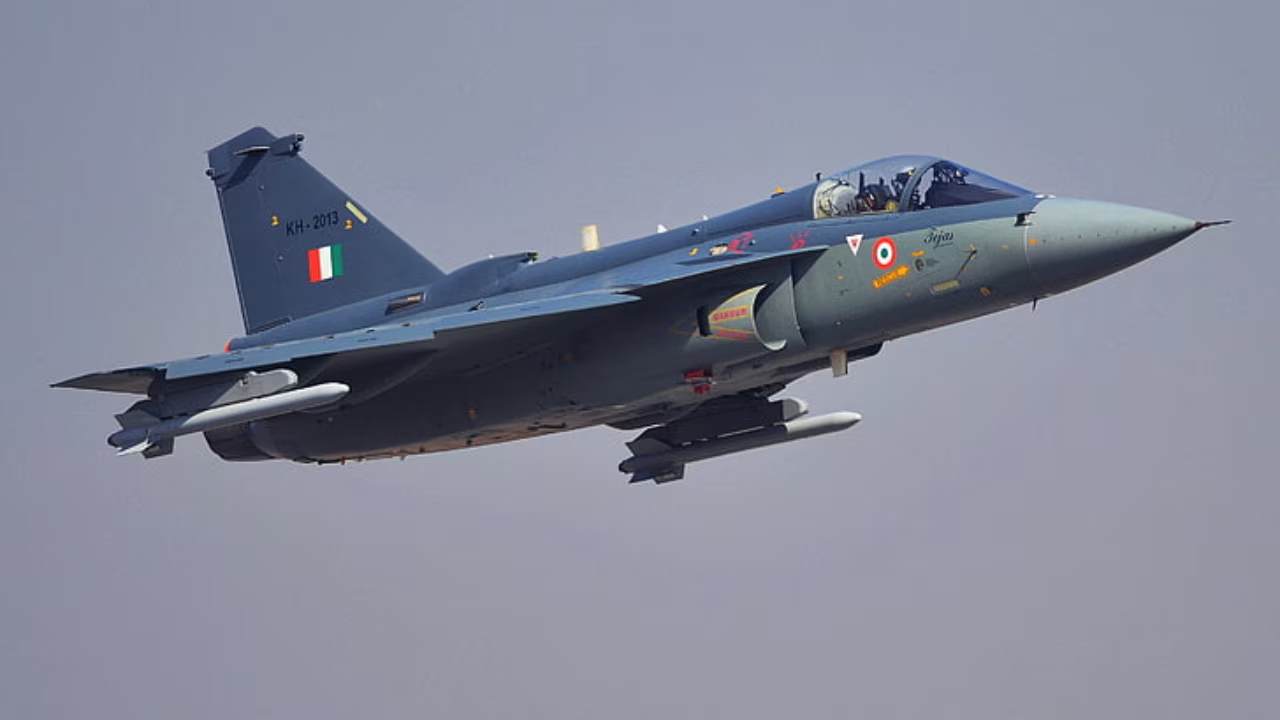
”No, operationally, definitely No,” said Air Marshal Nagesh Kapoor on being asked if it made sense for the Indian Air Force to retain a fourth-generation aircraft in 2035 when China has already moved onto the level of 6th generation fighter jets, and Pakistan is considering working on the 5th generation jets.
Published: August 22, 2026, 3:51 PM IST
Share Article
https://www.india.com/news/india/why-indias-tejas-mk-2-programme-not-stirring-just-retired-indian-air-force-vice-chief-air-marshal-nagesh-kapoor-iaf-china-pakistan-united-states-f-22-iran-j-20-j-36-j-50-artificial-intelligence-8507417/
File image
New Delhi: The indigenous Tejas Mk-2 fighter jet is considered a trademark of Indian military engineering, and the country is in talks with several nations to export the 4.5-generation, single-engine planeAmidst this, some harsh observations have been made on the native project, and that too by Air Marshal Nagesh Kapoor, who retired from the post of the 50th Vice Chief of the Indian Air Force (IAF), less than two months ago.
Operational Relevance of The Tejas Mk-2
Air Marshal Nagesh Kapoor has said that the ‘made-in-India fighter Tejas Mk-2 may not be operationally relevant in a frontline role when it starts entering service in significant numbers in the mid 2030s’, as reported by NDTV.
”No, operationally, definitely No,” said Air Marshal Nagesh Kapoor on being asked if it made sense for the Indian Air Force to retain a fourth-generation aircraft in 2035 when China has already moved onto the level of 6th generation fighter jets, and Pakistan is considering working on the 5th generation jets.
Advantages Of Fifth-Generation Fighter Jets
Military superpowers like the United States and China have already deployed and the former has given a demonstration of its prowess with fifth-generation fighters such as the US F-22 against its war with IranThe F-22 and the Chinese J-20, both fifth-generation fighters, boast of stealth that makes it very difficult for them to be tracked and hence targeted by the enemy radars.
The fifth-generation stealth technology has provided China a solid platform to work on the sixth-generation fighters, such as the J-36 and J-50Add to it Artificial Intelligence and it is a complete package, kind of wrapped into one that any air force would want to possess.
India is yet to embark on the next-level technology, i.ethe fifth-generationAccording to the NDTV report, some estimates say China is on its way to deploying 500 fifth-generation J-20 fighters by 2030.
Given the circumstances surrounding operational preparedness, hostile neighbours, and ground reality, not only it is an open ended debate but also an incisive point to ponder over.