The Uttar Pradesh government has launched an initiative to prepare 10,000 ‘Gau Mitras’ (Friends of Cows) across villages to involve the youth—particularly Gen Z—in the cow conservation campaignThe government believes this will not only boost cow conservation but also help connect the youth with agriculture and rural development.
Published: August 16, 2026, 10:55 PM IST
Share Article
https://www.india.com/news/india/yogi-government-to-engage-gen-z-in-cow-conservation-10000-gau-mitras-to-be-trained-across-uttar-pradesh-8503170/
(Representational image/File)
New Delhi: The Uttar Pradesh government has launched an initiative to prepare 10,000 ‘Gau Mitras’ (Friends of Cows) across villages to involve the youth—particularly Gen Z—in the cow conservation campaignThe government believes this will not only boost cow conservation but also help connect the youth with agriculture and rural development.
According to the Uttar Pradesh Gau Seva Aayog (Cow Service Commission), this initiative is part of a broader plan where cow conservation will not be limited merely to the management of gaushalas (cow shelters) but will also be linked to rural livelihoods, natural farming, women’s self-help groups, green energy, and employment generationThe goal is to foster a cow-based economy while creating new employment opportunities in villages.
Shyam Bihari Gupta, Chairman of the Uttar Pradesh Gau Seva Aayog, said, “The campaigns conducted at the village level aim to familiarise children and youth with indigenous cattle breeds, cow rearing, and related practicesTo achieve this, skilled trainers will be trained first; they will subsequently train others at the village levelPriority will be given to individuals who already have an interest in cow conservation and service.”
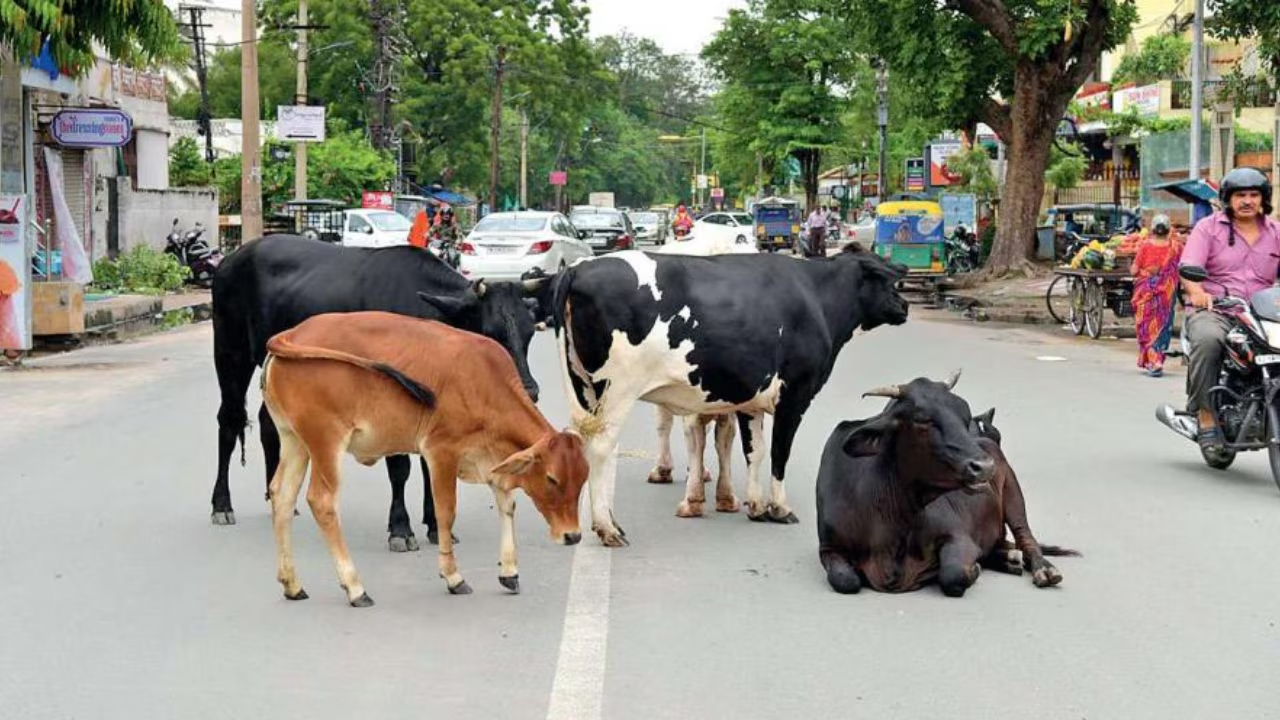
Over 7,500 Cow Shelters in UP
According to the Commission, there are more than 7,500 cow shelters in Uttar Pradesh, housing over 1.2 million stray cattleThe government recently increased the daily maintenance allowance per cow from Rs 30 to Rs 50CCTV surveillance systems have also been installed in most of these shelters.
Officials stated that the government aims to provide safe shelter for stray cattle while simultaneously minimising crop damage caused by animals roaming in agricultural fieldsMeanwhile, the government is also striving to generate additional rural income and employment by leveraging the state’s vast livestock base and its status as the country’s leading milk-producing stateOfficials stated that gaushalas (cow shelters) would be linked with local industries to promote economic activities based on cow dung and urine—such as the production of dung logs, dung-based paints, vermicompost, incense sticks, flower pots, and earthen lamps.
An official noted, “Products like Panchagavya, Ghanamrit, and Jeevamrit are also being promoted.” Furthermore, women’s self-help groups are being encouraged to participate in these initiatives to create local employment opportunities.
Additionally, the Cow Service Commission plans to assess gaushalas across various districts to identify activities suited to local resources and conditionsFor instance, districts with high potential for biogas production could focus on energy generation, while others might develop units for organic manure, dung-based products, or cow-urine-based goods.
According to officials, the broader objective of this initiative is to integrate cow conservation into the rural economy and create supplementary income sources in villagesThe government believes this will help boost the income of rural households through animal husbandry, natural farming, organic products, and related activities.