India produced its best wrestling campaign of the 21st century at Asian Games 2026, winning six medals, including two golds, two silvers and two bronzes.
Share Article
https://www.india.com/sports/others/asian-games-2026-indias-best-wrestling-show-of-21st-century-ends-with-six-medals-8533109/
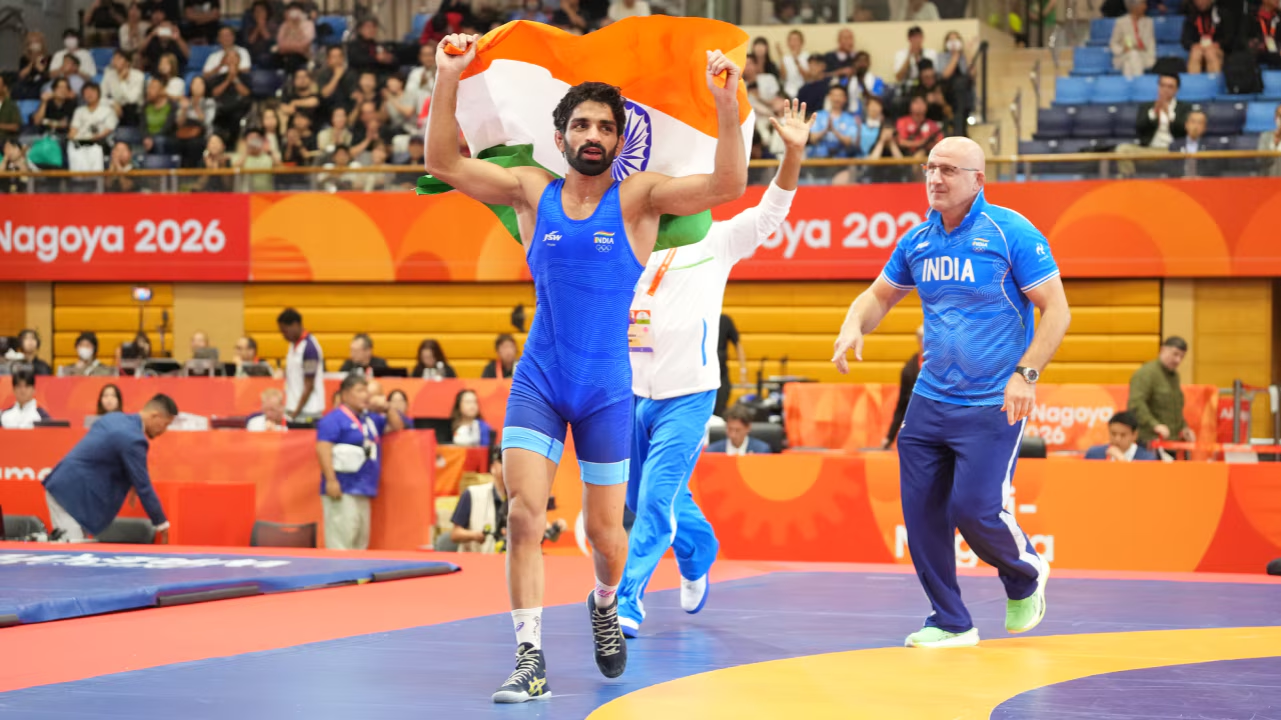
India’s Aman Sehrawat celebrates with the national flag after winning the men’s freestyle 57kg gold medal at the Asian Games 2026(Photo: IANS/Biplab Banerjee)
India’s wrestlers produced a campaign to remember at the Asian Games 2026 in Aichi-Nagoya, JapanThe Indian contingent returned with six medals – two gold, two silver and two bronze, making it the country’s best wrestling performance of the 21st century at the Asian Games.
India’s six-medal haul is also its best since the historic 1962 edition, when Indian wrestlers won 12 medalsThe latest campaign was led by Aman Sehrawat and Sujeet Kalkal, who won gold, while Nitesh Siwach and Antim Panghal claimed silverDeepak Punia and Sunil Kumar completed the medal tally with bronze.
Read more:
WATCH: Abhishek Sharma makes BIG statement on Vaibhav Sooryavanshi ahead of T20I series vs WI
Aman Sehrawat leads India’s gold rush
Aman Sehrawat produced one of the biggest performances of the campaign in the men’s 57kg freestyle categoryThe Paris Olympics bronze medallist defeated reigning world champion Han Chong Song 11-7 in the final to win gold.
The victory was especially important for Sehrawat after a difficult period that included a motivation slump and a stomach problemHis Asian Games gold was also an upgrade from the bronze he won at the previous edition.
“Ups and downs, injuries keep happening like thisThat phase also comes, but I had the belief in my mindWe should never give up, and I did the sameToday, I have won a gold medal in the GamesThe future goal is the Olympics,” he said after returning to India.
Sujeet Kalkal completes historic gold double
Sujeet Kalkal added India’s second gold in men’s freestyleCompeting in the 65kg category, Sujeet came back from 2-9 down to beat Tajikistan’s Abdulmazhid Kudiev 10-9 in a thrilling final.
The victory capped an unbeaten 2026 season for the world No2He had also won the Asian Championships and two Ranking Series events before claiming Asian Games gold.
“Whatever struggle I did has paid offThe final match was tough, but I was only thinking of winning that time,” he said.
Nitesh, Antim add two more silvers
Nitesh Siwach created history by reaching India’s first Asian Games final in the 97kg Greco-Roman category in 64 yearsAfter suffering a serious knee injury as a teenager and spending time helping his family business, Nitesh made a strong return to the mat.
He eventually lost 0-4 to Japan’s Yuri Nakazato but secured a memorable silver.
“I had aimed for goldI didn’t win gold, but I did secure the silver medal and I am very happy about thatSince this was my first Asian Games, I am delighted with the silver,” Siwach said.
Antim Panghal also improved on her previous Asian Games result by winning silver in the women’s 53kg categoryShe had won bronze at Hangzhou.
Deepak Punia, Sunil Kumar complete six-medal haul
Deepak Punia won bronze in the men’s 97kg freestyle category after moving up from his earlier 86kg and 92kg weight classesHe defeated Mongolia’s Gankhuyag Ganbaatar 2-1 in the bronze-medal bout.
Sunil Kumar added another bronze in Greco-Roman 87kgHis medal was historic as he became the first Indian Greco-Roman wrestler to win two Asian Games medals, having also taken bronze at Hangzhou.
A strong base for Los Angeles 2028 Olympic
India also had several wrestlers finish just outside the medalsSagar Jaglan, Mansi and Dipanshi finished fifth, while Manisha Bhanwala was seventh.
With six medals from 15 of the 18 weight categories entered, India’s wrestling campaign has provided a strong base for the next Olympic cycleThe focus now shifts towards Los Angeles 2028, with the medallists already setting their sights on Olympic success.
For India, the numbers tell the story: two gold, two silver and two bronze in Nagoya — the country’s best wrestling return at an Asian Games in more than six decades and its finest performance of the 21st century.