Chhattisgarh gets ample rainfall and has extensive forest cover, yet it continues to face water scarcity.

Published: April 24, 2026 11:57 AM IST
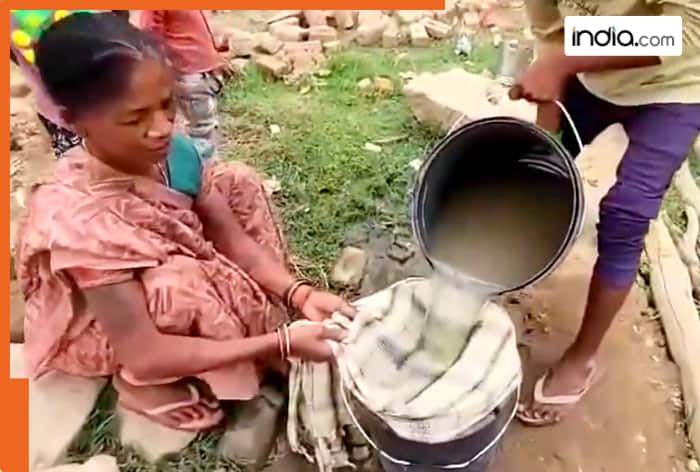
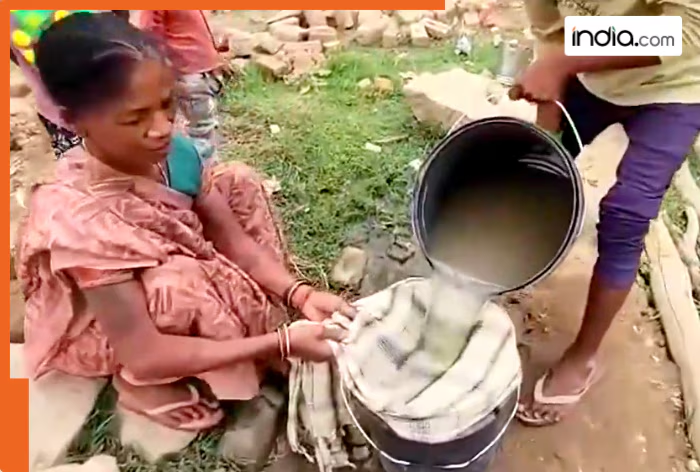
Chhattisgarh Water Crisis: As summer approaches, Chhattisgarh – which is also known as the ‘Rice Bowl of Central India’ – faces water shortage. Several rivulets, creeks and rivers run dry or witness low water levels during the summer season. Places such as Jashpur, Balrampur, Ambikapur, Surajpur and Marwahi are dealing with water shortage. But today’s story is about the Baiga tribe, living in Gaurela-Pendra-Marwahi, which is facing an acute drinking water shortage. The tribe, which is also known as ‘Sons of Nature’ is forced to drink muddy water. According to the video shared by news agency ANI, members of the tribe can be seen taking out muddy water from a well and then using a cloth for the filtration process.
The Baiga Tribe
The Baiga Tribe falls under the Particularly Vulnerable Tribal Group (PVTG), one of the highly marginalised and isolated tribal communities in the country. The tribe hails from Central India, primarily in Madhya Pradesh and Chhattisgarh. Known as the ‘Sons of Nature’, they traditionally practice slash-and-burn cultivation and are majorly dependent on forest produce. Baigas are also famous for their unique tattoo culture (godana) and a deep connection with forests. However, currently the tribe is facing an acute drinking water shortage.
#WATCH | Pendra, Chhattisgarh: In the Gaurela Pendra Marwahi district, the Baiga tribe are facing a drinking water crisis. (23.04) pic.twitter.com/RfW12txuhT
— ANI (@ANI) April 24, 2026
What Steps Has The Government Taken So Far?
Priya Soni, Executive Engineer, Public Health Engineering Department told news agency ANI that strict action has been taken against contractors who abandoned development work in the region.

Soni further told that some villages are dealing with ground water shortage and to deal with the situation, the department has requested hand pumps from the Tribal Development Department.
“In villages where we have available sources, we are continuing to engage contractors to complete the work. We have already blacklisted contractors who have abandoned work, and we are planning to terminate them by issuing final notices. Those villages where groundwater is unavailable are currently holding us back. We have requested some hand pumps from the Tribal Development Department for these purposes, and our departmental targets will also be met… We cannot give a definite timeline right now, but we have been given the target of completing all the schemes by 2027. We are now getting the work done as per that target. Every effort will be made to complete the scheme as soon as possible,” ANI quoted Priya Soni as saying.
#WATCH | Pendra, Chhattisgarh: Priya Soni, Executive Engineer, Public Health Engineering Department, says, “… In villages where we have available sources, we are continuing to engage contractors to complete the work. We have already blacklisted contractors who have abandoned… pic.twitter.com/A9dAlbCRDm
— ANI (@ANI) April 24, 2026
However, the Tribe and other villagers in the region are still dealing with an acute water shortage.
Chhattisgarh Water Shortage
It is to be noted that the Central India state is blessed with more forests compared to other states and it also receives plenty of rainfall during the monsoon season. But even after receiving plenty of rainwater the water shortages are increasing in several parts of the state.
According to a report by ETV Bharat, the reason of water shortage in the state is linked to illegal deforestation, industrial pollution, encroachment and illegal construction. This makes the state a classic case of plenty yet scarcity.
Average Rainfall In Chhattisgarh
The average rainfall in the state during the monsoon season ranges between 1,200 mm and 1,400 mm. Chhattisgarh is blessed with a tropical monsoon climate. It means that 80 to 85 percent of the state’s total rainfall occurs during the southwest monsoon season (June to September).
Chhattisgarh receives moderate rainfall, but it receives better rainfall than Rajasthan, Gujarat, Punjab and Haryana. But even after that faces water scarcity.