According to news agency PTI, the electorate comprises roughly 42 percent of Bengali Hindus, 34 percent of non-Bengali Hindus, and nearly 24 percent of Muslims, along with migrants from Bihar, Odisha, and Jharkhand.

Published: April 28, 2026 7:06 AM IST
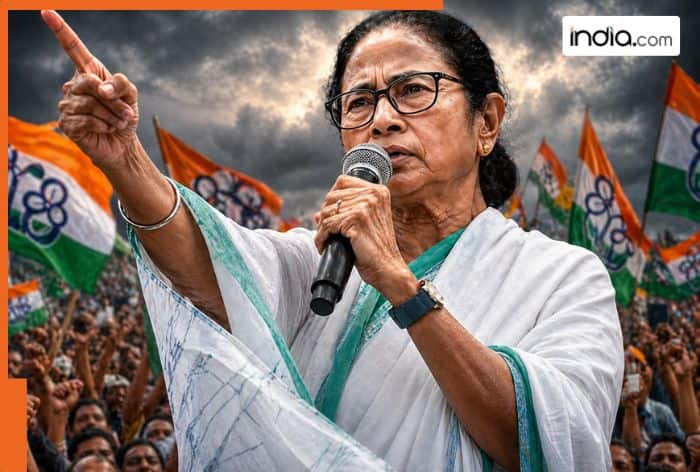
New Delhi: The second phase of the West Bengal Assembly elections is all set to be held on April 29, with 142 seats going to the polls. The fate of several high-profile candidates, including incumbent Chief Minister Mamata Banerjee and Leader of the Opposition Suvendu Adhikari, will be decided in this phase. Among all constituencies, South Kolkata’s Bhabanipur will be the center of media attention. Known as “mini-Bharat,” the seat comprises eight Kolkata Municipal Corporation (KMC) wards and has a vibrant mix of Bengali Hindus, Muslims, and migrants from Rajasthan, Gujarat, Bihar, Jharkhand, and Odisha.
It is important to note since 2011, the Bhabanipur seat has been a Trinamool Congress (TMC) stronghold, held by the party’s tallest leader, Mamata Banerjee. In the 2026 West Bengal Assembly election, however, what was once a safe seat for Mamata has become a fierce battleground. The saffron camp has fielded its most popular face in Bengal, Suvendu Adhikari, from this seat. The BJP, under Suvendu Adhikari’s leadership, has launched an all-out campaign to breach the fortress.
Mamata Banerjee and Bhabanipur seat:
- Bhabanipur has hitherto functioned as a steadfast political bastion for Chief Minister Mamata Banerjee and has consistently offered her an unassailable electoral refuge.
- In the 2011 assembly elections, the seat was won by TMC parliamentarian Subrata Bakshi, who later vacated it for Mamata, who was then the Union Railway Minister.
- She won the subsequent by-election by a margin of 54,213 votes.
- In 2016, defeating a united left-Congress opposition, the chief minister retained the seat by 25,301 votes.
- In both the elections, the BJP candidate wasn’t a heavyweight.
- In 2021, the BJP replaced the Left Front and became the principal challenger to the TMC.
- The defection of Suvendu Adhikari proved to be a major turning point.
- Their bitter rivalry peaked in Nandigram in 2021, where Mamata lost to Adhikari by a narrow margin of under 1956 votes.
- It was Bhabanipur that sent her to the Assembly with a bye-election, and helped her retain the CM’s post.

Why is Bhabipur a prestige battle for Mamata?
For Mamata Banerjee, the Bhabanipur seat is where she found her political bridge in the assembly, and the BJP is determined to make her feel the heat. Notably, this is no longer a seat where Mamata can easily fall back on. The BJP under Adhikari’s leadership has thrown its full weight behind a high-stakes campaign to repeat its Nandigram success.
“Jodi paren, vote ta amay deben… amake meeting ta porjonto korte dicche na (If you can, do cast your vote for me. They aren’t allowing me to even hold this meeting,” Mamata said as she walked off the stage at an election rally on Sunday. She alleged that her speech was being disrupted by a BJP rally nearby.
The phrase “if you can” in her appeal, coupled with her abrupt exit from the stage, has sparked widespread curiosity. Has Mamata lost confidence in the seat, or is she attempting to cast herself as a victim to garner sympathy?
What makes Bhabanipur so special?
Often called as a ‘mini Bharat,’ the Bhabanipur Assembly constituency has eight KMC wards (63, 70, 71, 72, 73, 74, 77 and 82), all currently represented by Trinamool councillors. Bhabanipur is not a usual Kolkata seat, it has around 40 percent of its voters belonging to non-Bengali communities, mainly Gujarati, Marwari, Punjabi, and Odia.
According to news agency PTI, the electorate comprises roughly 42 percent of Bengali Hindus, 34 percent of non-Bengali Hindus, and nearly 24 percent of Muslims, along with migrants from Bihar, Odisha, and Jharkhand.
The recent Special Intensive Revision (SIR) of electoral rolls has added an interesting angle. Over 47,000 names were deleted in Bhabanipur, with The Telegraph reporting that more than 40 percent of them were Muslims — a core TMC support base. Another 14,000 names remain under scrutiny.