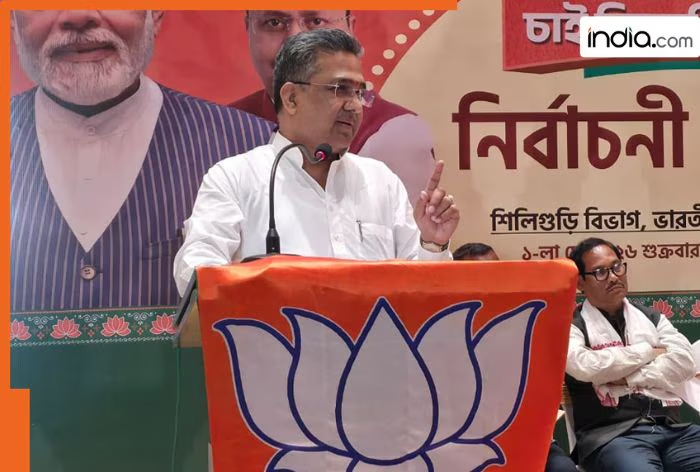
Sunil Bansal’s Bengal Election Strategy: Voting for the West Bengal Assembly elections has concluded. Exit poll results have also been released, showing the BJP in the lead. Therefore, it is important to discuss the “Kautilya” who formulated the Bengal election strategy and played a crucial role in garnering public support for the BJP.

Published: May 1, 2026 4:26 PM IST
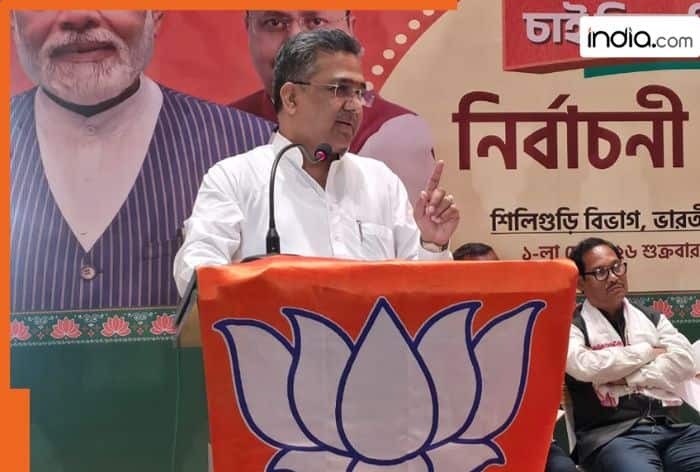
BJP National General Secretary Sunil Bansal, who coined the slogan “Fear out, trust in” for the West Bengal Assembly elections, has this time devised a strategy to win the state that Mamata Banerjee appears to be trapped in. A quartet of Bansal – a master of organisational skills, and election strategists Bhupendra Yadav, Biplab Deb, and Anil Malviya have successfully executed the entire task. He did such a job of churning the situation that in most of the exit polls, BJP is seen demolishing Mamata’s stronghold.
Throughout this election, the focus was on small public meetings, as per the strategy. These small meetings were held on a neighborhood and household basis. Over 12,000 street meetings were held in West Bengal’s 53 assembly constituencies. Additionally, 165,000 small meetings were held to establish communication with voters, especially women. These meetings created an atmosphere of “BJP Tai-BJP Chai.”
BJP’s strategy that entangled TMC

As part of the election strategy, it was initially decided not to target Mamata Banerjee, but instead launched a campaign to create an atmosphere against TMC MLAs. As part of this campaign, the BJP held approximately 80 press conferences and issued chargesheets against TMC MLAs in approximately 220 assembly constituencies. Subsequently, in the second phase, chargesheets were issued at the district level. Home Minister Amit Shah then put the final nail in the coffin by issuing a chargesheet against the Mamata Banerjee government. The impact of this campaign was such that the TMC was forced to change 77 of its candidates. Following this, the BJP launched a 10,000-kilometer-long Parivartan Yatra in Bengal.
‘Whoever wins the Brigade wins Bengal’
The enthusiasm for the BJP and the potential for change in Bengal can be gauged from Prime Minister Narendra Modi’s first public rally at Brigade Grounds in Kolkata. This rally caused worry lines on Mamata Banerjee’s forehead, as it is said that whoever wins Brigade Grounds wins Bengal. More than 500,000 people gathered at PM Modi’s rally. Following this, based on feedback from co-incharge and former Chief Minister of Tripura Biplab Deb, BJP leaders launched a direct campaign against Mamata Banerjee, reminding Bengali voters of the series of atrocities committed by her against “Maa-Mati-Manush.” In this vein, tickets were given to RG Kar and family members of the Sandeshkhali victims.
ALSO READ | West Bengal Assembly Election 2026 Highlights: 92 per cent voter turnout recorded
Focus on youth and women
Direct communication was conducted with youth and women, and millions of forms were filled under the Yuva Card and Matrishakti Card schemes. During the entire election campaign, 640 rallies were organized by the state and central leadership. Prime Minister Modi held 19 rallies and 2 road shows, covering approximately 42 organizational districts. Home Minister Shah held 29 rallies and 11 road shows, covering 29 organizational (23 administrative) districts. BJP National President Nitin Naveen also held approximately 17 events during the election campaign.