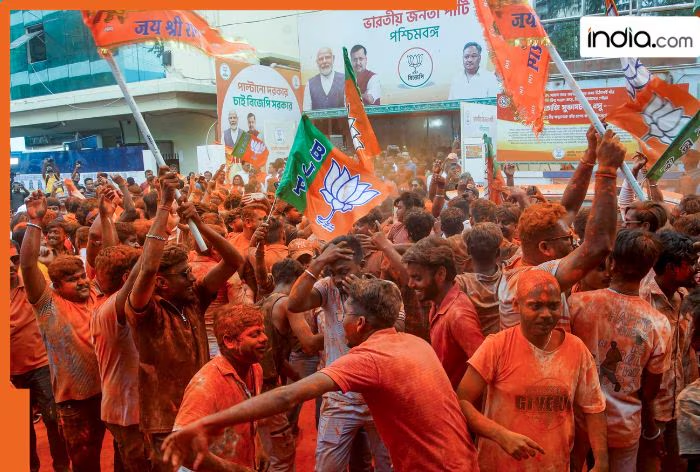
The BJP has registered a historic victory in West Bengal and has begun preparations to form a government, with May 9th set as the swearing-in date.

Updated: May 5, 2026 4:36 PM IST
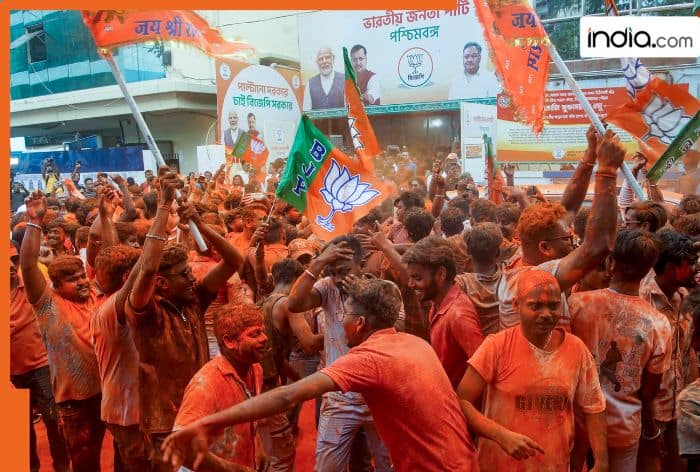
The Bharatiya Janata Party (BJP) on Monday scored a resounding victory in West Bengal, establishing itself in this crucial eastern Indian stronghold. Following this resounding victory, the BJP has set May 9th for the swearing-in ceremony of the new government. People are wondering why the BJP chose this date. Defense Minister Rajnath Singh is reportedly scheduled to visit Kolkata on Wednesday to speak with the BJP’s elected MLAs, after which the leader of the legislative party and the new Chief Minister of Bengal will be decided.
9th is special for Bengal
In fact, May 9 is the birth anniversary of Gurudev Rabindranath Tagore. The importance of Rabindranath Tagore’s music and literature to Bengal’s culture goes without saying. Throughout the election campaign, the Trinamool Congress and Mamata Banerjee alleged that the BJP would tamper with Bengal’s culture upon coming to power. Consequently, the BJP chose Rabindranath Tagore’s birth anniversary to form the new government, so that it could counter TMC’s allegations about how much the BJP cares about Bengal’s civilization and culture. West Bengal BJP President Samik Bhattacharya also endorsed May 9.
ALSO READ: ‘We have not lost West Bengal elections’: Mamata Banerjee makes big statement after massive loss

BJP’s victory in Bengal is special
The BJP’s decisive victory in West Bengal is not limited to electoral figures; it has reshaped the state’s politics, dealing a major blow to Mamata Banerjee’s long-standing dominance. Prime Minister Narendra Modi described it as a “victory for people’s power and good governance.” The BJP’s journey, which began with a limited presence in 2014, has led to a surge in 2019, challenges in 2021, and now a clear mandate in 2026.
This victory also reflects the BJP’s growing political presence at the national level. The party’s strategy focused on issues such as national security, counter-infiltration, border fencing, the security of the Siliguri Corridor, the CAA and the Unlawful Activities (Prevention) Act (UCA). It also emphasized law and order, industrial development, women’s safety, and the effective implementation of central government schemes.
Aggressive campaigning by top leaders like Prime Minister Modi and Amit Shah strengthened the anti-incumbency sentiment. However, even after victory, the BJP will face challenges such as a polarized society, regional identities, and a strong opposition from the Trinamool Congress.
Nevertheless, the result marks a major political shift, transforming the BJP from a challenger to a ruling force and catapulting Bengal politics into a new era.