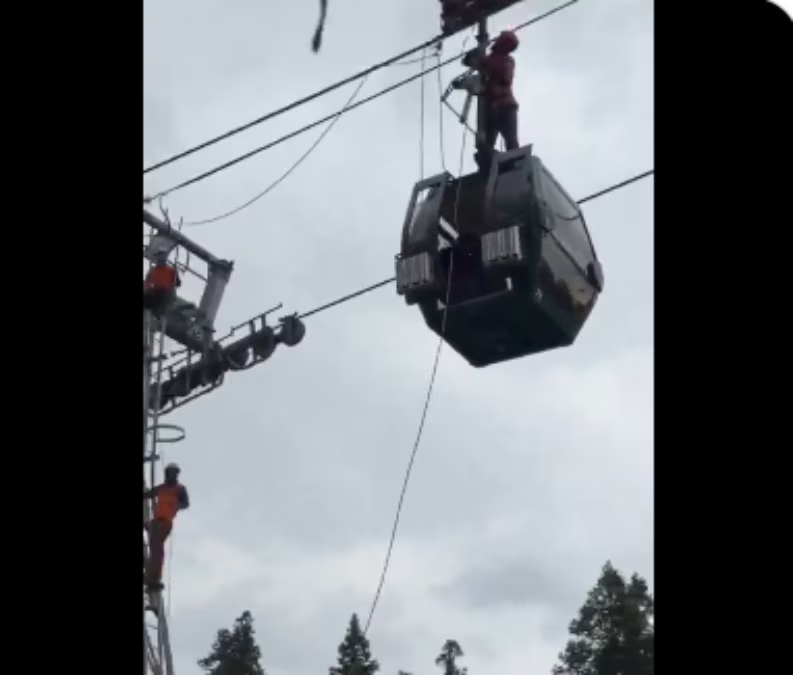
Following the incident, the Indian Army and the Tourism Department launched a joint major rescue operation. At least, 300 tourists have been safely evacuated.

Updated: May 26, 2026 10:40 AM IST
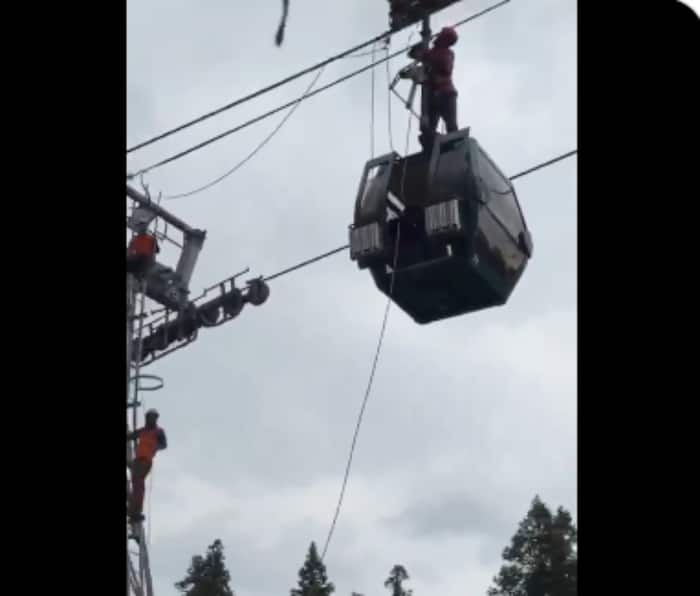
Gulmarg Gondola Rescue: A major accident occurred in Gulmarg, Jammu and Kashmir, where a component of the gondola cable car broke, disrupting the ropeway service. This technical fault left approximately 300 tourists trapped in 62 floating cabins. Following the incident, the Indian Army and the Tourism Department launched a joint major rescue operation. At least, 300 tourists have been safely evacuated.
It is being reported that a key component of the cable car suddenly broke, causing the entire ropeway system to come to a halt. At the time of the accident, a total of 62 cabins were operational, carrying approximately 300 tourists who had come to enjoy the beautiful valleys of Kashmir. As soon as the cable car stopped, the tourists in these 62 cabins were left breathless, and panic ensued.
Union Home Minister Amit Shah has praised the rescue operation carried out after the cable car accident in Gulmarg, Kashmir. Sharing a post on social media, he wrote, “Salute to the country’s disaster response forces for safely evacuating all 300 tourists trapped in 65 hanging cabins in Gulmarg.” Amit Shah stated that the SDRF, NDRF, Indian Army personnel, local police, and district administration immediately took charge. After a difficult six-hour operation, all passengers were safely rescued. The entire nation salutes the courage and unmatched skill of the soldiers.
Four and a half hours of terror in the air
A female tourist from Australia said that she was trapped in the cabin for five hours. Amidst the rain, people were shouting for help from above. While she praised the army’s rescue operation, this horrific scene terrified her to the core.

Mismanagement on the first stage
Tourists who safely escaped from their cabins and were stranded on the first stage expressed their anger at the administration’s gross mismanagement. They allege that after the gondola broke down, the management did not provide them with any assistance or transportation. They were told to descend using their own means (on foot, by horse, or by cart). Meanwhile, local horsemen took advantage of their distress and began demanding 2,000-3,000 rupees. It was impossible to seat small children on horses, forcing elderly people, women, and crying children to walk several kilometers through muddy and slippery paths.