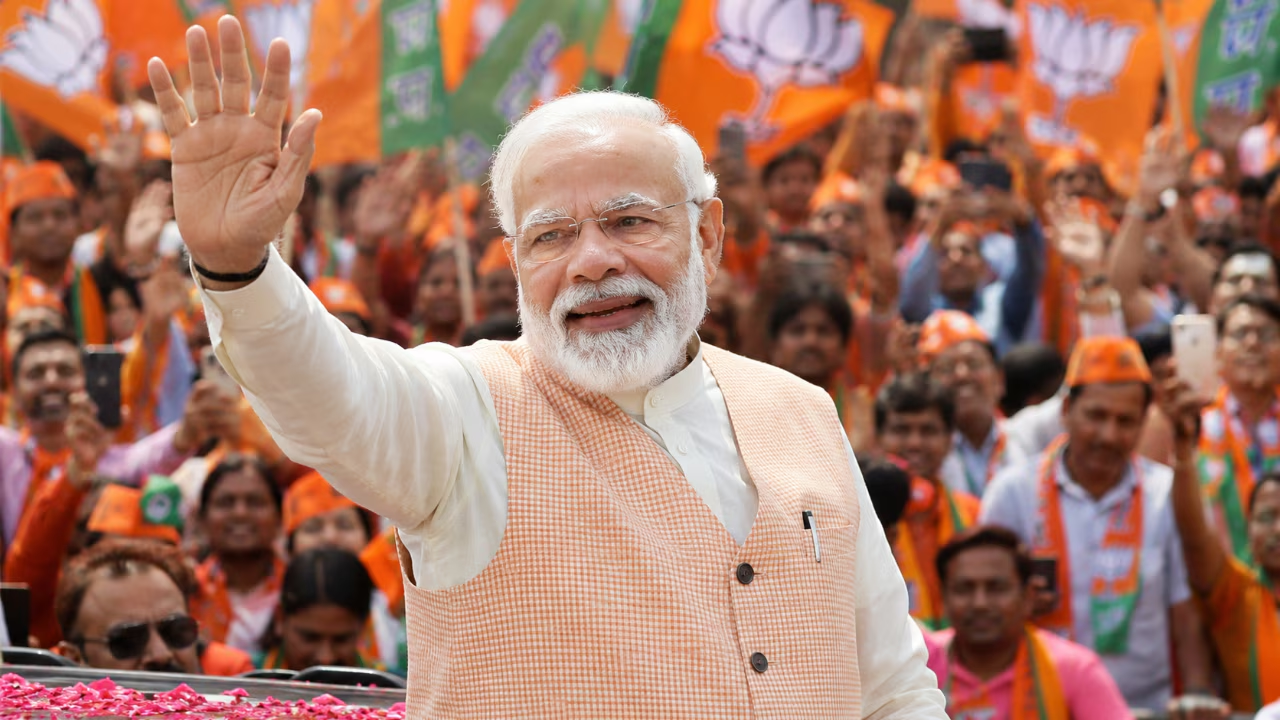
Over the last 12 years, more than 32 crore Jan Dhan accounts have been opened for women, while the empowerment of rural women has been strengthened through over 91 lakh self-help groups
Updated: June 9, 2026, 3:09 PM IST
Share Article
https://www.india.com/news/india/12-years-modi-government-article-370-to-ram-mandir-12-historic-decisions-that-defined-12-years-of-modi-sarkar-8441014/
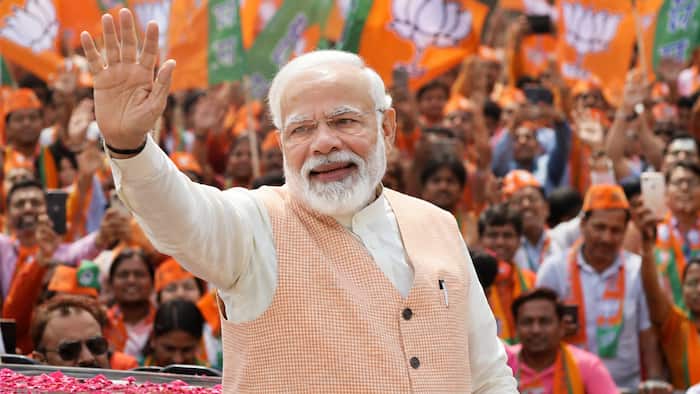
Prime Minister Narendra Modi
New Delhi: Prime Minister Narendra Modi recently marked a historic milestone, completing 12 years in office. First sworn in on May 26, 2014, his tenure has been defined by a focus on comprehensive socio-economic development, infrastructure expansion, and digital transformation, with the goal of achieving a Viksit Bharat (Developed India) by 2047.
He also surpassed Jawaharlal Nehru’s record to become India’s longest-serving continuously elected prime minister, reaching a 4,399-day milestone in office. While Nehru was India’s first prime minister, who served for 16 years and 286 days until his death, Modi is the longest-serving head of an elected government (combining his time as prime minister and Gujarat chief minister).
The past 12 years had ushered in a new era of development, public welfare and citizen-centric governance. From Garib Kalyan to women’s empowerment, from farmer welfare to creating new opportunities for the youth, from modern infrastructure to national security, 12 years of service have written a new saga of transformation, progress and self-confidence in every sector.
Over the last 12 years, more than 32 crore Jan Dhan accounts have been opened for women, while the empowerment of rural women has been strengthened through over 91 lakh self-help groups. Other notable achievements of the government include the expansion of metro rail networks to more than 1,100 km across 26 cities, the operation of 164 Vande Bharat trains, an increase in the number of airports from 74 to 164, and the establishment of over 2.2 lakh startups across the country.
Data shows that the financial inclusion efforts under the Pradhan Mantri Jan Dhan Yojana, under which more than 58 crore bank accounts have been opened and deposits have crossed nearly Rs 3 lakh crore. Under the PM SVANidhi scheme, more than Rs 18,600 crore had been disbursed through over 1.15 crore micro-loans to support urban street vendors.
In the last 12 years, India moved forward with renewed confidence across sectors, including infrastructure, the digital revolution, women’s empowerment, farmer welfare and global outreach. He said the trust of 140 crore Indians remained the country’s greatest strength and the driving force behind the vision of a Viksit Bharat.
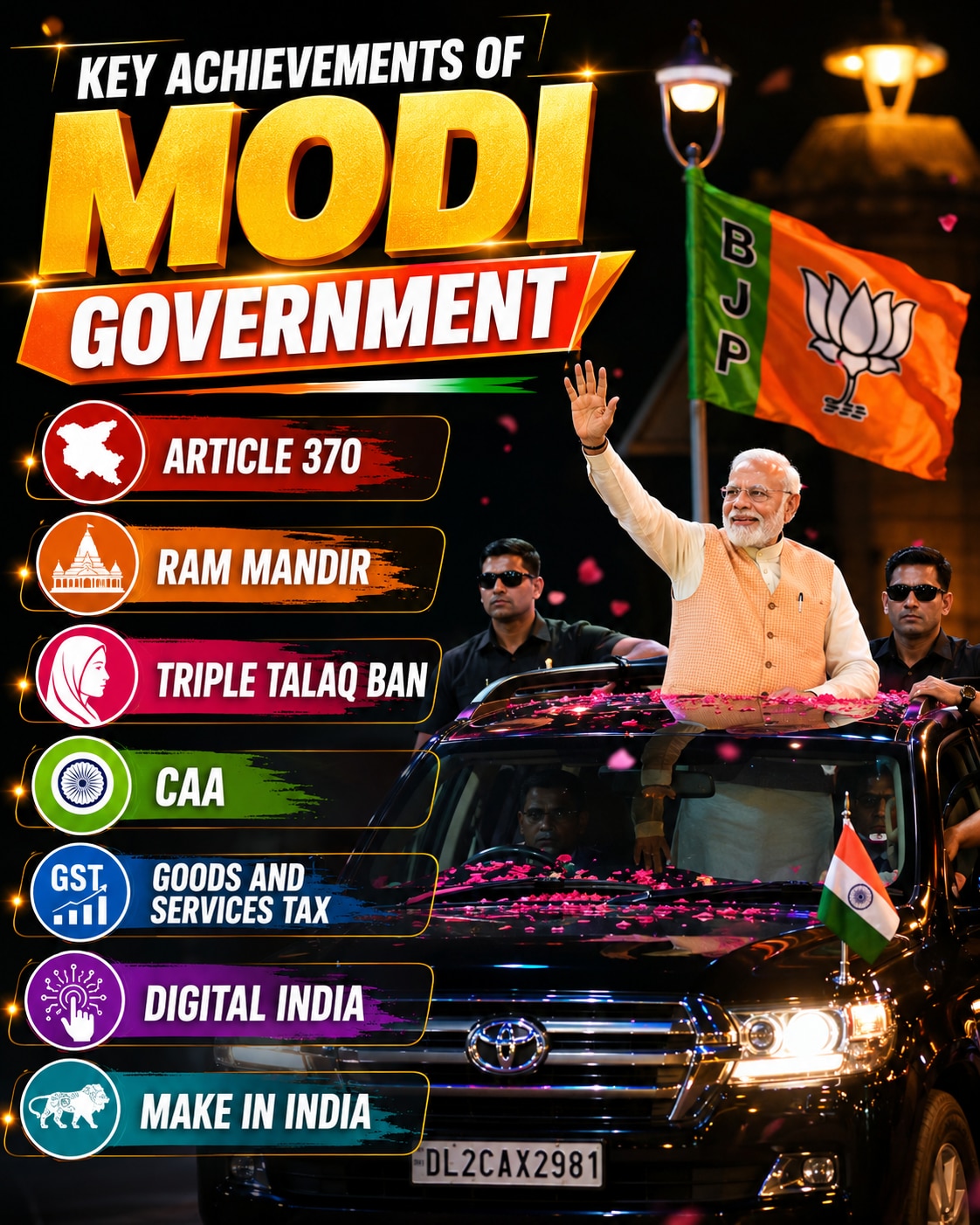
Here are 12 major transformations often highlighted during the Modi government’s tenure:
Digital India Revolution:
With the Digital India campaign, the Modi government transformed governance and public services through digital platforms, online payments, e-governance, and internet connectivity. Today, India has become one of the world’s largest digital economies.
Infrastructure:
India has seen rapid growth in highways, expressways, railway modernization, airports, metro networks and rural road connectivity, especially in remote regions.
UPI And Digital Payment:
India’s payment ecosystem changed after Unified Payments Interface (UPI), making digital transactions fast, accessible and widely used across urban and rural areas.
Ram Mandir Construction:
The construction of the Ram Temple in Ayodhya became a historic and emotional milestone for millions after decades of legal and political debate.
Goods And Services Tax (GST):
GST replaced multiple indirect taxes with a unified tax system, aiming to simplify taxation and create a single national market.
Abrogation Of Article 370:
The government revoked Article 370, removing the special status of Jammu and Kashmir and reorganising the region into Union Territories.
Triple Talaq Ban:
The ban on Triple Talaq is one of the greatest achievements of the Narendra Modi government. It criminalized the practice of instant Triple Talaq and has been described as a major step toward ensuring justice, dignity, and protection for Muslim women.
Swachh Bharat Mission:
The nationwide cleanliness campaign focused on sanitation, toilet construction and hygiene awareness across urban and rural India.
Aatmanirbhar Bharat Initiative:
The self-reliance campaign encouraged domestic manufacturing, local industries and reduced dependence on imports.
Welfare Schemes Expansion:
Schemes such as PM Awas Yojana, Ujjwala Yojana, Ayushman Bharat and Jal Jeevan Mission expanded welfare outreach to millions of beneficiaries.
India’s Global Diplomacy Push:
India strengthened its global presence through active diplomacy, international partnerships and leadership roles in forums like the G20.
Startup And Manufacturing Growth:
Initiatives such as Startup India and Make in India have fostered entrepreneurship, driven innovation, and attracted investment in the manufacturing sector.