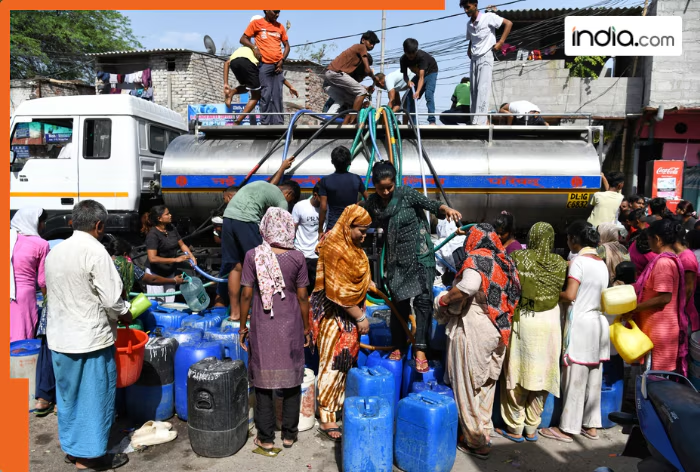
The entire world plunged into a major oil shortage due to the restrictions imposed by Tehran in the Strait of Hormuz owing to the conflict involving the United States, Israel, and Iran.
Published: June 19, 2026, 11:40 AM IST
Share Article
https://www.india.com/news/india/united-states-iran-us-peace-deal-tehran-crude-oil-petroleum-diesel-emi-aircraft-prices-soap-medicines-medicines-syringes-glucose-bottles-medical-tubes-gloves-face-masks-8450793/

From soap and medicines to petrol, here’s what could get cheaper in India after today’s agreement
New Delhi: In a significant development, the United States and Iran are set to come face-to-face at Switzerland’s Bürgenstock Resort for historic peace talks today after 107 days of conflict. According to the reports, the two sides are expected to discuss the implementation of the agreement and the roadmap ahead. It is important to note that the proposed peace agreement between the US and Iran, scheduled to take effect on June 19, will bring significant economic relief for India.
Notably, India depends highly on the global energy supply routes as it imports nearly 85 percent of its crude oil requirements. As oil and gas shipments through the Strait of Hormuz return to normal following the agreement, prices of petrol, diesel, and liquefied petroleum gas (LPG) are expected to ease.
In addition, the deal could help reduce transportation and manufacturing costs, benefiting a wide range of industries and consumers across the country.
A decline in crude oil prices would make petroleum-based raw materials such as synthetic fibres, rubber, plastics, and petrochemicals cheaper. As a result, products like clothing, soap, detergents, cosmetics, medicines, tyres, and even agricultural inputs could become more affordable over time.
Petrol and Diesel Prices Could Fall
The entire world plunged into a major oil shortage due to the restrictions imposed by Tehran in the Strait of Hormuz owing to the conflict involving the United States, Israel, and Iran. This also pushed up the global crude oil prices. Since India imports more than 85 percent of its crude oil requirements, any disruption in supply has a significant impact on the country.
If the Strait of Hormuz fully reopens today, the crude oil imports are expected to flow uninterrupted, increasing global supply and easing prices. This could eventually lead to lower petrol and diesel prices in India.
India and its dependence on LPG import:
- India is heavily dependent on LPG imports, with nearly 88 percent of its LPG imports linked to this route.
- A fully operational Strait of Hormuz would ensure adequate LPG supplies, helping the government keep prices stable and reduce the subsidy burden.
- The benefits could directly reach household consumers.
- Diesel is used not only in transportation but also extensively in agriculture, cold storage, and logistics.
- Transportation costs play a crucial role in moving fruits, vegetables, and other food items across states.
- In addition, fertilizers imported from Gulf countries are vital for Indian agriculture. If diesel and fertilizer prices decline, food prices could also come down.
Cosmetics and Personal Care Products May Cost Less
Cold creams, Body lotions, Lipsticks, Kajal (eyeliner) could decline as petroleum-based raw materials become cheaper.
Footwear Prices Could Fall
Clothing and Home Furnishing Products Could Get Cheaper
Products such as: Sportswear, Ready-made garments, Curtain, Carpets could see price reductions as the cost of synthetic fibres and petrochemical-based inputs falls.
Medical Products Could Become More Affordable
The prices of several healthcare products may decline, including: Medicines, Syringes, Glucose bottles
Medical tubes, Gloves, Face masks
Many of these products rely on petroleum-based plastics and chemicals during manufacturing.
Agricultural Inputs May Become Cheaper
Several pesticides and crop-protection chemicals used to safeguard crops from pests and diseases are petroleum-derived. Lower crude oil prices could reduce their production costs, benefiting farmers.
Airfares Could Become Cheaper
EMI Relief May Also Be Possible
If crude oil prices continue to fall, inflation could ease alongside fuel prices. This may give the Reserve Bank of India (RBI) greater flexibility to keep interest rates low or even reduce them in the future.
As a result, consumers could benefit from lower EMIs on:
Home loans, Car loans, Business loans Soap, Detergents, and Daily-Use Products Could Get Cheaper
Raw materials such as polypropylene and polyethylene, which are used to manufacture:
Laundry powders and detergents, Bath soaps, Plastic packaging, Wrappers Containers and lids
The tyre industry could benefit significantly from falling crude oil prices because synthetic rubber, a key component in tyre manufacturing, is petroleum-based.