India has witnessed several high-profile murder investigations where digital footprints, forensic science, DNA analysis, mobile phone records, CCTV footage, and electronic evidence played a decisive role.
Updated: June 28, 2026, 1:05 PM IST
Share Article
https://www.india.com/news/india/sheena-bora-jessica-lal-shraddha-walkar-sahil-goyal-chetan-chaudhury-ketan-agarwal-forensic-evidence-cbi-home-ministry-murder-crime-in-india-ncrb-data-8459814/

Raped, forced to drink urine: Self-styled spiritual guru tortures, molests woman for years | Image: X
New Delhi: In a significant development, a shocking confession has emerged in the Ketan Agarwal murder case in Pune. Agarwal, a realtor, had fallen to his death from a cliff at Lohagad fort, with the cops alleging Siya Goyal had planned it along with Chetan Chaudhary since she didn’t want to marry her fiance. The police are probing the different angles linked to the lives of Siya Goyal and her lover Chetan Chaudhary. Goyal has allegedly confessed during her questioning that killing Agarwal felt “easier” than confronting her family and calling off their November wedding, said sources in Pune Rural Police.
During his 10-hour interrogation, Sahil Goyal had told the cops that he knew Chaudhary and that her sister met him at one of his cricket matches. They grew closer over time after they met at a common friend’s Diwali party last year, police said. Siya Goyal’s parents, however, had denied they ever met or spoke to Chaudhary. Her lawyer has described Chaudhary as a “friend”.
It is important to note that in the past also, India has witnessed several high-profile murder investigations where digital footprints, forensic science, DNA analysis, mobile phone records, CCTV footage, and electronic evidence played a decisive role.
Cases most dependent on digital evidence
- Sheena Bora murder case
- Shraddha Walkar murder case
- Jessica Lal murder case
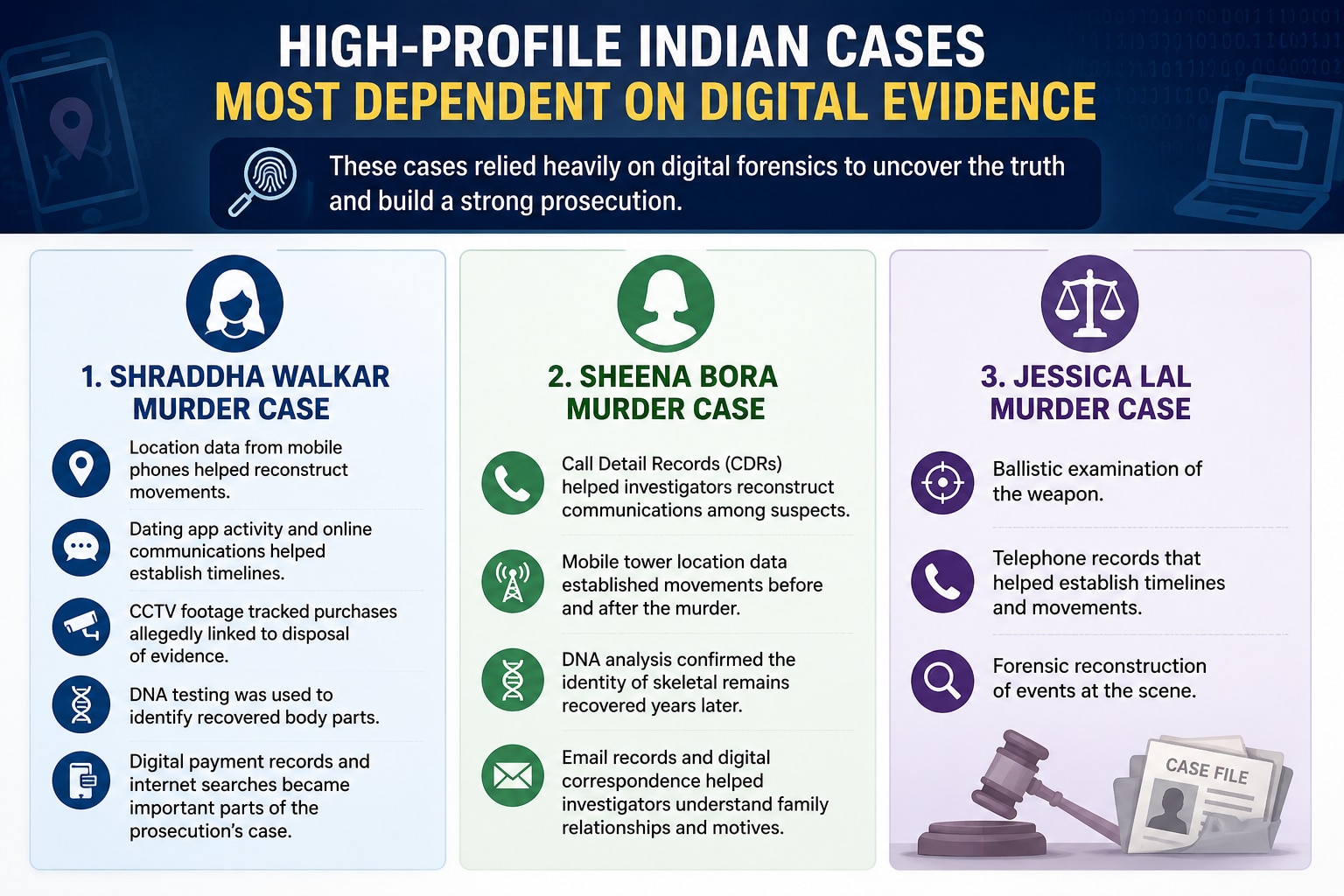
These investigations relied heavily on:
- Mobile phone data
- Locations cell phone towers
- CCTV footage/evidences
- Payments through digital means
- Mails and chats
- Internet search histories
- GPS and app records
Shraddha Walkar murder case:
The investigators relied massively on digital and forensic evidence in the Shraddha Walkar murder case. These pieces of evidence played a pivotal role in reconstructing the sequence of events and building the prosecution’s case. At the time of investigation, mobile phone location data helped the police trace movements and establish timelines. It is important to note that the activity on dating apps and online communications also gave additional insights into interactions and events leading up to the crime.
According to the reports, the police officials used CCTV footage to track purchases allegedly linked to the disposal of evidence. The digital payment records also helped investigators in corroborating these findings. Meanwhile, DNA testing played a crucial role in identifying the recovered body parts, making forensic science central to the investigation.
Sheena Bora murder case
Investigators dependended heavily on digital and forensic evidence to piece together the events surrounding the crime in the Sheena Bora murder case. The officials reconstructed communications among the suspects using the Call Detail Records (CDRs). Mobile tower location data helped establish their movements before and after the murder.
DNA analysis played a crucial role in confirming the identity of skeletal remains that were recovered several years later. Additionally, email records and other forms of digital correspondence provided investigators with valuable insights into family relationships, hidden identities, and possible motives, making the case one of India’s most prominent examples of the use of technology and forensic science in criminal investigations.
Jessica Lal murder case: Key details in points
- Witness testimony played a pivotal role in the investigation and trial in the Jessica Lal murder case
- Forensic and electronic evidence proved equally important
- The forensic and electronic evidence played a key role during the appeals process.
- Ballistic examination of the weapon helped establish crucial links between the firearm and the crime
- Telephone records enabled investigators to reconstruct timelines and track the movements of those involved.
Forensic reconstruction of the events at the crime scene provided investigators and prosecutors with a clearer understanding of how the murder unfolded, strengthening the case and contributing to the eventual conviction.
Nithari serial killings case
In the Nithari serial killings case, investigators relied heavily on advanced forensic techniques to identify victims and establish links to the crime scenes. DNA profiling proved essential in identifying many of the victims, while forensic anthropologists matched skeletal remains recovered during the investigation. Biological evidence collected from the sites further helped connect the victims to the crime scenes and strengthened the prosecution’s case against the accused, Surinder Koli and Moninder Singh Pandher.
At the time, the investigation marked one of the largest and most extensive uses of forensic identification techniques in India, highlighting the growing importance of scientific evidence in criminal investigations.