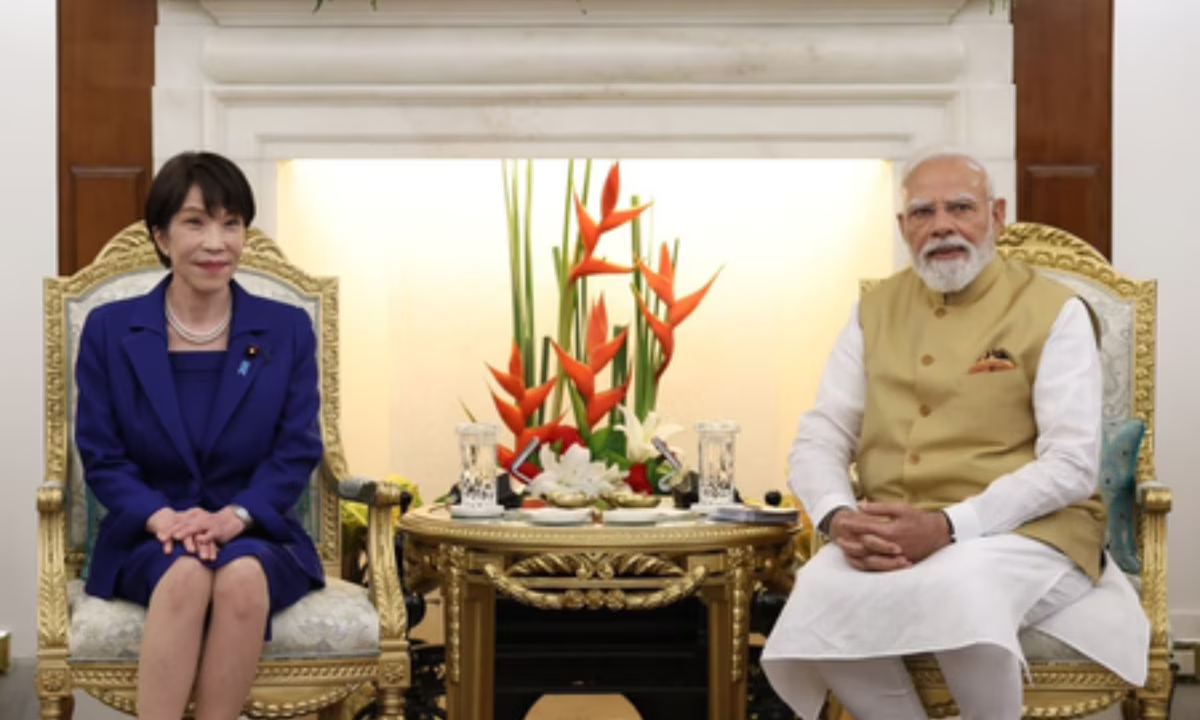
At the 16th India-Japan Annual Summit, Prime Ministers Narendra Modi and Sanae Takaichi expressed serious concern over the South China Sea, strongly opposing unilateral actions, militarization and any attempts to alter the status quo by force.
Share Article
https://www.india.com/news/world/freedom-of-navigation-concern-over-south-china-sea-what-was-discussed-between-pm-modi-and-japanese-pm-takaichi-on-her-historic-india-visit-8464001/
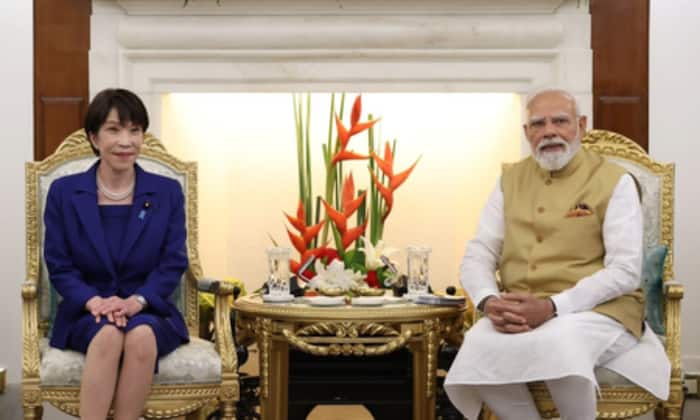
Prime Minister Narendra Modi and his Japanese counterpart Sanae Takaichi (IANS image)
India-Japan relations: Prime Minister Narendra Modi and his Japanese counterpart Sanae Takaichi on Thursday expressed their serious concerns over the situation in the East and South China Sea. According to the Joint Statement released after their meeting in New Delhi, both leaders reiterated their strong opposition to any unilateral actions that endanger the safety as well as freedom of navigation and overflight and attempts to change the status quo by force or coercion.
“They shared their serious concerns over the growing militarization of disputed features. They reaffirmed that maritime disputes must be resolved peacefully and in accordance with international law, as reflected in UNCLOS (United Nations Convention on the Law of the Sea),” the statement mentioned. They also shared serious concern over North Korea’s nuclear and missile programmes and reaffirmed their commitment to the complete denuclearisation of North Korea in accordance with relevant United Nations Security Council (UNSC) resolutions.
Read more:
PM Modi, Japan PM Takaichi to hold Annual Summit talks in Delhi today; What’s on the agenda?
Both leaders stressed the importance of addressing continued concern regarding the proliferation of nuclear and missile technologies to and from North Korea in the region and beyond. They also urged all UN Member States to abide by their international obligations under the UNSC resolutions to implement sanctions, including the prohibition on the transfer to North Korea or procurement from North Korea of all arms and related material. They reconfirmed the necessity of immediate resolution of the abductions issue.
“The two Prime Ministers remain concerned over the situation in Myanmar and its regional impact. They reiterated their call for the immediate cessation of hostilities and creation of a conducive environment for an inclusive dialogue among all stakeholders for a Myanmar-led, Myanmar-owned peaceful and durable solution,” the Joint Statement added. They also reiterated their commitment to sustainable peace and stability in the Middle East.
Regarding the situation surrounding Iran, they stressed the importance of securing free and safe navigation through the Strait of Hormuz, maintaining stable supply chains for energy and other essential goods, and upholding international law, in particular as reflected in UNCLOS.
Both leaders stressed the imperative of advancing the Comprehensive Plan to rebuild Gaza and of living up to the commitment to ensuring a two-State solution. They reaffirmed that continued diplomatic efforts are indispensable to restoring stability at the earliest and achieving lasting peace in the region.