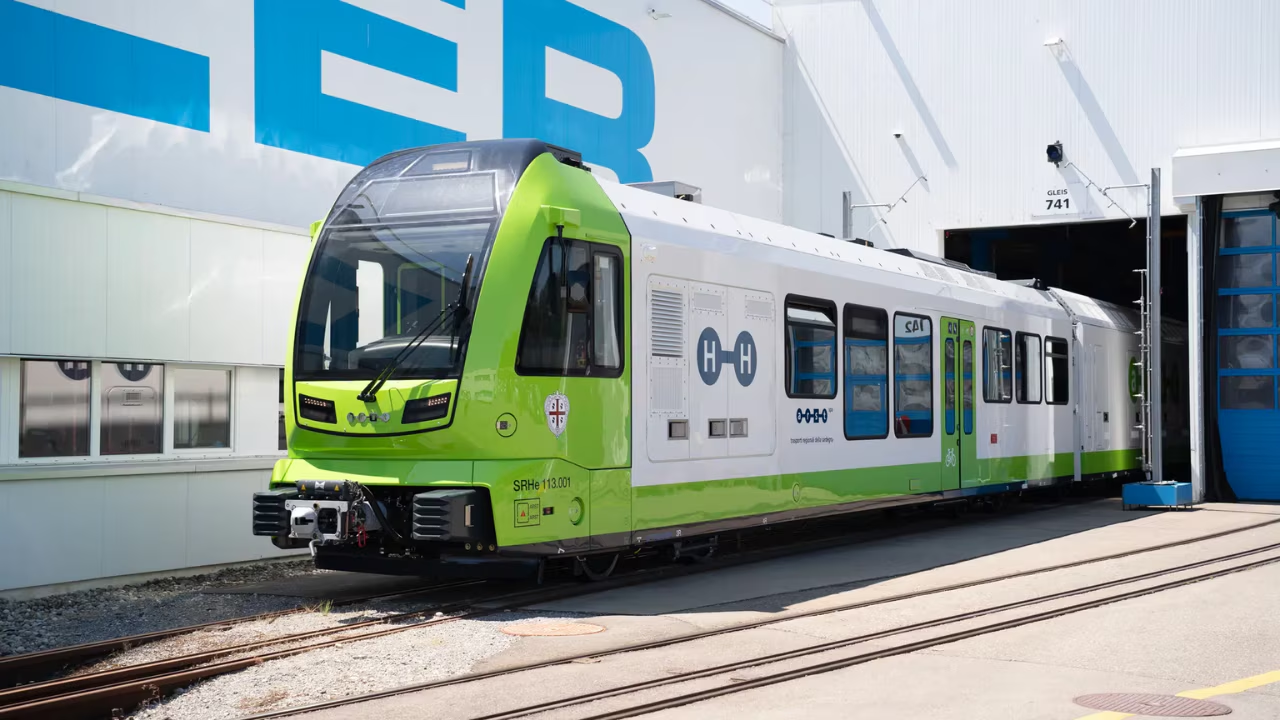
According to reports, the hydrogen-powered train will operate six days a week, making two trips daily. It will have one weekly maintenance day, during which services will remain suspended.
Updated: July 9, 2026, 1:24 PM IST
Share Article
https://www.india.com/news/india/hydrogen-powered-train-delhi-ncr-hmu-trains-sonipat-jind-narendra-modi-haryana-noida-gurugram-shakur-basti-8469261/
Hydrogen Train
New Delhi: In a major development, India’s first Hydrogen Multiple Unit (HMU) train, developed on the lines of DMU and EMU trains, is set to begin its first commercial run between Sonipat and Jind. According to the reports, Prime Minister Narendra Modi is likely to flag off the train on July 13 or July 17, with July 17 considered the more likely date for its commercial launch.
According to reports, the hydrogen-powered train will operate six days a week, making two trips daily. It will have one weekly maintenance day, during which services will remain suspended. The train’s limited schedule of two trips a day is due to its hydrogen refuelling capacity. On a single refuelling, the hydrogen-powered train will be able to travel approximately 350–360 kilometres.
Here are some of the key details:
- The train will operate much like a regular passenger service.
- Out of its 10 coaches, eight will be reserved for passengers, with a total carrying capacity of around 2,600 passengers.
- The train is equipped with eight fuel cells.
- Although it has a design speed of over 130 km/h, its maximum operating speed during commercial service will be limited to 75 km/h.
- The hydrogen-powered train will operate only on the Sonipat–Jind section.
- According to the reports, there are plans to introduce it on additional routes across Delhi, Haryana, and other parts of the country in the future.
- When the train is brought from Sonipat to Shakur Basti in Delhi for maintenance, it will not run on its hydrogen propulsion system.
- Instead, it will be hauled using a conventional locomotive.
“At maximum passenger load and operating conditions, it will consume about 300 kg of hydrogen per day. The train is designed to safely reach a maximum speed of 110 kmph; however, its operational speed on the Jind-Sonipat route will be 75 kmph,” railway officials said.
Referring to a Railway Board’s circular, officials said that since this train has been permitted to operate strictly between the Jind and Sonipat section only and its maintenance facilities have been created at Shakurbasti in Delhi, its hydrogen power system will be switched off as per safety protocol to bring it to a dead condition, and a diesel locomotive will haul the entire train to Shakurbasti for maintenance.
Referring to a Railway Board’s circular, officials said that since this train has been permitted to operate strictly between the Jind and Sonipat section only and its maintenance facilities have been created at Shakurbasti in Delhi, its hydrogen power system will be switched off as per safety protocol to bring it to a dead condition, and a diesel locomotive will haul the entire train to Shakurbasti for maintenance.