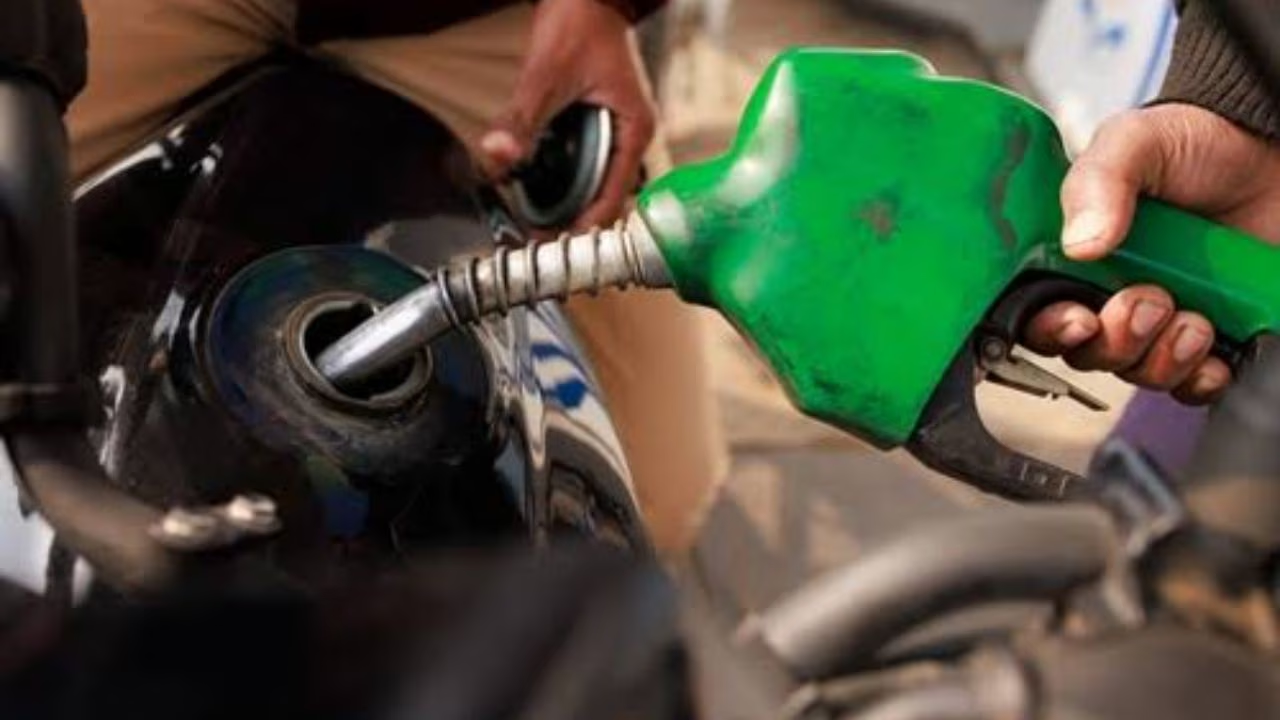
Biofuel for vehicles is now being produced from cow dung. It’s being produced in Gujarat with the help of Maruti Suzuki and a dairy, and costs ₹80 per kg.
Published: July 16, 2026, 3:40 PM IST
Share Article
https://www.india.com/news/india/amid-ethanol-crisis-is-cow-dung-is-being-used-as-vehicle-fuel-in-india-the-price-is-extremely-low-updates-8475795/
Amid ethanol crisis, is cow dung is being used as vehicle fuel in India, the price is expected to be… (File)
Due to tensions in West Asia, crude oil prices have risen sharply, leading to a surge in the prices of petrol, diesel, and other fuels. Meanwhile, the world has focused on finding alternatives to crude oil. Now, in Gujarat, cow dung is being used as a fuel alternative to petrol, and it is also much cheaper than petrol.
A bio-CNG station in Banaskantha, built in collaboration with Suzuki Motor Corporation and Banas Dairy, is supplying fuel made from animal dung to 600 to 700 vehicles daily. It sounds novel, but with global energy prices uncertain due to the ongoing conflict in West Asia, this simple experiment could offer a glimpse into how India can wean itself off expensive imported fuel.
Read more:
E20 row: Nitin Gadkari’s big statement, says average car owner can’t check mileage on their own
How much does it cost?
According to a Bloomberg report, the station sells bio-natural gas, made from methane extracted from animal dung. It costs around 80 rupees per kilogram, which is more than 20 rupees cheaper than petrol in some parts of India. The plant collects approximately 88 tons of animal dung daily from 16 villages. Farmers are paid around 1 rupee per kilogram for the dung, providing them with an additional source of income.
How does this model work?
Banas Dairy purchases cow dung from villages, while Suzuki brings in capital and vehicle demand. In Bukhala village, 32-year-old Bhimjibhai Nathubhai, who owns about 30 cattle, sells about 400 kilograms of cow dung to the plant every day and earns ₹400, in addition to his income from his millet crop. He also fuels his two CNG cars with biogas produced nearby.
Why does this matter?
These projects come at a time when India is striving to increase energy security and diversify fuel sources after the Iran war. India already produces bio-CNG from municipal solid waste, agricultural residues, and fodder crops like Napier grass, and buses in Indore run on biogas made from wet waste. But efforts to scale up production of this fuel have become even more urgent.
What are its benefits beyond cheap fuel?
The project is designed as a cyclical model. Methane gas from animal waste is collected and used as transportation fuel, while the remaining slurry after digestion is converted into organic fertilizer and sold to nearby farmers. Nathubhai said that this fertilizer has helped restore soil fertility after years of heavy urea use. Industry officials say such projects can help increase farmers’ incomes, reduce emissions, and reduce dependence on imported chemical fertilizers.
Could bio-CNG be a game-changer in India’s energy landscape?
Automobile manufacturers and major corporations are showing interest. Suzuki Motor and its Indian unit have invested heavily in CNG vehicles, while Reliance Industries Ltd. and the Adani Group are also investing in biogas production. India plans to increase the price paid to biogas producers, and a strategic plan signed during a visit to Japan this month has accelerated the addition of 1,000 new biogas plants.
What could be the obstacle?
Production volume remains the main challenge. According to estimates by the Union Oil Ministry, India consumes 190 million cubic meters of gas daily, half of which is imported, while current production is a mere 0.3 million cubic meters per day. The Confederation of Indian Industry (CBG) says that under current circumstances, annual CBG production will only reach 21.4 million tons by 2030, while with a moderate growth rate, it could reach only 39.8 million tons, well below the original target of 150 million tons.
The problem isn’t just producing the fuel, but also collecting and transporting the dung to the plants and transporting the gas to buyers. These plants are located in agricultural areas, far from pipelines, which increases costs. Officials at the Banaskantha plant estimate that the capital cost and limited production could make it financially unviable for at least the next three years.