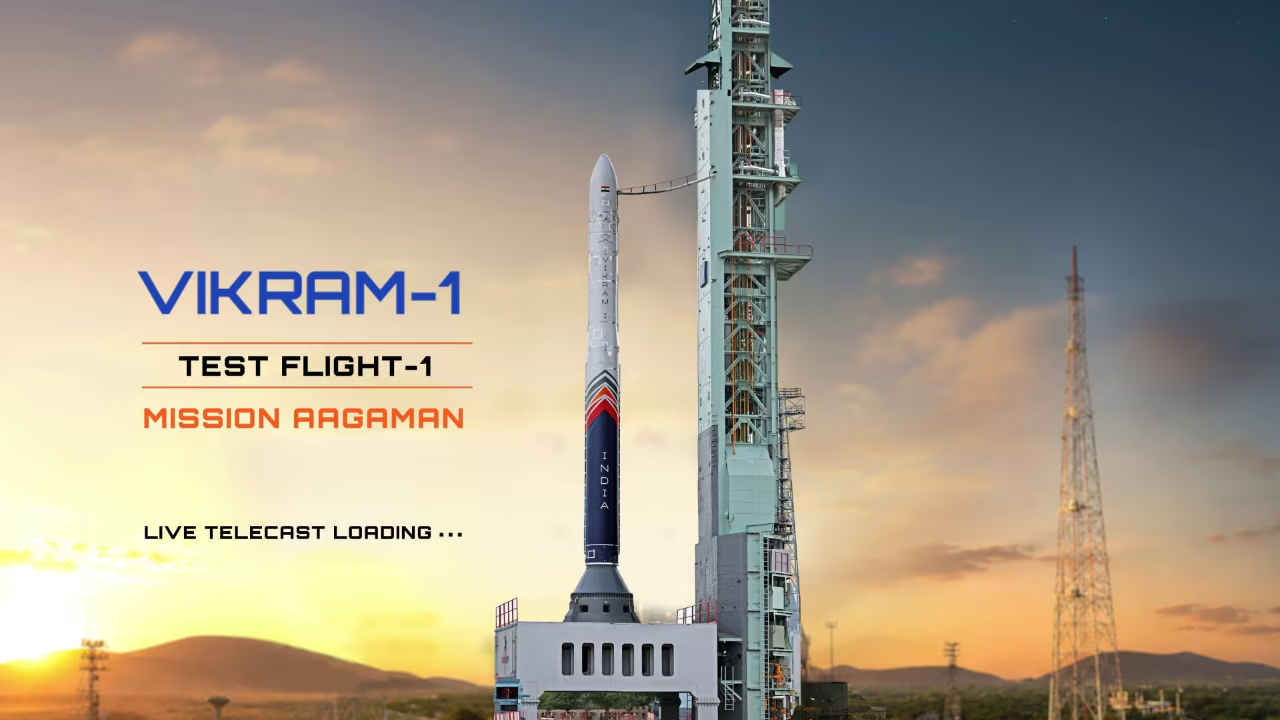
The rocket is designed to place satellites weighing up to 350 kg into Low Earth Orbit (LEO). During its first test flight, Vikram-1 is expected to aim for an orbit about 450 km above Earth with a 60-degree inclination.
Published: July 18, 2026, 8:46 AM IST
Share Article
https://www.india.com/news/india/skyroots-vikram-1-launch-live-streaming-indias-first-private-orbital-rocket-lifts-off-today-heres-where-and-when-to-watch-mission-aagaman-live-youtube-link-8477096/
Skyroot’s Vikram-1 launch LIVE streaming: India’s first private orbital rocket lifts off today; Here’s where and when to watch Mission Aagaman live
Skyroot Aerospace is set to launch the first test flight of its Vikram-1 rocket today at 11:30 am from the first launch pad at the Satish Dhawan Space Centre (SDSC-SHAR). The mission is a major milestone as it will be the first attempt by a privately developed orbital-class rocket to launch from India. Named Mission Aagaman, the launch is Skyroot’s second space mission. The company had earlier made history with the successful launch of Vikram-S on November 18, 2022, which became the first privately built Indian rocket to reach space.
The Vikram-1 rocket will carry several technology demonstration payloads from Grahaa Space, Cosmoserve, DCubed and Skyroot’s own SCOPE platform. It will also take “Cosmic Bloom,” an artwork created by Cosmos Diamonds, along with a micro-art piece into space.
When and where to watch Mission Aagaman launch LIVE
Skyroot Aerospace’s Mission Aagaman is scheduled to lift off today, July 18, at 11:30 am, from the First Launch Pad at the Satish Dhawan Space Centre (SDSC-SHAR) in Sriharikota, Andhra Pradesh. The mission will mark the first test flight of Vikram-1, India’s first privately developed orbital-class launch vehicle.
Those who want to watch the launch live can do so on Skyroot Aerospace’s official YouTube channel, where the company will stream the event.
What is Vikram-1?
Vikram-1 is Skyroot Aerospace’s first orbital launch vehicle, developed to carry small satellites into space. Standing about as tall as a seven-storey building, the rocket is made using lightweight carbon composite materials and is powered by engines and solid-fuel boosters designed by the company. Some of its engines have also been built using 3D-printing technology.
The rocket is designed to place satellites weighing up to 350 kg into Low Earth Orbit (LEO). During its first test flight, Vikram-1 is expected to aim for an orbit about 450 km above Earth with a 60-degree inclination.
What is the purpose of the test flight?
According to Skyroot Aerospace, the main goal of the July 18 launch is to test how Vikram-1 and its onboard systems perform in real flight conditions. The mission is meant to collect important data that will help the company evaluate the rocket’s performance, make improvements for future missions and move closer to offering regular commercial satellite launch services.