The government’s acceptance of CJP’s three key demands may have helped ease immediate tensions and slowed the movement’s momentum. However, the long-term impact will depend on how effectively the decisions are implemented.
Published: July 26, 2026, 11:43 PM IST
Share Article
https://www.india.com/news/india/did-early-action-on-cockroach-janta-partys-demands-help-the-government-prevent-a-larger-protest-explained-8484904/

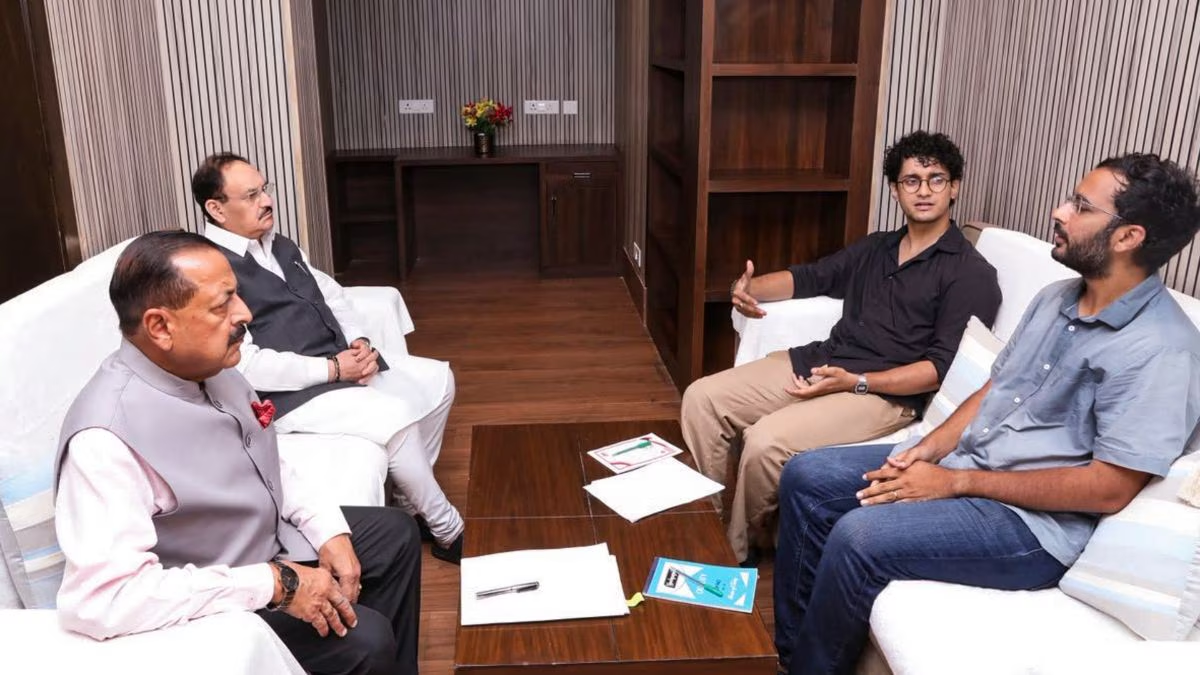
Union Minister JP Nadda and MoS Jitendra Singh hold talks with CJP Spokespersons Saurav Das and Ashutosh Ranka. PTI
India on Sunday saw Pralhad Joshi take charge of the Education Ministry after Dharmendra Pradhan stepped down from his position as the Union Education Minister on Saturday following massive protests led by the Cockroach Janta Party (CJP) in Delhi and the rest of the country. With the situation coming back to normal once again, there is a larger question that needs to be addressed: Did the move genuinely address public concerns, or was it a strategy to prevent the movement from gaining more momentum?
Movements often grow when grievances remain unresolved for a long time. By responding to some of the core demands early, the government may have attempted to reduce public anger and create space for dialogue. However, everything depends on how the decisions are implemented and whether remaining concerns are addressed.
Read more:
Sonam Wangchuk ends fast, will the CJP protests also end? Abhijeet Dipke reveals his plan
What were CJP’s main demands?
The CJP’s movement was centred around three key demands that had become the focus of public discussion. These were:
Ministerial accountability: The immediate resignation or removal of Union Education Minister Dharmendra Pradhan over the NEET examination irregularities.
Legal amnesty: The complete withdrawal of all FIRs and police cases filed against student protesters and organizers across central and state jurisdictions, along with guarantees against future retaliation.
Compensation: Financial compensation of Rs 1 crore for the families of aspirants who lost their lives in the wake of the exam disruptions.
Also Read | CJP sets tough condition before third meeting with Centre; ‘No point in discussion if…’
In a rare move given its historical stance on public protests, the Centre agreed to these core demands. Minister Dharmendra Pradhan submitted his resignation, paving the way for Pralhad Joshi to take additional charge of the ministry. The government also guaranteed the step-by-step dropping of police charges and committed to providing financial assistance under existing regulatory frameworks. In response, CJP leadership formally declared the withdrawal of the agitation.
How concessions de-escalated street protests?
By accepting the Education Minister’s resignation, the administration removed the central political target of the movement. This fulfilled the protesters’ primary call for high-level accountability and satisfied casual observers that action was being taken.
Drop-of-charge guarantees directly addressed the primary fear holding back moderate student participants, their academic and professional futures being tainted by police records.
The declaration to call off the protest immediately ended the blockade in central Delhi, allowing 18 closed Delhi Metro stations to reopen and restoring normal urban transit.
Political strategy or genuine response?
Critics may argue that accepting the demands was a political move designed to prevent the movement from expanding. Governments often face pressure when protests begin attracting public attention, and addressing demands can be a way to reduce political risks. Supporters of the government, however, may see the decision as a democratic response to public concerns. They may argue that accepting legitimate demands shows accountability and a willingness to engage with citizens.
What happens next will be crucial
The future of the movement will depend less on the announcement itself and more on what happens afterwards. Implementation, transparency, and communication will play a major role in determining whether the issue settles down or gains fresh momentum.
If the government successfully delivers on its promises, the movement may gradually lose public energy. But if there are delays, disagreements, or allegations of incomplete action, the issue could remain active.
By accepting CJP’s three key demands, the government may have succeeded in preventing the movement from immediately expanding further. The decision appears to have addressed some of the concerns that were driving public mobilisation.
However, it remains to be seen whether the protesters’ demands are met with the action that has been assured.