According to the order of the Food Safety Commissioner, violations are punishable by up to six months in prison and a fine of up to ₹1 lakh under the Food Safety and Standards Act, 2006.
Published: August 5, 2026, 10:43 AM IST
Share Article
https://www.india.com/news/india/maharashtra-bans-analog-cheese-violators-face-6-months-in-jail-rs-1-lakh-fine-why-did-the-government-take-this-decision-8493386/
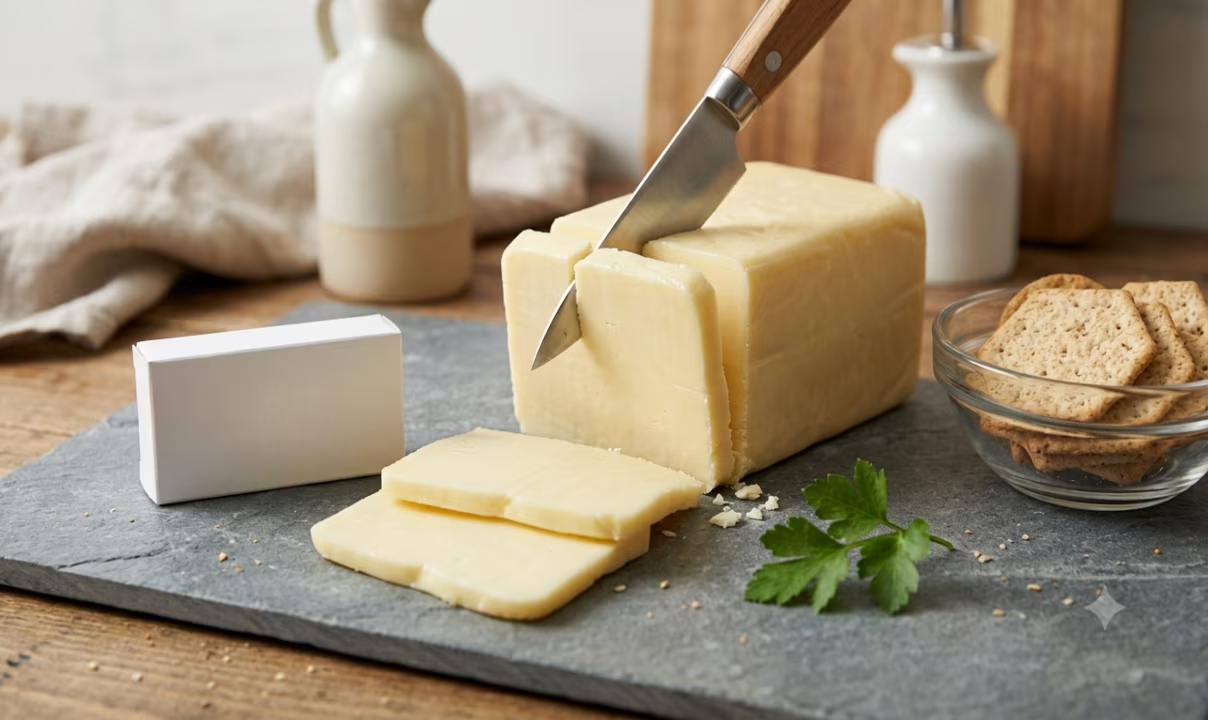
Maharashtra bans analog cheese, violators face 6 months in jail, Rs 1 lakh fine… why did the government take this decision? (AI image)
If you live in Maharashtra and buy or sell analog paneer, this news is for youYes, analog paneer has been banned in MaharashtraNo one can now buy or sell analog paneer in MaharashtraIt is completely prohibitedSelling analog paneer carries a jail term and heavy finesMaharashtra has become the second state in India to do so.
In light of public health concerns, the Maharashtra government has completely banned the manufacture, sale, storage, transportation, and distribution of analog (artificial/non-dairy) cheese in the stateWith this decision, Maharashtra becomes the second state in the country to take such a step, after Chhattisgarh.
According to an order issued by Food Safety Commissioner Tukaram Mundhe on July 30, the manufacture, processing, packing, storage, transportation, wholesale and retail sale and offering for sale of analogue or non-dairy cheese has been banned in the state with immediate effect.
Under which law?
The Food and Drug Administration (FDA) has clarified that any individual or establishment selling analog cheese as genuine dairy cheese would be considered misleading consumers and constitutes unfair trade practice under the Food Safety and Standards Act, 2006Strict legal action will be taken in such cases.
What is the provision for punishment and fine?
Under the law, depending on the severity of the offense, a jail term of up to six months and a fine of up to ₹1 lakh can be imposedIf the consumption of unsafe food results in death, life imprisonment and a fine of at least ₹1 million are provided.
Issue was raised in Assembly
It’s worth noting that this issue was also raised in the Maharashtra Legislative Assembly last year, where legislators demanded a complete ban on analog cheeseThis government decision is being considered a major step toward protecting the health of consumers.