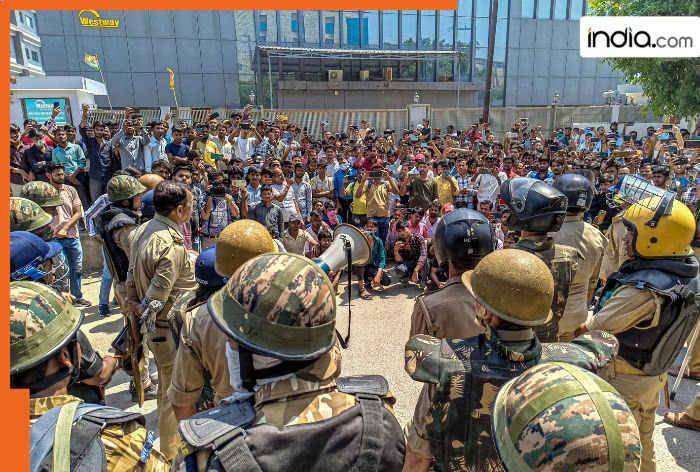
Violent protests by workers continue in Noida over the discrepancy between the minimum wage and inflation.

Published: April 14, 2026 1:38 PM IST
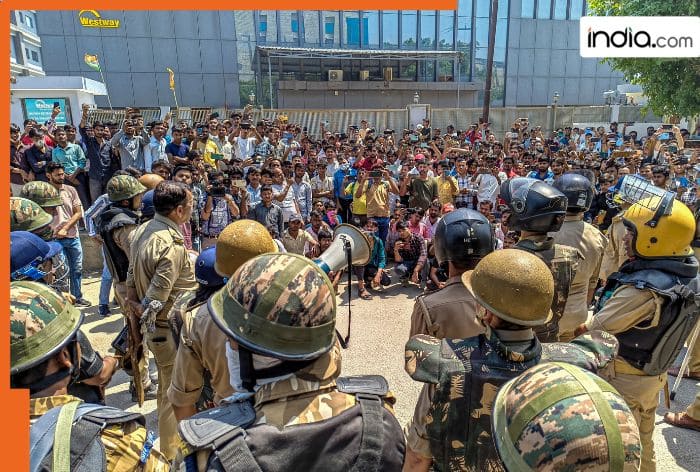
Minimum Wages UP Noida-Delhi-Haryana: Workers’ protests in Noida show no signs of abating. Their anger is surging repeatedly. Demanding everything from minimum wages to factory job security and PF in the face of rising inflation, workers are raising their demands with vigor because, compared to those in Delhi and Haryana, workers in Uttar Pradesh feel cheated. Despite working harder, their salaries have seen much less increase over the past 10 years compared to those in both states.
In Noida and Ghaziabad, the minimum wage for unskilled workers has increased by only 42 percent, while in neighboring Delhi, Gurugram, and Faridabad, the increase has been nearly 90 percent. This disparity has caused deep discontent among thousands of workers employed in Noida’s export units, which recently escalated into violent protests. Let’s explore the situation of workers and wages in the three states in detail.
Delhi has the highest minimum wage
The minimum wage in Delhi is higher than in Uttar Pradesh and Haryana. The government has increased the minimum wage in the capital by nearly 90 percent over the last 10 years.

The minimum wage for a laborer in Delhi has now risen from ₹9,724 in October 2016 to ₹18,456 per month. This represents a 90 percent increase. Inflation in Delhi is also lower than in Noida and Gurugram. Consequently, laborers here benefit more than in both states.
The condition of laborers and wages in Haryana
- The situation in Haryana was previously similar to that in Noida. In July 2016, the minimum wage for unskilled laborers was ₹8,070, which was increased to ₹11,274 before April 9, 2026. This means the salary increase was only 40 percent.
- Two cities in Haryana have significantly higher inflation rates than the rest of Haryana: Gurugram and Faridabad.
- Inflation rates of 52.7 percent in Gurugram and 48.1 percent in Faridabad have led to protests by organized workers in Manesar and other industrial areas.
- Following protests by workers, the Haryana government increased the minimum wage by 35 percent on April 9.
- The minimum wage for unskilled laborers in Haryana now stands at ₹15,221, an 88.6 percent increase compared to 2016.
Noida lagged behind the most
- The minimum wage situation in Uttar Pradesh is much worse than in Delhi and Haryana, while workers living in Noida have to spend more to make ends meet due to inflation.
- Ten years ago, in October 2016, the minimum monthly wage for unskilled workers in shops and establishments in Uttar Pradesh was Rs 7,936, which has now risen to Rs 11,314. This represents a total increase of 42.6 percent.
- Compared to the 42 percent salary increase, inflation for industrial workers in Ghaziabad and Gautam Buddha Nagar has risen by 51.3 percent over the same period. As a result, real wages are lower than they were ten years ago. Inflation has completely swallowed up the wage increase.
Thus, such a wide gap in minimum wages between neighboring cities and states drives labor from one location to another in a region like the NCR, impacting industrial peace. Export-oriented garment and other units in Noida already rely on contract labor, where benefits like provident funds, overtime pay, and realistic targets are often absent.
This is why workers are demanding the Uttar Pradesh government make appropriate amendments to the minimum wage, similar to those in Haryana and Delhi. This will ensure that families struggling with inflation can make ends meet and their children’s education is not affected. Currently, tension persists in Noida, and if a solution is not found soon, this discontent could spread further.