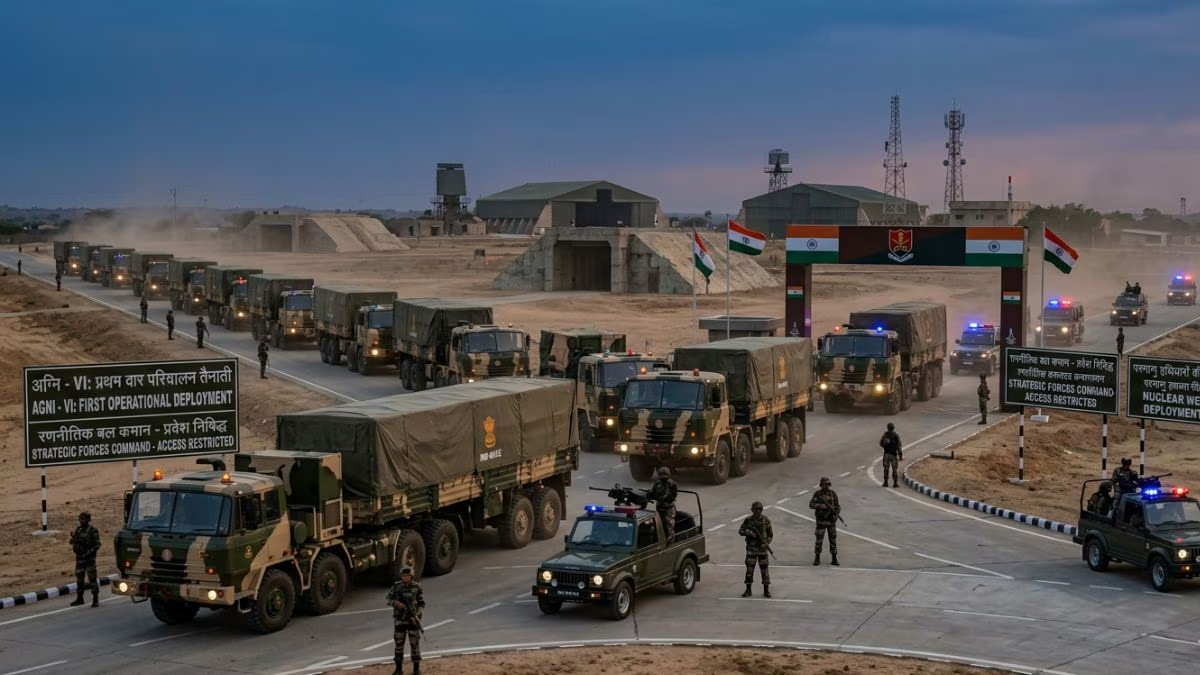
For the first time, India has deployed some of its nuclear weapons with operational forces, according to a SIPRI report. India now possesses 190 nuclear warheads, with approximately 12 estimated to be deployed.
Published: June 10, 2026, 12:44 PM IST
Share Article
https://www.india.com/news/india/india-deploys-12-nuclear-weapons-for-the-first-time-china-and-pakistan-borders-updates-8442007/
India deploys 12 nuclear weapons for the first time, war policy shifts to…, more worries for China and Pakistan (AI image)
A new international report has made a significant claim regarding India’s nuclear strategy. According to the Stockholm International Peace Research Institute’s (SIPRI) Yearbook 2026, India has operationally deployed some of its nuclear weapons for the first time. If this assessment proves correct, it would be considered a significant shift in India’s nuclear policy and military preparedness.
The report comes as SIPRI warns the world that a new global nuclear arms race is underway. Nuclear risks are constantly rising due to geopolitical tensions, military modernization, and the weakening of arms control agreements.
Read more:
Donald Trump warns US will ‘blow up’ anyone approaching Iran’s enriched uranium stockpiles
Has India changed its nuclear policy?
By January 2026, according to SIPRI India has an estimated 190 nuclear weapons. There were 180 nuclear warheads, compared to 180 a year earlier. The most significant finding of the report is that approximately 12 of these nuclear warheads can now be deployed with operational forces. Until now, India has been believed to keep its nuclear weapons and missile systems separate during peacetime, so that ultimate control over any nuclear action remains with the political leadership.
Experts believe that the deployment of a limited number of warheads could be a step towards India’s more rapid and effective deterrence capability, especially as India continues to strengthen its sea-based nuclear capability.
Nuclear weapons for defense, not aggression
India’s nuclear policy has long been based on the principles of “no first use” and “credible minimum deterrence.” This means that India maintains nuclear weapons not for aggression, but to deter an enemy from attacking. The SIPRI report does not specifically state that India’s official nuclear policy has changed, but it does indicate that the level of preparedness of its strategic forces has increased.
China is also rapidly increasing its nuclear stockpile
The report states that the biggest influence on India’s nuclear modernization process is China’s rapidly expanding military and nuclear capabilities. According to SIPRI, China is expanding its nuclear arsenal at the fastest rate in the world. This has led India to develop new missile systems capable of striking targets deep within China. This clearly indicates that India’s strategic thinking is no longer limited to Pakistan.
However, Pakistan also remains a significant part of India’s security calculations. Over the past decade, both countries have developed new missile systems and nuclear weapons platforms. Maintaining strategic balance in South Asia remains a priority for India.
How many nuclear weapons are there in the world?
The importance of nuclear weapons is also increasing globally. According to SIPRI, the world’s nine nuclear-armed countries possess a total of approximately 12,187 nuclear warheads. Almost all of these countries are engaged in modernizing their nuclear arsenals. The report concludes that the role of nuclear weapons in security strategies is steadily increasing and the world is gradually moving towards a new nuclear arms race.
India’s reported operational deployment is also being viewed within this broader global context. While limited in number, defense experts believe this move could be significant in making India’s deterrence capabilities more credible and effective, especially at a time when security challenges are constantly increasing on both the China and Pakistan fronts.