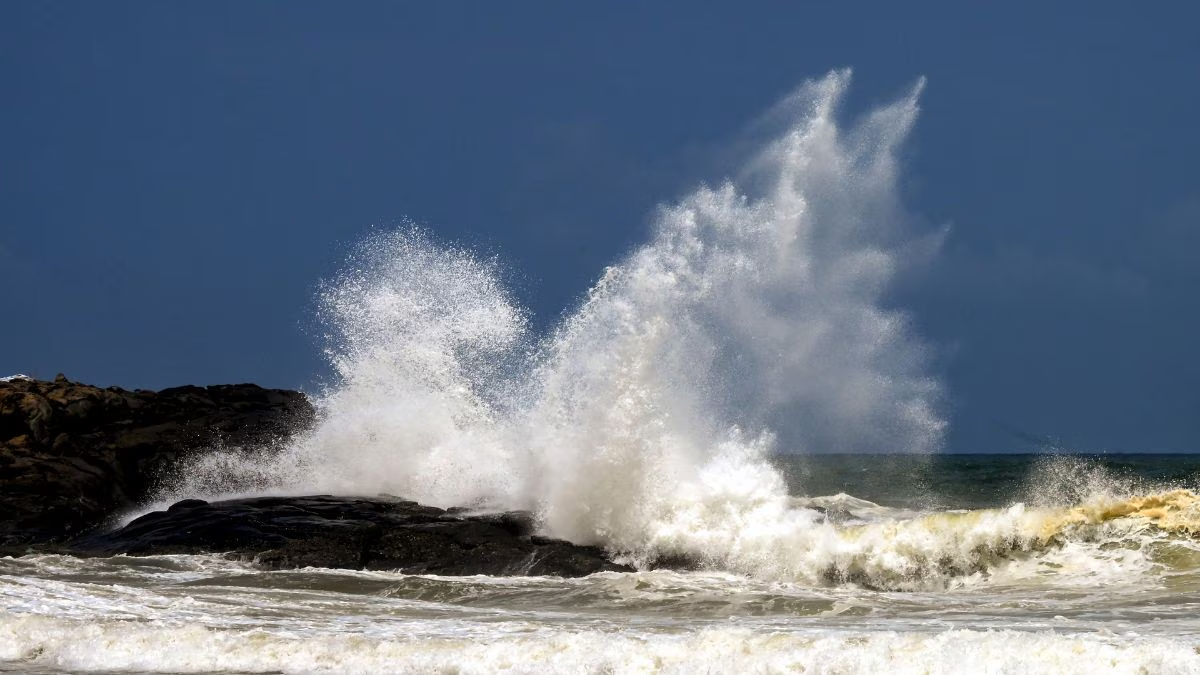
There has been a sudden change in the weather in Delhi. While many attribute it to pre-monsoon showers, is it really due to that, or is there something bigger behind this? Meanwhile, Kerala is bracing for a flood-like situation amid the ongoing monsoon showers in the state.
Published: June 12, 2026, 9:38 PM IST
Share Article
https://www.india.com/news/india/hailstorm-in-delhi-flood-risk-in-kerala-understanding-india-weather-divide-imd-explainer-8444789/
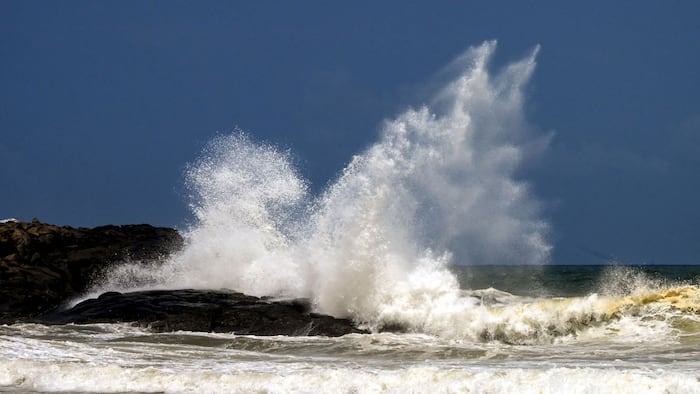
Sea waves crash against the shore at Kovalam beach during the monsoon season in Thiruvananthapuram, Kerala. PTI
Have you noticed that Delhi has suddenly started facing heavier rain and storms than it did before? There has been a sudden switch from the sweltering heat to showers of hail. Meanwhile, Kerala, which usually gets its rain during this time of the year, is currently facing floods. If you, too, are wondering what led to the change, then this article is for you.
Both regions are facing an extreme weather in their respective regions.
What is extreme weather?
The term “extreme weather switch” is used to describe a sharp change in weather patterns, where severe heatwave conditions are quickly replaced by rain, thunderstorms, and cooler temperatures in parts of Northwest and southern India. Weather-related extreme events are often short-lived and include heat waves, freezes, heavy downpours, tornadoes, tropical cyclones, and floods.
What is leading to the change in weather in Delhi?
Delhi is witnessing pre-monsoon showers mainly due to the Western Disturbance. This has led to thunderstorms, gusty winds and isolated hailstorms in Delhi and neighbouring states, so much so that the weatherman has issued a yellow alert for the region for the next couple of days.
Notably, the IMD has warned of isolated hailstorm activity over Delhi, Haryana, Punjab, and Uttarakhand on June 11 and 12. The weather system is bringing hail, thunderstorms and lightning to the region, accompanied by strong thundersqualls with winds blowing at 60–70 kmph and gusting up to 80 kmph. The forecast covers all districts of Delhi as well as adjoining NCR cities such as Faridabad, Gurugram, Noida and Ghaziabad.
Due to the effects of the Western Disturbance, there has been a “marked fall” in maximum temperatures by 4–6 degrees Celsius in Delhi. This in turn has led to a brief respite from the previous 40–46 degrees Celsius heatwave conditions. IMD has also stated that Delhi’s maximum temperature will remain around 35-37 degrees Celsius on June 13, which is actually below normal for this time of year. The mercury is expected to rise gradually thereafter, reaching 37-39 degrees Celsius by June 14-15 and potentially 39-41 degrees Celsius by June 17.
Why is Kerala facing floods?
IMD has predicted that Kerala will be facing floodlike situations in the coming days. It has attributed the Southwest Monsoon as the main cause of floods and heavy rainfall. The rainfall is being driven by the monsoon’s progress and several cyclonic circulations over the Bay of Bengal and Karnataka.
The IMD issued an orange alert across several districts of Kerala for the next two days. The orange alert has been issued for districts like Ernakulam, Idukki, and Thrissur, warning of very heavy rainfall ranging from 12 cm to 20 cm.
The weather department has sounded a yellow alert in Pathanamthitta, Kottayam, Alappuzha, Palakkad and Malappuram, signalling the likelihood of heavy rain of 7–11 cm. The rest of the state’s districts have not been placed under any alert for Thursday.
Strong winds are expected to prevail along the Kerala coast through June 12, with speeds ranging from 40–50 kmph and gusting up to 60 kmph, according to the IMD. The weather department has urged fishermen to stay off the sea until conditions improve.
Due to the incessant rainfall, the weather agency has warned of flash floods, localised flooding of roads, and significant waterlogging in low-lying areas. It has also warned of swell surges in coastal areas where wave heights up to 1.4 meters and squally weather reaching speeds of 40–50 kmph gusting to 60 kmph have been predicted, making sea conditions dangerous for fishermen.
With inputs from agencies