


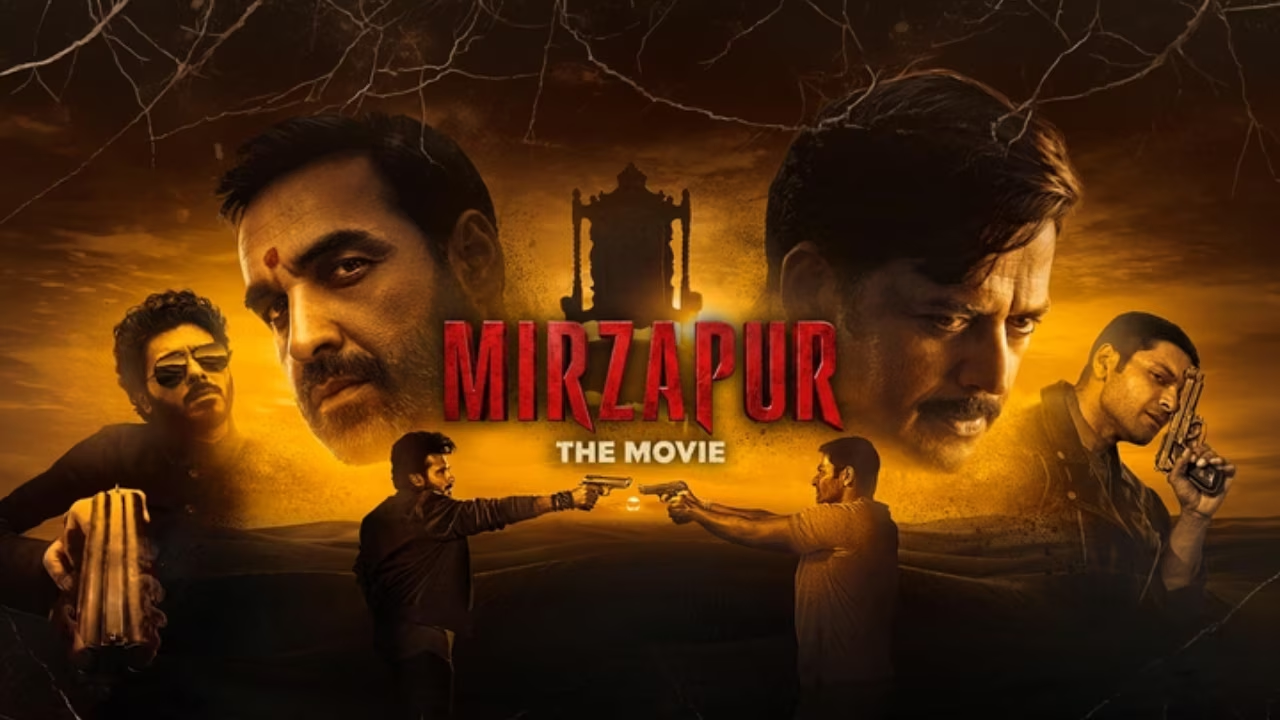
The Mirzapur universe gets a theatrical expansion with a fiery new addition, returning favourites and an unpredictable final act that aims to deliver a full-fledged big-screen experience.
Share Article
https://www.india.com/entertainment/bollywood/mirzapur-the-movie-review-pankaj-tripathi-divyenndu-and-ali-fazal-own-screen-as-ravi-kishan-elevates-bhaukaal-in-this-experimental-cinema-8516757/
Pankaj Tripathi, Divyenndu and Ali Fazal bring the OG bhaukaal back (PC: IMDb)
Finally, the most awaited big-screen chapter from the Mirzapur universe has arrived and it brings the franchise’s familiar madness to a much larger canvasMirzapur: The Movie, led by Pankaj Tripathi, Divyenndu, Ali Fazal and new additions Jitendra Kumar and Ravi Kishan, takes characters audiences have followed for years and places them in a story that attempts to be more than a nostalgic reunionThere is scale, fresh conflict, enough new material and absolute bhaukaal to justify the jump from streaming to cinemaThe first half comes with tremendous energy while the second half slows down a littleYet the film’s layered writing, strong performances and theatrical treatment make it a largely satisfying outing for Mirzapur fans.
A worthy big-screen experiment
The most interesting thing about Mirzapur: The Movie is that it does not simply feel like another season packaged as a filmThat could have been the easiest route for the makers but director Gurmeet Singh and writer Puneet Krishna instead try to reshape the universe for theatrical viewing.
The characters remain recognisable but the film gives them a larger setting and introduces new conflicts around themThe action has more scale and the narrative moves across different locations while retaining the gritty identity of the franchise.
What makes this experiment work is that the film does not depend entirely on nostalgiaThe returning characters are obviously a major attraction but the makers also attempt to build something bigger around themThat makes the transition from web series to feature film feel purposeful rather than merely commercial.
The first half VS the second half
The first half is where the film is at its most energeticThe pace is brisk and the character interactions have the swagger that fans associate with the franchiseRavi Kishan’s Babban Yadav becomes the standout during this portionHis performance brings a fresh unpredictability to the story and his “bhaukaali” screen presence makes him difficult to ignoreThe introduction of his character changes the equation between the existing players and gives the film a new source of tension.
The momentum does dip in the second halfThe film becomes more measured and takes longer to move between its various storylinesThis is also where Ravi Kishan’s impact reduces compared with the first halfAfter such a commanding beginning, his comparatively quieter presence becomes noticeable.
The slower pacing does not completely derail the film because the layered narrative continues to hold interest but a tighter edit could have made the second half considerably strongerThe film eventually finds its rhythm again as it approaches its final stretch, but the contrast between both halves remains one of its noticeable weaknesses.
The Mirzapur universe expands
The film’s world becomes broader with the introduction of Sushant Singh as Bhairav Singh KarnawatHis character is connected to Babban Yadav as his former business partner and their history adds another dimension to the drug cartel storylineThe Jaisalmer (Rajasthan) portions are useful in this regardThey allow the film to move beyond the familiar geography of the franchise and create a wider sense of the network surrounding these characters.
At the same time, the film does not forget its Jaunpur connectionsElements involving Compounder played by Abhishek Banerjee, Rati Shankar Shukla and his son Sharad, played by Anjumm Sharma, make their presence felt againThese callbacks are handled as part of the larger world rather than being inserted only to remind audiences of earlier seasonsThey underline how interconnected the different power struggles in the franchise have always been.
The returning cast continues to deliver
Pankaj Tripathi remains effortlessly commanding as Kaleen BhaiyaHe understands that the character’s authority comes as much from restraint as it does from confrontation and his performance continues to carry that weight.
Ali Fazal brings the aggression required for Guddu Bhaiya while also reflecting the character’s journey through the franchiseThere is a lived-in quality to his performance that prevents Guddu from feeling like a repetition of his earlier appearances which also makes this theatrical release more iconic.
Divyenndu’s return as Munna Bhaiya is one of the film’s most rewarding elementsThe makers wisely preserve the OG Munna Bhaiya personality instead of attempting to reinvent himHis bhaukaal remains intact and that familiarity works in the film’s favour especially for die hard fans of Munna Bhaiya.
Jitendra Kumar gets his moments as Bablu Pandit but, the comparison with Vikrant Massey is inevitableKumar brings his own screen presence but Vikrant had a distinctly different quality in the series and that particular energy is still difficult to replace.
The supporting cast also benefits from the screenplayBeena Tripathi (Rasika Duggal), Maqbool (Shaji Chaudhary), Kulbhushan Kharbanda and Sheeba Chaddha as Guddu’s mother and Rajesh Tailang are given enough space to remain relevant to the proceedings rather than functioning solely as familiar faces.
A special shout out to Satendra Soni, for making Chandu Puncture one of the film’s most memorable new charactersPlaying an eccentric mechanic with a dangerous and unpredictable side, Soni brings a distinct energy to the roleChandu may be a new addition to the Mirzapur universe but his presence certainly leaves an impression.
Gurmeet Singh gives the film a cinematic shape
For Gurmeet Singh’s feature-film debut, the direction shows a clear understanding of what needed to change for the franchise to work theatricallyThe film does not abandon the visual and tonal identity established by the series but expands it through larger action set pieces, new locations and a broader canvas.
Singh’s biggest achievement is perhaps maintaining the balance between familiarity and expansionThe movie still feels like Mirzapur but it does not look trapped by the format that came before itThe decision to treat the material as cinema rather than simply extending the web-series formula gives the film a distinct identity.
Puneet Krishna’s layered writing keeps things engaging
Puneet Krishna’s writing is among the film’s biggest strengthsThe screenplay and dialogues carry the familiar flavour of Mirzapur but there is enough layering in the narrative to keep things from becoming predictableSeveral subplots operate alongside the central conflict and some take time to reveal their importanceThis gives the supporting characters more relevance and allows the story to connect different parts of the Mirzapur universe.
The writing is particularly effective in balancing established characters with new additionsInstead of pushing everyone into the same conflict, the film gives different players their own motivations and connectionsThat approach gives the movie more depth than a straightforward action-driven continuation and is a major reason the experiment works.
Cinematography and music elevate the experience
Sanjay Kapoor‘s cinematography gives the film a polished theatrical scale while retaining the gritty character of the franchiseThe shift towards Rajasthan also brings visual variety and helps the world feel larger.
John Stewart Eduri‘s background score strengthens the film’s atmosphere, particularly during the action-driven portionsThe Mirzapur The Bhaukaal Theme retains the musical identity associated with the franchiseThe song choices are also appropriately placed and complement the mood of their respective sequences.
This is further elevated by the inclusion of high-energy rap tracks by Dhanda Nyoliwala and others, which inject raw intensity into an adrenaline-pumped chase sequence and deliver a truly whistle-worthy climax.
Censor cuts dilute some of the rawness
The censorship of certain cuss words is one area where the film loses a little of its original flavourLanguage has always been closely tied to the identity of Mirzapur and the unfiltered dialogue was an important part of its appealRemoving some of that language makes a few scenes feel less raw than they might have otherwiseIt is not damaging enough to affect the overall experience but fans of the series are likely to notice the difference.
Final verdict for Mirzapur The Movie
Overall, Mirzapur The Movie is an ambitious experiment that gives the franchise a bigger cinematic identity without relying solely on nostalgiaDespite a slower second half and some censor cuts, its fresh conflicts, layered world and strong performances make it a worthwhile theatrical experience for fans.