
Hyderabad-based startup Cosmoserve Space has unveiled Base 1, India’s first private space facility for space vision effects and microgravity simulationOne of only six such centres worldwide, the facility will focus on developing technologies for space debris removal.
Share Article
https://www.india.com/news/india/indias-first-private-space-facility-cosmoserve-opens-in-hyderabad-what-is-base-1-and-why-is-it-important-remove-space-junk-and-repair-satellites-8542608/
India’s first private space facility opens in Hyderabad: What is Base 1 and why is it important?
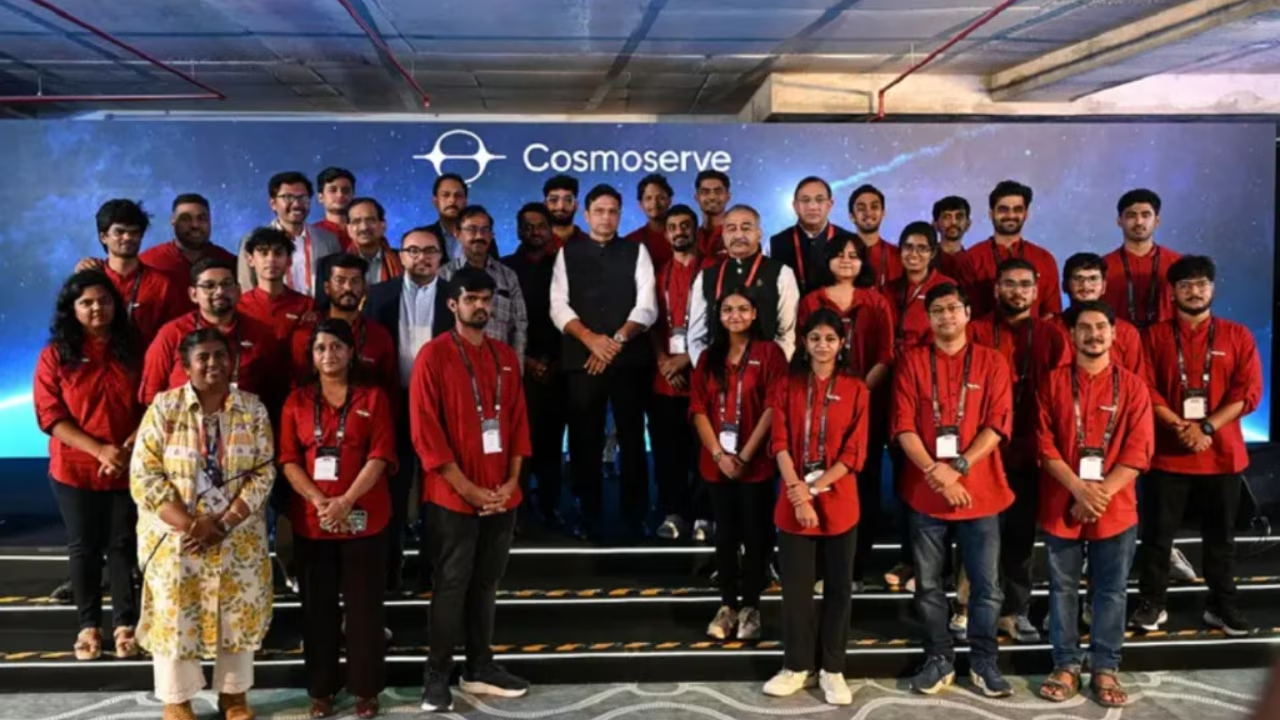
Hyderabad-based space technology startup Cosmoserve Space has launched Base 1, India’s first privately owned facility for space vision effects and microgravity simulationThe facility is also among only six such centres in the worldThe facility was inaugurated on Thursday by Telangana IT and Industries Minister DSridhar Babu, while Union Minister of State for Science and Technology Dr Jitendra Singh joined the event virtuallyCosmoserve Space Founder and CEO Dr Chiranjeevi Phanindra and Telangana IT Advisor Sai Krishna were also present.
Base 1 is India’s first private centre that brings together the design, manufacturing and operational work needed for active space debris removal and satellite servicing under one roofThe development is being seen as an important step for India’s growing private space industry.
Speaking at the inauguration, Telangana Minister DSridhar Babu said, “Facilities like Cosmoserve’s Base 1 show exactly why Hyderabad is leading the country in space innovationWe are now home to over 30 spacetech companies, including India’s first spacetech unicornThey are building everything from launch vehicles and space data centres to debris removal systems and drug discovery platforms.”
He also highlighted Hyderabad’s growing aerospace and defence industry, its research facilities and skilled workforce.
“This deep-tech execution is possible because we have the fastest-growing aerospace and defence sector in Hyderabad alongside 52 national labs, a talent pool of 1.5 million engineers, and a local supply chain that covers nearly 90% of their component needs.”
What is Base 1 and how will it help India’s space industry?
Base 1 has been designed to help companies develop, test and operate technologies used for satellite servicing and the removal of space debrisThe centre has four major facilities, each designed for a different purpose.
The Orbital Rendezvous and Capture Lab will help engineers test how one spacecraft can approach and capture another object in spaceThis technology is important for removing dead satellites and other unwanted objects from Earth’s orbit.
The Space Robotics Innovation Lab will focus on developing robotic systems that can capture and handle objects in space.
The facility also has an ISO Class 8 clean room where satellites and other space equipment can be assembled and integrated under controlled conditions.
A Mission Simulation and Control Centre will help the company plan, monitor and manage its future space missions.
Apart from removing space debris, Base 1 will support satellite maintenance work, including repairs and refuelling in orbitSuch technology could help extend the working life of satellites and reduce the need to replace them.
Cosmoserve plans to reduce dependence on imported space technology
Cosmoserve Space plans to use the new facility to develop more advanced technologies within IndiaThe company wants to strengthen local manufacturing and reduce its dependence on imported parts.
These include important components such as optics, avionics and space-grade electronic systems, which are required for satellite and spacecraft operations.
The company currently sources nearly 60% of the components required for its missions from Indian suppliersIt aims to increase this share by developing more technologies in-house.
Founder and CEO Dr Chiranjeevi Phanindra said the company had achieved several milestones within its first year of operations“In our first year we have flown our first payload on an Indian rocket, raised our seed round, and today we open a facility where we can design, build, test and fly our missions under one roof.”
He also pointed out the growing problem of space debris and explained why developing technologies to remove it has become important.
“Space debris is becoming the limiting factor for every nation’s space ambition, including India’sBase 1 is where we build the capability to keep orbits usable, for Gaganyaan, the Bharatiya Antariksh Station and every satellite that follows.”
Cosmoserve space raises over USD 9 million in funding
The launch of Base 1 comes after Cosmoserve Space raised USD 6 million in its seed funding roundWith this investment, the company’s total funding has crossed USD 9 millionThe funding is expected to support its research, technology development and future space missions.
In July 2026, the startup flew its first payload, called Mission Embrace, aboard Skyroot Aerospace’s Vikram-1 rocket.
The company developed the flight hardware in less than four months, completing the work six months ahead of its planned schedule.
However, the mission did not go entirely as plannedThe robotic capture petals, which were expected to deploy during the flight, failed to open as intendedDespite this, the mission provided important technical information that will help the company improve its technology for future attempts.
Hyderabad emerging as a major spaceTech hub
The launch of Base 1 also highlights Hyderabad’s growing role in India’s aerospace and space technology sectors.
Telangana IT Advisor Sai Krishna said the city already has a strong presence in digital engineering and research, with more than 525 Global Capability Centres (GCCs), research and development centres, Centres of Excellence and innovation centres.
He said aerospace and defence were becoming important areas of growth for the city, with space technology now opening up another major opportunity.
“Now, we are witnessing the exciting emergence of the SpaceTech ecosystem, with over 30 startups, including a unicorn and several soonicorns, driving innovation and pushing boundaries,” he added.
With the launch of Base 1, Cosmoserve Space aims to build technologies that could support India’s future satellite missions, space stations and efforts to keep Earth’s orbit free from dangerous debris.